Current Views: 241256
 Current Downloads: 133267
Advance in Law
ISSN Print:2707-1499
ISSN Online:2707-1502
Contact Editorial Office



Subscribe to the latest published information from SCISCAN
On the Criteria for Balancing the Obligation of Tolerance Regarding Light Pollution—An Empirical Analysis Based on 57 Judicial Rulings


-
Information:
School of Law, Jinan University, Guangzhou, China
-
Keywords:
Tolerance Obligation for Light Pollution; Measurement Standards; Empirical Analysis
- Abstract: Against the backdrop of the “dual carbon” goals, pollution prevention and control is of paramount importance. As a specific form of energy-related environmental pollution, light pollution faces the challenge of unclear assessment criteria compared to other types of pollution. With the release of Supreme People’s Court Guiding Case No. 128—the case of Li Jin v. China Resources Land (Chongqing) Co., Ltd.—a new approach to resolving this issue has emerged, and the value of exploring the obligation of tolerance has become increasingly evident. Drawing on judicial documents from relevant cases as an empirical foundation, this paper examines the application of the obligation of tolerance regarding light pollution in 13 provinces and municipalities, including Beijing and Shanghai. It constructs a theoretical framework based on the principle of proportionality. The findings indicate that when applying the obligation of tolerance, multiple factors must be comprehensively considered to clarify the scope of the duty, determine the order of its application, and define its value-based application. On this basis, the study ultimately establishes and determines the criteria for the obligation of tolerance regarding light pollution, thereby safeguarding the public’s environmental rights and protecting the public interest.
- DOI: 10.35534/al.0802003
- Cite: Yi, S. Y. (2026). On the Criteria for Balancing the Obligation of Tolerance Regarding Light Pollution —An Empirical Analysis Based on 57 Judicial Rulings. Advance in Law, 8(2), 23-32.
With the continuous deepening of reforms and the steady advancement of the socialist market economy, China’s economy has shown vigorous growth and has become the world’s second-largest economy. However, alongside economic development, environmental issues have also emerged. In addition to common forms of pollution such as air and water pollution—which are already regulated by legislation and frequently reported in the media—energy-based forms of pollution, such as light pollution and electromagnetic radiation pollution, are profoundly impacting social life. As a typical example of energy-related environmental pollution, light pollution has garnered significant public attention, and numerous cases involving light pollution infringement disputes have emerged in judicial practice. However, China’s current legal framework lacks environmental standards for light quality and emission standards for light pollutants. In judicial precedents, judges often rely on the victim’s “duty of environmental tolerance” and “tolerance threshold” as key criteria for determining light pollution, leading to significant variations in factual findings, legal application, and judicial outcomes in such cases. Consequently, the factors included in the assessment of “tolerance threshold” directly impact the scientific rigor and legitimacy of rulings in light pollution infringement cases.
To address this, this paper analyzes the practical challenges affecting the assessment of the tolerance obligation through theoretical and empirical research, constructs a model for reference standards regarding light pollution tolerance, and explores judicial pathways for determining energy-related environmental pollution, with the aim of providing theoretical guidance for legislation on light pollution prevention and judicial adjudication.
1 Theoretical Overview of Standards for Measuring the Obligation of Tolerance in Light Pollution
Light pollution is a general term referring to the negative impacts caused by disruptive light or excessive light radiation (including visible, ultraviolet, and infrared radiation) on humans and the ecological environment. With the development of industrialization and urbanization, cases of light pollution infringement have become increasingly frequent in social life. Such cases have also increasingly become a focal point and challenge in contemporary judicial adjudication. However, China’s existing legal system has yet to enact a Law of the People’s Republic of China on Prevention and Control of Light Pollution. In light of this, the Supreme People’s Court’s Guiding Case No. 128 offers a novel approach—the concept of “tolerance threshold”, which refers to the limits of the “obligation of tolerance” borne by the general public.
In traditional legal theory, the obligation of tolerance is a specialized concept derived from the German Civil Code doctrine of infringement of immaterial immissions, which was later expanded to apply to the balancing of rights in the context of personality rights and the fair use of copyright in intellectual property law. Since the 1970s and 1980s, Japan’s environmental rights movement, international environmental conferences, and the development of environmental rights have introduced the obligation of tolerance into the field of environmental law. Furthermore, this concept was applied to the realm of light pollution as early as 2004 in Lu v. Shanghai Yongda Zhongbao Automobile Sales and Service Co., Ltd. (Li, 2007). This paper argues that the duty of tolerance for light pollution means that the victim shall bear reasonable restrictions on their environmental rights when the polluter’s emissions are within the statutory or reasonable limit, without constituting a tort.
In practice, the obligation of tolerance regarding light pollution is a difficult issue to define. Coupled with the current lack of legislation on this duty in China, this has led to inconsistent rulings in judicial practice for similar cases, and some judicial decisions fail to effectively meet the public’s expectations for a livable environment. Consequently, exploring the theoretical issues surrounding the criteria for the obligation of tolerance regarding light pollution, analyzing the practical challenges in establishing such criteria, and identifying pathways to resolve these challenges have become critical theoretical and practical issues that demand our close attention.
1.1 Theoretical Debates on the Standard for Measuring the Obligation of Tolerance for “Immaterial Immissions”
In academic circles, few theories specifically isolate light pollution from the broader category of “intangible objects” to discuss the standards for balancing the obligation of tolerance. However, theoretical research on the standards for balancing the obligation of tolerance under the general concept of “intangible objects” is quite mature, with divergent theoretical schools of thought emerging both domestically and internationally. After reviewing a vast amount of literature and comprehensively evaluating the maturity and systematic nature of these theories, the author has identified the following four representative schools of thought:
First is the “Tolerance Threshold Theory” in Japanese law. This theory incorporates the following factors into the criteria for assessing the obligation of tolerance regarding “intangible objects”: (1) public interest and public works; (2) the sequence of land use; (3) regional characteristics; (4) the type and degree of infringement; and (5) whether necessary countermeasures have been taken (Chen, 2021).
Second, according to Professor Wang Liming’s perspective, the key to determining whether a person bears an obligation of tolerance lies in clarifying whether the harm caused by another’s conduct is minor. The standard for determining whether the harm is minor should be measured using objective criteria such as environmental standards for light pollution, illuminance monitoring data, and relevant regulations, rules, and measures regarding light pollution issued by various cities.
Third is the German Civil Code’s system for infringements involving “unquantifiable substances”. Under this system, the duty to tolerate “unquantifiable substances” is assessed by considering the following factors: (1) the location where the infringement occurred; (2) whether the tortfeasor discharged the unquantifiable substances in accordance with customary land use practices; (3) whether the infringement caused by the discharge could have been prevented or eliminated by other means; and (4) whether the victim could have foreseen that the discharge would cause harm.
Finally, there is the French system of nuisance between neighbors. This system specifically considers the nature and severity of the harm suffered by the victim (similar to the “type and degree of infringement” in the Japanese “theory of tolerance limits”), the objective conditions at the location where the infringement occurred (similar to the “location of the infringement involving immaterial immissions” in the German system), and the victim’s personal characteristics. However, the author believes that the factor of “the victim’s personal characteristics” is highly subjective and vague, must be weighed on a case-by-case basis, and is not suitable as an objective, operational standard.
1.2 Theoretical Synthesis of Standards for Assessing the Duty to Tolerate Light Pollution
By synthesizing and integrating the aforementioned theories, unifying the overlapping elements among them, eliminating factors deemed unsuitable as standards for the obligation of tolerance in this paper, and narrowing the broad concept of “intangible harm” to the specific concept of light pollution, we can identify 10 criteria for the obligation of tolerance regarding light pollution. Depending on the perspective emphasized, these 10 criteria can be further categorized into the following three groups:(1) Based on the objective harm caused by the immaterial immissions itself, these can be divided into three categories: “type and degree of harm,” “location where the light pollution harm occurs,” and “whether relevant laws and regulations have been violated”; (2) From the perspective of balancing special interests, these can be divided into two categories: “public interest and public welfare” and “regional characteristics”;(3) Based on the degree of fault of the perpetrator, these can be divided into five categories: “sequence of land use,” “whether the perpetrator took necessary countermeasures,” “whether the perpetrator emitted light pollution in accordance with customary land use practices,” “whether the harm caused by the perpetrator’s emission of light pollution could have been prevented or eliminated by other means,” and “whether the victim could have foreseen that the emission of light pollution would cause harm.”
2 Practical Dilemmas in the Standards for Balancing the Duty to Tolerate Light Pollution
As mentioned above, theoretical research on the obligation of tolerance is quite extensive and highly systematic. However, due to the lack of relevant legislation, numerous practical challenges persist in applying the balancing standard for light pollution tolerance in China’s judicial practice.
2.1 Lack of Specific Legal Provisions on the Obligation of Tolerance and Ambiguity in Determining Light Pollution
In China, provisions concerning harm caused by harmful substances are primarily found in Article 294 Civil Code of the People’s Republic of China. While this provision provides a general list of such objects, it does not explicitly define the obligation of tolerance; that is, there are no specific legal provisions in China that outline the limits or criteria for determining this duty. Without direct statutory grounds for judgment, actual trials lack a crucial basis for decision-making, resulting in extreme ambiguity in the determination of light pollution damages and making it difficult to maintain consistent judicial standards.
2.2 Insufficient Objective Standards to Aid in Determining Damages; Strong Subjectivity in Light Pollution Assessments
Due to the lack of direct statutory grounds for determining the obligation of tolerance in China, judges in actual trials often resort to objective standards—such as light pollution standards and light pollution monitoring data from the location of the damage—to assist in determining the facts of light pollution damage. However, the formulation and application of such objective standards, including light pollution standards and monitoring data, face numerous difficulties, specifically as follows:
2.2.1 Legislative Gaps in Light Pollution
2.2.1.1 There is a legislative gap regarding specialized laws for the prevention and control of light pollution, and the application of legal principles remains ambiguous
China has enacted separate laws addressing various types of pollution, such as the Law of the People’s Republic of China on Prevention and Control of Water Pollution and the Law of the People’s Republic of China on the Prevention and Control of Air Pollution; however, there is a distinct lack of legislation specifically targeting the prevention and control of light pollution (Liu, 2008). At the same time, the only unified provisions regarding light pollution consist of general principles scattered throughout the Constitution of the People’s Republic of China and other branches of law. These provisions are overly broad, leaving judges without a solid basis for determining whether light pollution damage has actually occurred.
2.2.1.2 Deficiencies in the Formulation and Application of Light Pollution Standards
Currently, China’s existing standards on light pollution still cannot effectively serve as a solid basis for judges to determine whether light pollution damage has occurred and to what extent. The specific reasons are as follows: First, the current light pollution standards are established at a relatively low hierarchical level. Second, the scope of these standards is limited and does not yet cover all aspects of light pollution, resulting in a lack of scientific and comprehensive criteria for judicial adjudication.
2.2.2 Monitoring of Light Radiation Is Challenging
In practice, most ecological and environmental monitoring stations primarily focus on common types of pollution, such as noise and water pollution and lack the capacity to monitor light radiation. While some universities and research institutions possess the technical capabilities to monitor light radiation, they have not obtained the corresponding judicial appraisal qualifications. Consequently, there are very few institutions with the necessary qualifications to conduct light radiation-related monitoring, such as measuring light intensity (Ran et al., 2022). Consequently, when applying laws and regulations, judges can only exercise highly subjective discretion regarding whether light pollution damage has occurred, based on their own understanding of the legislative intent and value orientation of the provisions. However, judicial discretion is often influenced by the judge’s personal qualities, self-perception, and external environment, rendering such determinations highly subjective. Consequently, rulings in similar cases often differ, and there is a lack of uniformity in judicial standards.
3 Empirical Analysis of the Standards for Balancing the Duty to Tolerate Light Pollution
Given the practical challenges associated with the standards for assessing the duty to tolerate light pollution—such as the high degree of ambiguity and subjectivity in judicial rulings—the implementation of this duty faces significant obstacles. Against this backdrop, further exploration of the standards for assessing the duty to tolerate light pollution is both necessary and urgent. This paper will employ an empirical research methodology to conduct an empirical analysis of the criteria for the obligation of tolerance regarding light pollution and to derive visual, objective standards, with the aim of contributing to future judicial adjudication of light pollution cases.
3.1 Data Sources
To achieve a comprehensive, multi-level analysis of the standards for the duty to tolerate light pollution, this paper adopts a comprehensive approach to data selection. It selects several representative indicators from multiple perspectives using keyword search methods. First, a full-text search for “light pollution” was conducted on the Judgment Document Network without restricting keywords, case types, regions, courts, or judgment years, yielding a total of 595 judgment documents from 2009 to 2023. Second, the initial data was re-screened by adding “tolerance” as a full-text search term, resulting in a sample of 58 documents. Step 3: Through manual screening, completely duplicate judicial documents were removed, and the year of judgment was restricted to 2013–2022, resulting in 57 valid samples.
3.2 Data Integration, Processing, and Analysis
The data integration, processing, and analysis in this paper are primarily divided into the following three steps:
Step 1: Aggregation and analysis of basic data.
The scope of this study, centered on the obligation of tolerance regarding light pollution, was defined as judicial documents issued between 2013 and 2022. Given that Guideline Case No. 128, Li Jin v. China Resources Land (Chongqing) Co., Ltd., listed “tolerance level” as a keyword and was the first to elevate the obligation of tolerance for light pollution to an authoritative reference standard, this study uses 2018 as a dividing line to collect data on relevant judicial rulings from the five years before and after that date. Thus, judicial rulings from 2013 to 2022 serve as the primary subjects of systematic investigation and analysis. In this study, the number of judicial documents from 2013 to 2017 was 1, 2, 3, 2, and 7, respectively, accounting for 1.75%, 3.50%, 5.26%, 3.50%, and 12.28%, with a combined total of 26.32%; From 2018 to 2022, the figures were 12, 9, 10, 6, and 6, respectively, accounting for 21.05%, 15.79%, 17.54%, 10.53%, and 10.53%, respectively, with a combined total of 73.68%; Consequently, following the issuance of Guideline Case No. 128 in 2018, the growth rate of cases citing the tolerance duty as a judicial standard in light pollution rulings reached as much as 186.7%. This demonstrates the judicial community’s enthusiastic response to Guideline Case No. 128, and it is now self-evident that the obligation of tolerance serves as a standard for determining light pollution.
Accordingly, this paper summarizes the factors mentioned in various judicial documents regarding the criteria for balancing the obligation of tolerance.
On the one hand, this paper categorizes factors mentioned in the judgments—such as “low-grade anti-theft doors and windows” and “excessively close proximity of buildings”—under the criterion of “location where the light pollution infringement occurs” among the ten standards for assessing the obligation of tolerance summarized in Part I of this paper, and calculates that this factor was cited 16 times;factors such as “reflective building materials” and “excessively high awning height” are categorized under “the manner and degree of light pollution infringement”, with a frequency of 45 mentions; factors such as “the plaintiff’s prior knowledge of the defendant’s living environment” and “the plaintiff’s prior consent to the defendant’s conduct in a pre-trial settlement agreement” are categorized under “whether the victim could have foreseen that the light pollution would cause harm”, with a frequency of 4 mentions;Factors such as “the awning was constructed in compliance with regulations and with the property management’s approval at the time of purchase” and “the defendant’s business activities within the premises were approved by relevant authorities” were categorized under “whether the tortfeasor emitted light pollution in accordance with customary land use practices”, cited 4 times; Factors such as “the defendant has cleared debris from the platform” and “the defendant has minimized the damage” were categorized under “whether the tortfeasor has taken necessary remedial measures”, appearing 24 times;Factors such as “glare can be resolved through shading measures” and “the defendant can take measures to rectify the light pollution” were categorized under “whether the harm caused by the tortfeasor’s emission of light pollution can be prevented or eliminated by other means”, appearing 6 times; factors such as “the defendant’s structure complies with engineering standards” were categorized under “whether relevant laws and regulations were violated”, appearing 17 times;Factors such as “the hospital’s use will improve the medical environment” and “enhancing commercial amenities in the surrounding community” were categorized under “public interest and public utilities”, appearing 12 times; factors such as “the display screen already existed when the plaintiff moved into the residential complex” and “the disputed structure is a historical installation” were categorized under “sequence of land use”, cited 4 times.
On the other hand, in addition to the ten theoretical standards for assessing the obligation of tolerance regarding light pollution summarized in Section 1.2 above, the author’s analysis and compilation of 57 judicial documents revealed that, in actual judicial practice, judges also cited numerous considerations beyond the aforementioned ten standards during their reviews. The author has summarized these as follows:
Factors mentioned in the judicial documents, such as “judicial personnel’s on-site observations and actual impressions” and “the defendant’s conduct exceeding the general tolerance threshold”, were categorized under “public perception and personal experience”, appearing 6 times; factors such as “the defendant’s conduct severely affecting the plaintiff’s physical and mental health” and “severely affecting the plaintiff’s sleep time” were categorized under “whether it affects normal life and rest”, appearing 41 times; Factors mentioned in judicial documents such as “balancing the interests of both parties” were categorized as the “principle of fairness and reasonableness”, appearing 8 times; factors such as “the defendant’s conduct causing a decrease in the value of the plaintiff’s property” and “impacting the plaintiff’s living comfort” were categorized as “other special interests of the victim”, appearing 17 times; Factors such as “the bright light will severely affect the plaintiff’s normal work and study” were categorized under “whether normal work and study are affected”, appearing 5 times; Factors such as “feedback from nearby residents and expert opinions” were categorized under “external reference opinions”, appearing 5 times; The phrase “the adjacent rights holder shall provide necessary convenience”, as mentioned in the judicial documents, was categorized as “special obligations of the tortfeasor”, cited 4 times; Factors such as “the defendant’s primary purpose in enclosing the balcony was to prevent water accumulation” and “the defendant rebuilt the structure only after it had aged and developed leaks”, were categorized as “justification of the tortfeasor’s conduct”, appearing 6 times.
Step 2: Calculate the frequency of occurrence for the extracted data and create the Pie chart of the frequency distribution of mentions for measuring the obligation of tolerance (see Figure 1) based on these results.
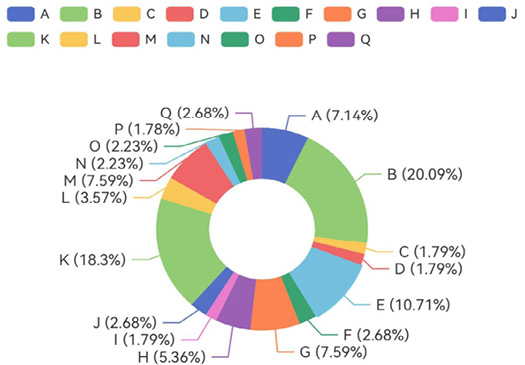
Figure 1 Pie chart of the frequency distribution of mentions for measuring the obligation of tolerance
Note: A = Location of the light pollution infringement; B = Manner and degree of the light pollution infringement; C = Whether the victim could have foreseen that the light pollution would cause harm; D = Whether the tortfeasor emitted light pollution in accordance with customary land use practices; E = whether the perpetrator took necessary countermeasures; F = whether the harm caused by the perpetrator’s emission of light pollution could have been prevented or eliminated by other means; G = whether relevant laws and regulations were violated; H = public interest and public utilities; I = the sequence of land use; J = public perception and personal experience; K = whether normal life and rest were affected; L = the principle of fairness and reasonableness; M = Other special interests of the victim; N = Whether it affects normal work and study; O = External reference opinions; P = Special obligations of the perpetrator; Q = Legitimacy of the perpetrator’s conduct.
As shown in Figure 1, the location where light pollution infringements occur accounts for 7.14%; the manner and degree of light pollution infringements account for 20.09%; whether the victim could have foreseen that light pollution would cause an infringement accounts for 1.79%; whether the perpetrator emitted light pollution in accordance with customary land use practices accounts for 1.79%; and whether the perpetrator took necessary countermeasures accounts for 10.71%;whether the harm caused by the tortfeasor’s emission of light pollution could have been prevented or eliminated by other means accounted for 2.68%; whether there was a violation of relevant laws and regulations accounted for 7.59%; public interest and public utilities accounted for 5.36%;Sequence of land use accounted for 1.79%; public perception and personal experience accounted for 2.68%; whether it affects normal life and rest accounted for 18.30%; the principle of fairness and reasonableness accounted for 3.57%; other special interests of the victim accounted for 7.59%; whether it affects normal work and study accounted for 2.23%; external reference opinions accounted for 2.23%;the perpetrator’s special obligations accounted for 1.78%; the legitimacy of the perpetrator’s actions accounted for 2.68%. Among these, the manner and degree of light pollution infringement accounted for as much as 20.09% of the 17 factors, occupying a dominant position. This indicates that the obligation to tolerate light pollution is still primarily considered from an objective perspective.
Step 3: Based on Figure 1, the target terms were further categorized, resulting in the In-depth Inductive Statistical Table of Obligation of Tolerance Measuring Factors (see Table 1).
Table 1 In-depth Inductive Statistical Table of Obligation of Tolerance Measuring Factors
|
Focus Area |
Target Terms |
Number of Occurrences in 57 Judgments |
Percentage |
Focus Area |
Target Terms |
Number of Occurrences in 57 judgments |
Percentage |
|
Balance Special Interests (10.7%) |
Special obligations of the perpetrator |
4 times |
1.78% |
Other (9.0%) |
External Reference Opinions |
5 times |
2.23% |
|
Fairness and Reasonableness Principle |
8 times |
3.57% |
Other Special Interests of the Victim |
17 times |
7.59% |
||
|
Public Interest and Public Services |
12 times |
5.36% |
Light Pollution The objective Injury Itself (59.8%) |
Whether it affects normal daily life and rest |
41 times |
18.3% |
|
|
The perpetrator’s Degree of fault (19.6%) |
Whether the harm caused by the perpetrator’s emission of light pollution could have been prevented or eliminated by other means |
6 times |
2.68% |
The nature and extent of the light pollution infringement |
45 times |
20.09% |
|
|
Legitimacy of the Perpetrator’s Actions |
6 times |
2.68% |
Location of Light Pollution Incidents |
16 times |
7.14% |
||
|
Whether the victim could have foreseen that light pollution would cause harm |
4 times |
1.79% |
Whether in breach of relevant laws and regulations |
17 times |
7.59% |
||
|
Whether the perpetrator emits light pollution in accordance with the customary use of the land |
4 times |
1.79% |
Public perception and personal experience |
6 times |
2.68% |
||
|
Whether the perpetrator took necessary measures |
24 times |
10.71% |
Sequence of land use |
4 times |
1.79% |
||
|
Whether it affects normal work and study |
5 times |
2.23% |
As shown in Table 1, based on a weighted analysis of judicial documents regarding light pollution cases from 2013 to 2022, this paper categorizes the focus of target terms such as “the tortfeasor’s special obligations” under “balancing special interests”; and categorizes the focus of target terms such as “external reference opinions” under “other”; key terms such as “whether the harm caused by the perpetrator’s emission of light pollution can be prevented or eliminated by other means” were categorized under “degree of the perpetrator’s fault”; and key terms such as “whether it affects normal life and rest” were categorized under “the objective harm of light pollution itself”. Based on the frequency of each key term’s appearance in the 57 judgments, the total frequency of these four categories of factors was calculated. Furthermore, the importance of these four factors in determining the threshold of tolerance varies. Among them, “the objective harm of light pollution itself” accounted for 59.8%, showing the strongest correlation with the standard for assessing the obligation of tolerance; “the tortfeasor’s fault” accounted for 19.6%; “balancing special interests” accounted for 10.7%; and “other” accounted for only 9.8%, with a relatively low weighting among the influencing indicators.
3.3 Research Conclusions
Combining the preliminary findings from theoretical analysis, adhering to a scientific and rigorous approach, and grounded in empirical research, this study conducted a detailed analysis and interpretation of 57 judicial documents. It identified four major categories of factors influencing the determination of the obligation of tolerance: balancing special interests, the degree of the perpetrator’s fault, the objective harm of light pollution itself, and other issues. The following research conclusions are drawn to address the challenges of excessive subjectivity in judicial rulings regarding the obligation of tolerance for light pollution and the ambiguity in the application of existing standards.
3.3.1 Defining the Scope of Light Pollution
Before weighing the obligation of tolerance, it is essential to consider the nature of the pollution itself. It must first be clarified whether the elements of the case fall within the scope of light pollution. If excluded—particularly pollutants explicitly defined by law—they should be judged according to national standards and do not fall under the category discussed in this paper. The method for determining light pollution should directly follow the logic of environmental law: first, examine specific enumerations, then consider abstract principles. The factors relevant to the case should be identified and assessed to determine whether they constitute specific scenarios listed within the concept of light pollution, such as glare pollution or visual pollution. If so, they fall within the scope discussed in this paper and are subject to the standards for the obligation of tolerance regarding light pollution. If not, further assessment is required based on abstract definitions to determine whether it meets the two characteristics of light radiation and negative impacts on humans and the ecological environment. This serves as a catch-all approach to determine whether the element falls within the scope of light pollution and whether the standard of the obligation of tolerance can be applied.
3.3.2 Specific Application of the Obligation of Tolerance and Determination of the Order of Application
Based on the conclusions of the empirical analysis in this paper, it is evident that in China’s judicial practice, “the objective harm of light pollution itself” holds a central position with a high proportion of 59.8%, ranking as the primary factor. This focuses on the manner and extent of the light pollution harm, as well as whether it affects normal life and rest, while also considering the location of the harm, potential violations of relevant laws and regulations, public perception and personal experience, the sequence of land use, and whether it impacts normal work or school operations. Secondly, “the tortfeasor’s fault” ranks second with a proportion of 19.6%, emphasizing considerations such as leniency toward the tortfeasor, whether necessary countermeasures were taken, and the legitimacy of the conduct. Finally, apart from the aforementioned two factors, “balancing special interests”—which includes references to externalities and other special interests of the victim—serves only as a supplementary consideration, is not mandatory, and ranks third. Therefore, when considering the various factors determining the degree of tolerance, the court should take the objective harm caused by light pollution itself as the central axis (primary factor), the degree of the perpetrator’s fault as the secondary axis (secondary factor), and simultaneously incorporate the balancing of special interests and other factors into the scope of consideration (auxiliary factors).
3.3.3 Verifying the Legitimacy of the Conclusion on the Obligation of Tolerance
Given the multi-layered factors required under the standard of the duty to tolerate, the results of its application must be verified from the following two perspectives: First, based on the logic of application and the core of reasoning, one must examine whether the reasoning follows the form of deductive syllogism, whether the adjudication process and conclusions are fully justified, and whether the normative role of procedural rules is emphasized while prioritizing substantive matters, thereby determining the legitimacy of the applied logic. Second, from the perspective of legal principles, while ensuring logical consistency, it is essential to assess whether the conclusions reached under the obligation of tolerance align with fundamental legal principles. This involves a thorough examination in light of existing core principles of environmental law—namely, the principle of protection priority, the precautionary principle, the principle of public participation, and the polluter-pays principle—to conduct a final validation of the conclusions, thereby ensuring the reasonableness and legality of the application of the obligation of tolerance.
Based on the above, a three-step framework for establishing the standard for balancing the obligation of tolerance regarding light pollution can be constructed, serving as a concrete reference for judges in judicial practice.
4 Conclusion
At present, there remains a legislative gap regarding environmental standards for energy-related environmental pollution, such as light pollution. With the development of industrialization and urbanization, as well as technological progress, such pollution will intensify further, and standards for different categories will be introduced in due course. Prior to the enactment of relevant standards and laws, the precise definition of the “tolerance threshold” profoundly impacts the legality and legitimacy of adjudicating light pollution infringement cases. As a typical representative of energy-related environmental pollution, the criteria for determining this threshold can be extended to other forms of energy-related environmental pollution; however, this requires careful consideration of various influencing factors and adjustments based on regional and social contexts. Therefore, future research should focus on further refining the criteria for determining the tolerance level of energy-related environmental pollution. Joint efforts among governments, enterprises, and the public are required to promote the enactment of relevant laws, regulations, and environmental standards—such as light quality standards, light pollution emission standards, and the Light Pollution Prevention and Control Law—to provide institutional safeguards for the protection of natural resources, the environment, and ecosystems. This will serve as a reference and guide for future light pollution and energy-related environmental pollution management, fostering harmonious coexistence between humanity and nature.
References
[1] Chen, Y. X. (2021). On private law remedies for injuries caused by intangible objects (Master’s dissertation). Nanjing Normal University. https://doi.org/10.27245/d.cnki.gnjsu.2021.001606
[2] Li, Y. G. (2007). The legal theory of the duty to tolerate reasonable harm: A case-based analysis and review of doctrinal perspectives. Law, (7), 121–127.
[3] Liu, X. H. (2008). A preliminary study on legislation for the prevention and control of light pollution in China. Hebei Law Review, (7), 135.
[4] Ran, C. G., Wu, K. M., & Li, Y. X. (2022). Understanding and reference to the case of Li Jin v. China Resources Land (Chongqing) Co., Ltd. on environmental pollution liability disputes: Factual determination and liability in light pollution cases. People’s Justice, (11), 50–53.