Current Views: 365812
 Current Downloads: 220407
Advances in Linguistics Research
ISSN Print:2707-2622
ISSN Online:2707-2630
Contact Editorial Office


Subscribe to the latest published information from SCISCAN
Algorithmic Translanguaging and Cultural Legibility: AI-Mediated Language Practices in Chinese Digital Platforms


-
Information:
1. Department of Communication, Faculty of Humanities and Social Sciences, Beijing Normal-Hong Kong Baptist University, Zhuhai, China;
2. Jiangxi Normal University, Nanchang, China
-
Keywords:
Algorithmic Translanguaging; Cultural Legibility; Chinese Digital Platforms; AI‑Mediated Communication; Management of Internet Information Services
- Abstract: Multilingual expression on Chinese digital platforms is becoming increasingly contingent on algorithmic ranking, machine translation (MT), recommendation architectures, and platform-specific norms of visibility. Existing research has richly examined translanguaging as fluid repertoire practice and has separately analyzed platform power, yet less attention has been paid to how algorithmic infrastructures make some multilingual practices culturally legible while rendering others peripheral, humorous, risky, or unintelligible. Drawing on translanguaging theory, language ideology, platform affordance theory, and AI-mediated communication, this article develops a bounded conceptual and interpretive framework for analyzing algorithmic translanguaging in Chinese digital platforms. It argues that platform-mediated multilingual practice is not merely a product of user creativity or code choice; it is a relational process through which linguistic resources are selected, ranked, translated, normalized, and recirculated by human and computational actors. The proposed Algorithmic Translanguaging-Cultural Legibility Model distinguishes four mechanisms: algorithmic visibility sorting, interface-driven performance calibration, computational meaning standardization, and platform linguistic governance. The analysis demonstrates how translanguaging operates simultaneously as creative repertoire, platform vernacular, and object of infrastructural evaluation. This article contributes to digital sociolinguistics by systematically integrating translanguaging theory with algorithmic platform studies and proposing a bounded, analytically usable model. It does not claim theoretical novelty in translanguaging or platform studies separately, but offers an integrated framework for examining their mutual shaping.
- DOI: 10.35534/lin.0802008
- Cite: He, H. Y., & He, X. Y. (2026). Algorithmic Translanguaging and Cultural Legibility: AI-Mediated Language Practices in Chinese Digital Platforms. Advances in Linguistics Research, 8 (2), 82-94.
1 Introduction
Digital platforms have become central environments in which linguistic repertoires are performed, evaluated, and circulated. In Chinese digital contexts such as Weibo, WeChat, Bilibili, Xiaohongshu, and Douyin, multilingual and multimodal communication routinely exceeds the neat boundaries of named languages. Users hybridize Mandarin, regional varieties, English fragments, romanized spellings, emojis, subtitles, dialect stylizations, platform slang, and algorithmically suggested expressions, drawing on multimodal resources whose meaning is organized across language, image, sound, and interface design (Kress, 2010). Such practices transcend the conventional paradigm of code-switching as movement between two stable linguistic systems. They are better understood as translanguaging: the situated selection of resources from a speaker’s communicative repertoire in response to audience, medium, identity, and social meaning (García & Li, 2014; Li, 2018; Otheguy et al., 2015). Yet platform-mediated translanguaging also differs from face-to-face multilingual interaction. It unfolds in infrastructures where recommendation algorithms, machine translation, search functions, content moderation, hashtags, metrics, and platform vernaculars help determine which linguistic performances become visible, searchable, valuable, or risky (Androutsopoulos, 2015; Gillespie, 2014; Zappavigna, 2015).
The central problem addressed here is that digital sociolinguistics lacks a robust theoretical framework for how algorithmic mediation changes the conditions of translanguaging. Research on networked multilingualism has shown that digital writers use language choice to manage heterogeneous audiences and contexts (Androutsopoulos, 2015). Studies of Chinese social media have demonstrated that translanguaging can index creativity, self-presentation, local identity, youth style, and ideological contestation (Li & Wang, 2024; Qi & Li, 2023; Ren et al., 2022; Zhang & Ren, 2022; Zhao & Liu, 2021). Platform studies, meanwhile, have emphasized that platforms are not neutral channels: they organize communication through affordances, policies, metrics, and algorithmic judgments (Bucher, 2017; Bucher & Helmond, 2018; Gillespie, 2010; van Dijck et al., 2018). The missing link lies between these conversations. Translanguaging on a platform is not only produced by users; it is sorted, interpreted, translated, and recirculated by infrastructures. A multilingual phrase becomes socially effective only when it is legible to multiple actors: peers, imagined audiences, recommendation systems, search engines, machine translation tools, moderators, and wider cultural publics.
This article develops the concept of algorithmic translanguaging to capture this infrastructural condition. Algorithmic translanguaging refers to multilingual and multimodal repertoire practice as it is shaped by platform architectures, automated mediation, and algorithmic visibility regimes. The concept does not imply that algorithms independently create language. Rather, it foregrounds the relational process through which user creativity and computational ordering become mutually constitutive. A Cantonese-English pun, a romanized Chinese meme, a dialectal short-video catchphrase, or a bilingual self-praise formula does not circulate solely because it is linguistically inventive. It circulates because platform infrastructures make it retrievable, recognizable, translatable, recommendable, and effectively engaging. Conversely, some forms of linguistic diversity remain low-ranking, poorly translated, contextually flattened, or treated as non-standard speech. In this sense, platforms do not merely host multilingual expression; they participate in the production of linguistic value.
2 Literature Review
2.1 Translanguaging, Repertoire, and Digital Multilingualism
Translanguaging theory evolved as a conceptual intervention against language-separation models that treat multilingual speakers as alternating between discrete codes. García and Li (2014) argue that bilingual and multilingual practice draws on integrated repertoires rather than sealed linguistic compartments. Otheguy et al. (2015) further clarify that translanguaging is not simply another name for code-switching; it challenges the assumption that named languages transparently correspond to the internal linguistic systems of speakers. Li (2018) develops translanguaging as a practical theory of language by emphasizing creativity, criticality, and the lived realities of twenty-first-century communication. This orientation is particularly productive for digital environments as platform users combine alphabetic scripts, characters, images, sound, gesture, subtitles, screenshots, abbreviations, and algorithmically stabilized slang in ways that transcend monolingual analytic categories.
The concept of repertoire is crucial. Agha (2007) links linguistic forms to registers, personae, and social relations, while Bauman and Briggs (2003) show how language becomes entangled with modern regimes of authority, authenticity, and voice. Blommaert and Rampton (2011) argue that superdiverse conditions require attention to mobile, layered, and unequal semiotic resources. Pennycook and Otsuji’s (2015) work on metrolingualism likewise shifts attention from languages as objects to language practices as situated assemblages of people, place, materiality, and social relations. These approaches reconceptualize digital platforms not merely as online spaces but as mediated environments in which repertoires are assembled, evaluated, and recontextualized.
Digital multilingualism research has extended these concerns to networked communication. Androutsopoulos (2015) proposes networked multilingualism to describe multilingual practices shaped by digital connection and embeddedness in the web. This concept is important because online communication often involves collapsed audiences, partial visibility, and asynchronous circulation. Jones et al. (2015) similarly show that digital discourse analysis must attend to the practices, tools, and material arrangements through which meaning is produced. For social media, Zappavigna (2015) demonstrates how hashtags organize searchable talk, linking linguistic forms to ambient affiliation and algorithmically retrievable publics. These insights are essential for studying Chinese digital platforms, where hashtags, hot-search rankings, danmu comments, algorithmic feeds, and platform-specific slang shape the circulation of linguistic
resources.
2.2 Language Ideology, Visibility, and the Politics of Standardization
Translanguaging practices are never ideologically neutral. Language ideologies attach value, authenticity, class position, regional identity, and legitimacy to particular forms. Irvine and Gal (2000) identify processes such as iconization, fractal recursivity, and erasure through which linguistic differences are naturalized and socially ordered. In digital environments, these processes are intensified because platform metrics and visibility systems can amplify some ideological judgments while making others appear as common sense. A dialectal expression may become a marker of local pride, comedic authenticity, rurality, backwardness, trendiness, or subcultural intimacy depending on how it is framed, circulated, and evaluated.
Chinese digital contexts provide a rich site for this problem. Zhao and Liu (2021) analyze discussions of regional Putonghua on Weibo and show how standard spoken and written Chinese language positions regional varieties as non-standard while also allowing them to index local belonging. Studies of Chinese platform discourse also demonstrate that multilingual forms can become resources for youth creativity and social positioning. Qi and Li (2023) examine translanguaging hybrids on WeChat, showing how Chinese university students use language play to create creative digital identities. Ren et al. (2022) analyze Chinese young people’s attitudes toward translanguaging in self-praise on social media, demonstrating that such practices are judged through norms of appropriateness, gender, and social evaluation. Zhang and Ren (2022) show how a popular Weibo expression can be creatively reworked through translanguaging, while Lin et al. (2024) examine Chinese language play in micro-blogging through translanguaging practices. These studies collectively show that digital multilingual creativity is always evaluated through situated ideologies of standardness, cosmopolitanism, humor, authenticity, and classed taste.
The term cultural legibility captures the moment at which a linguistic practice becomes recognizable within a given interpretive regime. Legibility is not identical to comprehensibility. A phrase may be semantically accessible yet remain devoid of cultural legibility if its pragmatic force, regional indexicality, irony, or identity work is lost. Conversely, a dialectal or hybrid form may be partly opaque but highly legible as a marker of style, belonging, or platform intimacy. This distinction is central for algorithmic environments, where visibility and recognition are not always based on semantic depth. Platforms can reward signs that are effectively recognizable, quickly classifiable, searchable, repeatable, and compatible with existing categories. They can also flatten ambiguous or context-dependent meanings into standard labels, automatic translations, or content categories.
2.3 Platform Affordances, Algorithms, and AI-Mediated Communication
A platform perspective is necessary because digital language practice is shaped by more than users’ intentions. Affordance theory begins from the insight that environments both enable and constrain action (Gibson, 1979/2014). Hutchby (2001) adapts this idea to communication technologies, arguing that affordances should be understood as both enabling and constraining the social uses of artifacts. Bucher and Helmond (2018) extend this logic to social media platforms, where affordances involve not only visible interface features but also infrastructural relations among users, software, data, and business models. In a platform feed, language is not simply posted; it is formatted, tagged, recommended, ranked, monetized, translated, and moderated.
Platform studies have established that platform infrastructures function as political and cultural agents. Gillespie (2010) argues that the term platform itself performs strategic work by presenting commercial intermediaries as neutral facilitators. Gillespie (2014) later emphasizes that algorithms are not abstract technical procedures but socio-material systems that include institutional priorities, classifications, and practices of relevance. Bucher (2017) adds that users form algorithmic imaginaries: practical beliefs about how algorithms see and value them. Van Dijck et al. (2018) further demonstrate that platforms reorganize public values through datafication, commodification, and selection. For digital sociolinguistics, these arguments imply that multilingual visibility is not simply a function of audience uptake. It is mediated by systems that evaluate signs according to engagement, retention, policy compliance, marketability, and categorizability.
AI-mediated communication adds another layer to this problem. Hancock et al. (2020) define AI-mediated communication as human communication in which computational agents modify, augment, or produce messages for interpersonal goals. Mieczkowski et al. (2021) and Hohenstein et al. (2023) show that algorithmic response suggestions can alter language use and social perception, indicating that AI tools are not merely assistive but socially consequential. In multilingual platform contexts, machine translation, caption generation, keyword recommendation, search optimization, and suggested replies can similarly reshape what users say and how others interpret it. Paullada and Haroutunian (2026) argue that machine translation on social media should be evaluated through language justice, transparency, and consent, not only access. Leung (2026) likewise frames digital multilingualism as a management of internet information services problem, emphasizing that platforms regulate who can speak, to whom, and under what linguistic conditions. These recent interventions make it necessary to connect translanguaging theory with AI-mediated infrastructures.
2.4 Chinese Digital Platforms and the Unresolved Problem of Cultural Legibility
Chinese digital platforms intensify the question of cultural legibility because they combine high-speed vernacular innovation, strong platform-specific genres, multilingual aspiration, regional language ideologies, and algorithmic visibility systems. Li and Wang (2024) analyze translanguaging strategies and online self-presentation through internet slang on Douyin, showing that short-video contexts make linguistic hybridity inseparable from visual style, persona, and algorithmic attention. Qi and Li (2023) show how WeChat facilitates translanguaging hybrids as creative language play among university students. Zhao and Liu’s (2021) analysis of Weibo demonstrates that discussions of non-standard Putonghua are simultaneously linguistic, ideological, and affective. These studies provide strong empirical grounding, but they rarely place automated ranking and translation at the center of theoretical explanation.
3 Theoretical Framework: Algorithmic Translanguaging and Cultural Legibility
The framework proposed here rests on three premises. First, language practice is repertoire-based. Multilingual speakers select resources from complex semiotic repertoires rather than switching mechanically among bounded languages (García & Li, 2014; Li, 2018; Otheguy et al., 2015). Second, platform environments are affordance structures. They enable some communicative actions, constrain others, and embed social life in data-driven infrastructures (Bucher & Helmond, 2018; Hutchby, 2001). Third, cultural recognition is mediated. Linguistic forms become legible through ideological and institutional systems that evaluate what counts as standard, authentic, stylish, local, cosmopolitan, humorous, or risky (Agha, 2007; Irvine & Gal, 2000). Algorithmic translanguaging names the point at which these three premises meet.
Algorithmic translanguaging can be defined as repertoire-based multilingual and multimodal practice shaped by platform affordances, algorithmic ordering, and automated mediation. The concept does not treat algorithms as autonomous speakers. Instead, it foregrounds how algorithmic systems participate in the conditions of speech. They rank content, recommend audiences, produce captions, translate text, cluster hashtags, detect keywords, and transform linguistic forms into data categories. In doing so, they affect the social afterlife of multilingual expression. A user’s hybrid phrase may be intended as irony, intimacy, cosmopolitan play, or local pride; the platform may process it as a keyword, engagement cue, risk marker, searchable tag, or translation object. The resulting meaning is not controlled by either user or system alone.
Cultural legibility is the second key term, referring to the degree to which a linguistic practice becomes recognizable, interpretable, and circulable within a specific social and infrastructural context. Cultural legibility has at least four dimensions. Semantic legibility concerns whether an utterance can be understood. Pragmatic legibility concerns whether its implied meaning, stance, humor, or politeness is recognized. Indexical legibility concerns whether it successfully points to identities, regions, communities, or values. Algorithmic legibility concerns whether it can be classified, ranked, translated, and recommended by platform systems. These dimensions may diverge from one another. A dialect joke may be semantically opaque but indexically powerful; a machine translation may be semantically serviceable but pragmatically misleading; a platform tag may be algorithmically legible while culturally thin.
To avoid collapsing all platform effects into an undifferentiated mechanism, the model distinguishes four bounded but sequentially related processes. Algorithmic visibility sorting refers specifically to the distribution of exposure through ranking, recommendation, clustering, and search. Interface-driven performance calibration refers to users’ adaptive self-presentation in response to interface cues, metrics, and algorithmic imaginaries. Computational meaning standardization refers to machine translation, auto-captions, speech recognition, and other tools that transform culturally dense utterances into standardized outputs. Platform linguistic governance refers to moderation, normalization, and value assignment through which platforms and users decide which forms count as acceptable, marketable, authentic, risky, or peripheral. These four mechanisms overlap empirically but are analytically separable: the first concerns visibility, the second user adaptation, the third semantic transformation, and the fourth normative regulation.
The framework, therefore, shifts the analytic question from what languages are mixed to how multilingual practices are made consequential. Translanguaging is not only a speaker’s resource; it is also a platform event. It involves users who mobilize repertoires, interfaces that invite particular formats, algorithms that sort visibility, translation systems that standardize or distort meaning, and audiences that reinterpret signs across contexts. This model is especially useful for Chinese digital platforms because they combine multiple writing systems, regional varieties, English-oriented prestige, local humor, multimodal memes, and rapid algorithmic circulation. It allows researchers to study linguistic practice without separating it artificially from the infrastructures through which it becomes public.
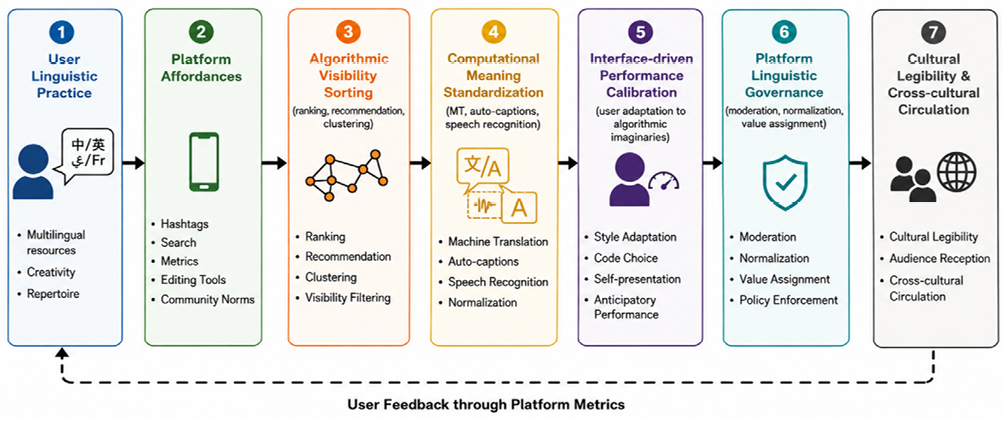
Figure 1 The Algorithmic Translanguaging-Cultural Legibility Model
Table 1 Key Theoretical Constructs and Analytical Functions
|
Construct |
Core meaning |
Analytical function in the model |
|
Translanguaging |
Repertoire-based use of linguistic and semiotic resources beyond named-language boundaries. |
Explains how users creatively assemble multilingual and multimodal forms. |
|
Algorithmic visibility sorting |
Ranking, recommendation, clustering, trending, and search-based distribution of exposure. |
Identifies how multilingual expression becomes more or less publicly visible. |
|
Interface-driven performance calibration |
User adaptation to interface cues, metrics, and algorithmic imaginaries. |
Explains how users adjust captions, hashtags, scripts, and explanations after audience or metric feedback. |
|
Computational meaning standardization |
Machine translation, auto-captions, speech recognition, and suggested wording that transform linguistic form. |
Explains how culturally dense expression may become technically readable but pragmatically thinner. |
|
Platform linguistic governance |
Moderation, normalization, monetization, and value assignment around linguistic forms. |
Explains how platforms and audiences assign legitimacy, risk, authenticity, or marginality. |
|
Cultural legibility |
Recognition of semantic, pragmatic, indexical, and algorithmic meaning. |
Explains whether multilingual practices become understandable, valued, or misrecognized. |
Note: The constructs are designed for conceptual integration rather than variable measurement.
4 Methodology / Analytical Approach
This article uses a conceptual and interpretive analytical design. The argument is developed through a theoretically guided synthesis of scholarship on translanguaging, digital multilingualism, language ideology, platform affordances, algorithmic mediation, AI-mediated communication, and Chinese social media discourse. This design is appropriate because the article’s main purpose is not to report a bounded empirical case, but to build a conceptual framework that can guide subsequent empirical inquiry. Conceptual work is particularly valuable when existing research traditions have developed separately and require theoretical integration.
The analytical procedure involved four steps. First, core concepts were selected from sociolinguistics and applied linguistics: translanguaging, repertoire, networked multilingualism, and language ideology. Second, these concepts were connected to platform studies concepts: affordance, algorithmic relevance, datafication, and management of internet information services. Third, recent studies of Chinese digital platforms were used as interpretive anchors, especially work on WeChat translanguaging hybrids, Weibo regional Putonghua ideology, Weibo and Douyin internet slang, and micro-blogging language play (Li & Wang, 2024; Lin et al., 2024; Qi & Li, 2023; Ren et al., 2022; Zhang & Ren, 2022; Zhao & Liu, 2021). Fourth, the concept of cultural legibility was developed to link human recognition and algorithmic classification.
5 Analytical Discussion
The following analysis treats the four mechanisms as distinct analytical lenses, not as mutually exclusive empirical stages. In practice, a single multilingual post may be shaped by all four: a user may adapt wording to platform metrics, the post may be ranked or clustered by recommendation systems, its meaning may be standardized through captions or translation, and its value may be judged through moderation rules or community norms. Their separation is therefore methodological. It prevents the analysis from using the algorithm as a catch-all explanation and clarifies whether a particular observation concerns visibility, user adaptation, semantic standardization, or governance.
5.1 Algorithmic Visibility Sorting (Ranking, Recommendation, Clustering)
The first mechanism is algorithmic visibility sorting. Platforms distribute exposure through recommendation feeds, hot lists, trending tags, search rankings, and engagement metrics. In such environments, multilingual practice is not equally available to public recognition. Certain forms achieve heightened visibility due to their brevity, iterability, and affective resonance, and are compatible with platform categories. Others remain peripheral because they are difficult to classify, poorly matched to dominant engagement signals, or too dependent on local context. Gillespie’s (2014) argument about algorithmic relevance is therefore directly sociolinguistic: relevance systems shape not only information access but also linguistic value.
Chinese social media illustrates this process vividly. Expressions such as romanized internet slang, hybrid English-Chinese catchphrases, dialectal performance, and bilingual self-presentation can become visible when they fit platform vernaculars. Zhang and Ren (2022) show how Chinese micro-blogging users creatively rework a hip-hop-derived expression through translanguaging, while Li and Wang (2024) show that Douyin slang can support online self-presentation. These practices gain force not only from multilingual creativity but also from the platform’s capacity to circulate stylized repetition. Searchability, tagging, shareability, and recommendation all contribute to cultural uptake. Zappavigna’s (2015) account of hashtags as searchable talk helps explain why platform forms can transform a phrase into an affiliation device. A hybrid expression becomes more than a linguistic token; it becomes a node in a searchable public.
5.2 Interface-Driven Performance Calibration (User Adaptation to Algorithmic Imaginaries)
The second mechanism is interface-driven performance calibration. Platform interfaces invite users to adjust linguistic performance according to imagined audiences and anticipated algorithmic judgments. Users do not merely produce linguistic output; they strategically compose for algorithmic visibility, commentability, searchability, and affective uptake. Bucher (2017) shows that users develop algorithmic imaginaries, practical theories of what platforms reward or penalize. In multilingual contexts, such imaginaries affect language choice, script choice, captioning, hashtagging, and the degree of explanation attached to local expressions. Translanguaging becomes a calibrated performance shaped by the interface and the user’s anticipation of algorithmic reception.
This calibration is particularly evident in self-presentation. Ren et al. (2022) show that Chinese young people’s evaluations of translanguaging in self-praise are governed by judgments of appropriateness, gender, and social meaning. Qi and Li (2023) show that WeChat translanguaging hybrids nurture creative language play among university students. These practices are not merely expressive. They position users in relation to taste, education, cosmopolitanism, localness, humor, and peer intimacy. On platforms where metrics make reception visible, users receive immediate feedback about which combinations of linguistic resources work. Likes, reposts, comments, saves, follower growth, and comment tone become semiotic feedback systems. In this sense, metrics help teach users what kinds of translanguaging are culturally legible.
The feedback loop in Figure 1 is therefore not a decorative element but a conceptual claim about iterative adaptation. After a hybrid expression receives measurable uptake, users may repeat its structure, simplify local references, add explanatory subtitles, attach searchable hashtags, or intensify bilingual contrast in later posts. Conversely, weak engagement or hostile comments may lead users to abandon dialectal forms, avoid ambiguous romanization, or translate culturally specific phrases more explicitly. Metrics do not directly determine these choices; rather, they provide cues through which users infer what the platform and its audiences have recognized as legible, valuable, or risky. Interface-driven calibration thus links user agency to platform evaluation without reducing either side to the other.
5.3 Computational Meaning Standardization (Machine Translation, Auto-Captions, Speech Recognition)
The third mechanism is computational, meaning standardization. Machine translation, automatic captions, speech recognition, suggested replies, and content classification systems transform linguistic forms into standardized outputs. These tools can expand access across language boundaries, but they can also flatten cultural nuance. Hancock et al. (2020) and Hohenstein et al. (2023) show that AI-mediated communication can alter language use and interpersonal perception. In multilingual platform contexts, the stakes are not only interpersonal efficiency; they include cultural legibility, language justice, and the distribution of interpretive authority.
Machine translation is especially ambivalent. A translated caption may allow a viewer outside the original linguistic community to enter the conversation. It may also remove tone, dialectical texture, punning, irony, and affective stance. Paullada and Haroutunian (2026) argue that social media machine translation should be assessed through transparency and language justice rather than simple inclusion. This argument matters for Chinese digital platforms because many platform expressions depend on pragmatic density. A phrase may rely on the visual shape of Chinese characters, homophony, romanized spelling, regional pronunciation, or the sociolinguistic value of English as both a global resource and an object of irony. Machine translation often privileges denotational equivalence over indexical meaning. As a result, a culturally dense expression can become semantically readable but socially thin.
5.4 Platform Linguistic Governance (Moderation, Normalization, Value Assignment)
The fourth mechanism is platform linguistic governance. Digital platforms can be extraordinarily productive sites of language innovation. They allow users to remix resources across languages, modalities, regions, and genres. They also stabilize some innovations into recognizable platform vernaculars. A meme phrase, dialect clip, or hybrid expression can quickly become a shared cultural resource. This creativity aligns with translanguaging theory’s emphasis on flexible repertoire use and critical meaning-making (Canagarajah, 2013; Li, 2018).
However, vernacular creativity is never outside governance. Management of internet information services operates through content rules, moderation systems, monetization policies, recommendation architectures, automated linguistic tools, and community-level judgments of taste or acceptability. Van Dijck et al. (2018) argue that platforms reorganize public values through mechanisms of selection and datafication. For language, this means that the social life of vernacular expression is mediated by institutional categories and audience evaluations. A dialect may be encouraged as local flavor in entertainment contexts but marginalized in serious discourse. English may be valued as cosmopolitan capital, but mocked when perceived as pretentious. Romanized Chinese may be celebrated as youth creativity or dismissed as non-standard. These judgments are not simply imposed from above; they circulate through users, metrics, comments, and algorithmic feedback. Platform linguistic governance, therefore, names the normative process through which multilingual forms are assigned value, risk, legitimacy, or marginality.
Table 2 Platform-Mediated Language Practices and Cultural Effects
|
Practice |
Primary mechanism |
Possible cultural effect |
|
Bilingual captioning |
Computational meaning standardization |
Expanded access, but possible loss of pragmatic or affective nuance. |
|
Dialectal short-video speech |
Platform linguistic governance |
Local authenticity and humor, but potential stereotyping or narrow legibility. |
|
Romanized Chinese slang |
Algorithmic visibility sorting |
Creative affiliation, but possible standardization into repeatable attention cues. |
|
Hashtagged multilingual expression |
Interface-driven performance calibration |
Community formation and discoverability, but reduced contextual specificity. |
6 Discussion
The revised framework contributes to digital sociolinguistics by treating visibility as a linguistic condition rather than merely a communicative outcome. Existing studies of translanguaging have persuasively shown that multilingual speakers mobilize integrated repertoires to create meaning, negotiate identity, and resist rigid language boundaries (García & Li, 2014; Li, 2018; Otheguy et al., 2015). The present argument adds that, on platforms, such repertoire work becomes socially consequential only through infrastructures of ranking, tagging, recommendation, translation, moderation, and metric feedback. Algorithmic translanguaging, therefore, shifts analytical attention from the presence of multilingual forms to the processes by which those forms become legible, searchable, repeatable, and valuable. This shift is especially necessary for Chinese digital platforms, where linguistic creativity often depends on multimodal montage, dialect stylization, abbreviated scripts, homophony, and platform-specific humor.
The four revised mechanisms clarify the model’s analytical boundaries. Algorithmic visibility sorting explains distribution and exposure; interface-driven performance calibration explains user adaptation to algorithmic imaginaries; computational meaning standardization explains the transformation of culturally dense signs into technical outputs; platform linguistic governance explains moderation, normalization, and value assignment. Their separation matters because the same multilingual expression may be visible but poorly translated, semantically translated but pragmatically flattened, or creatively received by users but constrained by moderation and monetization rules. A model that treats all of these processes simply as algorithmic mediation would obscure important differences between ranking, adaptation, translation, and governance.
The model also clarifies why cultural legibility is not equivalent to translation accuracy. Machine translation may make a phrase semantically accessible while weakening its pragmatic force, local indexicality, or affective stance. Conversely, an expression may remain partly opaque yet circulate powerfully because users recognize it as a sign of locality, youth affiliation, ironic cosmopolitanism, or subcultural intimacy. This distinction matters for language justice. If platform infrastructures privilege language forms that are easy to classify, monetize, or translate, then linguistic diversity may be included only after being standardized. The problem is not only whether platforms support more languages; it is whether their infrastructures can preserve pragmatic density, regional specificity, and culturally situated meaning (Leung, 2026; Paullada & Haroutunian, 2026).
Methodologically, the article suggests that future research should combine digital discourse analysis with platform-sensitive observation. Researchers cannot adequately analyze algorithmic translanguaging by collecting textual tokens alone. They should also document the interface location of the text, the affordances through which it is encountered, the hashtags and recommendation contexts that frame it, the machine translations or captions that accompany it, and the forms of audience feedback that stabilize its value. Such an approach would connect the micro-analysis of linguistic creativity with the meso-level study of platform genres and the macro-level critique of algorithmic governance. It would also allow comparative work across Weibo, WeChat, Bilibili, Xiaohongshu, and Douyin, where the same linguistic resource may acquire different meanings under different architectures of visibility.
The framework has practical implications for platform design and multilingual communication policy. Platforms that rely on machine translation and moderation should treat hybrid, dialectal, and multimodal expressions as culturally dense rather than technically noisy. Interface design could make translation uncertainty visible, allow community-based contextual notes, and avoid treating standard written language as the default measure of communicative legitimacy. For cross-cultural communicators, the model cautions against assuming that multilingual reach automatically produces cultural recognition. Digital circulation can increase exposure while narrowing interpretive complexity. A more responsible approach to platform multilingualism would therefore evaluate not only access and engagement but also the quality of cultural interpretation enabled by platform systems.
7 Conclusion
Chinese digital platforms provide a critical site for rethinking multilingualism under algorithmic conditions. Users creatively combine linguistic and semiotic resources to perform identity, humor, intimacy, locality, and cosmopolitan aspiration. Yet these practices do not become socially consequential by creativity alone. They are made visible, searchable, translatable, rankable, and governable through platform infrastructures. This article advances the construct of algorithmic translanguaging for analyzing this condition and cultural legibility as a way to evaluate how multilingual practices become recognizable across human and computational contexts.
The Algorithmic Translanguaging-Cultural Legibility Model identifies four analytically bounded mechanisms: algorithmic visibility sorting, interface-driven performance calibration, computational meaning standardization, and platform linguistic governance. Together, they show that digital multilingualism is neither free-floating creativity nor simple technological determination. It is a negotiated process in which users mobilize repertoires within infrastructures that evaluate and redistribute linguistic value. This article contributes to digital sociolinguistics by systematically integrating translanguaging theory with algorithmic platform studies and proposing a bounded, analytically usable model. It does not claim theoretical novelty in translanguaging or platform studies separately, but offers an integrated framework for examining their mutual shaping.
For linguistics, this means that new methods must attend not only to linguistic forms but also to the platform conditions that make forms circulate. For translation and cross-cultural communication, it means that A critical distinction must be maintained between mere access and culturally adequate recognition. For Chinese digital media research, it means that regional, hybrid, and multilingual expression should be analyzed as both vernacular creativity and infrastructural politics. Future empirical work can apply the model to comparative platform corpora, creator interviews, interface walkthroughs, or studies of machine translation and captioning, thereby testing how different mechanisms interact across platform ecologies.
References
[1] Agha, A. (2007). Language and social relations. Cambridge University Press.
[2] Androutsopoulos, J. (2015). Networked multilingualism: Some language practices on Facebook and their implications. International Journal of Bilingualism, 19(2), 185–205.
[3] Bauman, R., & Briggs, C. L. (2003). Voices of modernity: Language ideologies and the politics of inequality. Cambridge University Press.
[4] Blommaert, J., & Rampton, B. (2011). Language and superdiversity. Diversities, 13(2), 1–21.
[5] Bucher, T. (2017). The algorithmic imaginary: Exploring the ordinary effects of Facebook algorithms. Information, Communication & Society, 20(1), 30–44.
[6] Bucher, T., & Helmond, A. (2018). The affordances of social media platforms. In J. Burgess, A. Marwick, & T. Poell (Eds.), The SAGE handbook of social media (pp. 233–253). SAGE.
[7] Canagarajah, S. (2013). Translingual practice: Global Englishes and cosmopolitan relations. Routledge.
[8] García, O., & Li, W. (2014). Translanguaging: Language, bilingualism and education. Palgrave Macmillan.
[9] Gibson, J. J. (2014). The ecological approach to visual perception: Classic edition. Psychology Press. (Original work published 1979).
[10] Gillespie, T. (2010). The politics of platforms. New Media & Society, 12(3), 347–364.
[11] Gillespie, T. (2014). The relevance of algorithms. In T. Gillespie, P. J. Boczkowski, & K. A. Foot (Eds.), Media technologies: Essays on communication, materiality, and society (pp. 167–194). MIT Press.
[12] Hancock, J. T., Naaman, M., & Levy, K. (2020). AImediated communication: Definition, research agenda, and ethical considerations. Journal of ComputerMediated Communication, 25(1), 89–100.
[13] Hohenstein, J., Kizilcec, R. F., DiFranzo, D., Aghajari, Z., Mieczkowski, H., Levy, K., Naaman, M., Hancock, J., & Jung, M. F. (2023). Artificial intelligence in communication impacts language and social relationships. Scientific Reports, 13, Article 5487.
[14] Hutchby, I. (2001). Technologies, texts and affordances. Sociology, 35(2), 441–456.
[15] Irvine, J. T., & Gal, S. (2000). Language ideology and linguistic differentiation. In P. V. Kroskrity (Ed.), Regimes of language: Ideologies, polities, and identities (pp. 35–83). School of American Research Press.
[16] Jones, R. H., Chik, A., & Hafner, C. A. (2015). Discourse and digital practices: Doing discourse analysis in the digital age. Routledge.
[17] Kress, G. (2010). Multimodality: A social semiotic approach to contemporary communication. Routledge.
[18] Leung, J. H. C. (2026). Digital multilingualism and management of internet information services. Cambridge University Press.
[19] Li, W. (2018). Translanguaging as a practical theory of language. Applied Linguistics, 39(1), 9–30.
[20] Li, Z., & Wang, L. (2024). Investigating translanguaging strategies and online selfpresentation through internet slang on Douyin (Chinese TikTok). Applied Linguistics Review, 15(6), 2823–2855.
[21] Lin, Z., Wang, F., Mao, Y., & Wang, F. (2024). Understanding microblogging users’ translanguaging in Chinese language play: A qualitative phenomenological approach. Applied Linguistics Review, 15(6), 2493–2514.
[22] Mieczkowski, H., Hancock, J. T., Naaman, M., Jung, M. F., & Hohenstein, J. (2021). AImediated communication: Language use and interpersonal effects in a referential communication task. Proceedings of the ACM on HumanComputer Interaction, 5(CSCW1), Article 154.
[23] Otheguy, R., García, O., & Reid, W. (2015). Clarifying translanguaging and deconstructing named languages: A perspective from linguistics. Applied Linguistics Review, 6(3), 281–307.
[24] Paullada, A., & Haroutunian, L. (2026). Language justice and machine translation on social media. Modern Languages Open, (1), Article 7.
[25] Pennycook, A., & Otsuji, E. (2015). Metrolingualism: Language in the city. Routledge.
[26] Qi, F., & Li, J. (2023). Chinese university students’ translanguaging hybrids on WeChat: Creativity nurtured language play in the context of a Chinese digital social media. English Today, 39(4), 297–306.
[27] Ren, W., Guo, Y., & Li, W. (2022). Chinese young people’s attitudes towards translanguaging in selfpraise on social media. Journal of Pragmatics, 198, 93–103.
[28] Van Dijck, J., Poell, T., & de Waal, M. (2018). The platform society: Public values in a connective world. Oxford University Press.
[29] Zappavigna, M. (2015). Searchable talk: The linguistic functions of hashtags. Social Semiotics, 25(3), 274–291.
[30] Zhang, Y., & Ren, W. (2022). This is so skrrrrr: Creative translanguaging by Chinese microblogging users. International Journal of Multilingualism, 19(3), 289–304.
[31] Zhao, H., & Liu, H. (2021). Standard language ideology and regional Putonghua in Chinese social media: A view from Weibo. Journal of Multilingual and Multicultural Development, 42(9), 882–896.