
 Current Views: 939734
 Current Downloads: 624589
Progress in Social Sciences
ISSN Print:2664-6943
ISSN Online:2664-6951
Contact Editorial Office



Subscribe to the latest published information from SCISCAN
老年数字鸿沟治理的政策工具逻辑与优化研究
A Study on the Logic and Optimization of Policy Tools for Addressing the Digital Divide Among the Elderly


-
Information:
南京工业大学,南京
-
Keywords:
Digital divide among the elderly; Policy tools; Digital governance; Age-friendly design; Silver economy老年数字鸿沟; 政策工具; 数字治理; 适老化; 银发经济
- Abstract: Against the backdrop of the deepening overlap between population aging and digital transformation, the digital divide among the elderly has become a critical issue affecting the equitable provision of public services and the development of social inclusion. Drawing on policy instrument theory, this study constructs a three-dimensional analytical framework comprising “policy instruments—stakeholders—policy objectives.” It selects 15 relevant policy documents issued at the central government level between 2020 and 2025 and employs NVivo 15 to conduct coding analysis of the policy texts. The study finds that current governance of the digital divide among the elderly exhibits a structural characteristic dominated by environmental tools, supported by supply-side tools, and relatively lacking in demand-side tools. Government departments play a dominant role in policy formulation and implementation, while the participation of the elderly and their families remains low. Policy objectives are primarily focused on basic service guarantees and digital competency enhancement, with insufficient attention paid to fostering the silver economy and building market mechanisms. Overall, the current governance system is strongly administratively driven and still exhibits significant shortcomings in terms of multi-stakeholder collaboration, demand-side incentives, and the establishment of long-term market mechanisms. Based on these findings, this study proposes pathways to optimize the structure of policy tools, improve mechanisms for multi-stakeholder collaboration, and strengthen policy support for the silver economy, with the aim of shifting the governance of the digital divide among the elderly from a model focused on basic safeguards to one focused on development and empowerment. 在人口老龄化与数字化转型深度叠加背景下,老年群体数字鸿沟问题已成为影响公共服务均等化与社会包容发展的重要议题。本文基于政策工具理论,构建“政策工具—利益相关者—政策目标”三维分析框架,选取2020—2025年中央层面15份相关政策文件,运用NVivo15对政策文本进行编码分析。研究发现当前老年数字鸿沟治理呈现以环境型工具为主导、供给型工具为支撑、需求型工具相对不足的结构特征;政府部门在政策制定与实施中占据主导地位,而老年群体及其家庭参与度较低;政策目标主要集中于基本服务保障与数字能力提升,对银发经济培育和市场机制建设关注不足。总体来看,现阶段治理体系具有较强的行政驱动特征,在多元主体协同、需求侧激励与长效市场机制构建方面仍存在明显短板。基于此,提出优化政策工具结构、完善多元协同参与机制、强化银发经济政策支持等路径,以推动老年数字鸿沟治理由基础保障型向发展赋能型转变。
- DOI: 10.35534/pss.0805074 (registering DOI)
- Cite: 李佳新.老年数字鸿沟治理的政策工具逻辑与优化研究[J].社会科学进展,2026,8(5):423-430.
1 引言
在人口老龄化与数字化转型加速发展的背景下,数字技术已嵌入到公共服务、社会治理与日常生活各个层面。线上政务、智慧医疗、移动支付、网络出行等数字化场景不断扩展,在提升社会运行效率的同时,也对老年群体的数字接入与应用能力提出了更高要求。受年龄、教育水平、收入状况和技术适应能力等因素影响,部分老年人至今仍难以熟练操作智能设备和使用数字平台。在医疗服务、公共交通、金融消费以及社会交往等领域面临新的数字排斥现象。数字鸿沟已不再局限于互联网接入差异,正在成为影响公共服务均等化和积极老龄化战略落地的现实障碍。
近年来,国家层面围绕老年群体数字融入问题密集出台相关政策。《关于切实解决老年人运用智能技术困难的实施方案》《促进数字技术适老化高质量发展工作方案》等政策文件相继发布,将适老化改造、智慧助老、数字技能培训、银发经济发展逐步纳入国家治理框架。在政策持续推进背景下,如何科学配置治理工具、协调多元主体关系、提升政策实施效能,成为当前老年数字鸿沟治理研究的重要方向。
围绕数字鸿沟问题,国内外学界已形成较为丰富的研究成果。国外研究主要集中于数字不平等、数字包容以及积极老龄化等议题,重点关注年龄因素、数字技能差异与社会结构之间的关系。[1]部分研究指出,老年群体在数字技术接入、应用能力与数字收益获取等方面普遍处于弱势地位,而教育水平、社会支持与技术友好性是影响老年人数字融入的重要因素。[2]也有研究强调,通过社区支持、家庭数字反哺以及适老化设计,可以有效提升老年群体的数字参与能力。[3,4]
国内相关研究主要集中于三个方面:一是从技术接入、使用能力与知识获取等维度分析老年数字鸿沟的形成机制;[5]二是从家庭支持、社区治理、数字反哺等角度探讨老年数字融入路径;[6,7]三是围绕智慧养老、适老化改造以及数字公共服务等议题展开政策讨论。[8]总体来看,现有研究对老年数字鸿沟的表现形式、影响因素及治理路径已进行了较为充分的探讨,但仍存在一定不足:多数研究侧重问题描述与对策分析,对国家层面政策体系内部的工具结构缺乏系统研究;关于政策工具、利益相关者与政策目标之间互动关系的分析相对不足,缺少整体性治理视角;已有研究更多聚焦地方实践或单项政策,对中央层面政策文本的系统量化分析仍有待深化。
基于此,本文引入政策工具理论,构建“政策工具—利益相关者—政策目标”三维分析框架,选取2020—2025年中央层面发布的老年数字鸿沟相关政策文本作为研究对象,运用NVivo15软件进行编码分析,系统分析当前政策体系中的工具配置特征、主体协同关系与目标导向结构。在此基础上,揭示我国老年数字鸿沟治理的政策逻辑及现实问题,并提出优化路径,为完善老年数字治理体系与推进数字公共服务均等化提供参考。
2 理论基础与分析框架
2.1 政策工具理论
政策工具理论主要关注政府为实现特定治理目标所采取的干预方式及其作用机制,用于分析不同政策工具的功能差异、配置逻辑及实施效果。随着公共治理研究不断深化,政策工具理论已广泛应用于科技创新、公共服务、社会治理以及数字治理等领域,并逐渐成为分析国家治理行为的重要理论视角。
在政策工具的分类方法中,Rothwell和Zegveld提出的供给型、环境型、需求型三分法应用较广,解释力也相对更强。[9]该框架认为,政府可以通过资源投入、制度规范和市场激励等不同路径,推动政策目标落地。其中,供给型工具主要体现为政府直接投入资金、技术、设施和公共服务,以弥补市场在特定领域的供给不足;环境型工具则更多依靠标准制定、法律规范、政策激励和舆论引导,从外部塑造有利于政策实施的制度环境;需求型工具则通过政府采购、消费补贴和试点示范等方式,先行激活市场需求,进而引导社会资源参与公共治理。
老年数字鸿沟问题具有公共性、技术性与社会性三重属性。其治理不只涉及数字基础设施建设和公共服务供给,还关系到制度规范、社会协同与市场机制的逐步培育。从这个意义上说,政策工具理论为分析国家如何借助不同治理手段推动老年群体数字融入,提供了一个较为合适的解释框架。因此,本文以政策工具理论为核心分析视角,对中央层面相关政策文本进行结构化分析,重点考察当前老年数字鸿沟治理中政策工具的配置特征、结构逻辑及其现实影响。
2.2 三维分析框架构建
老年数字鸿沟治理是政策工具、多元主体与治理目标共同作用的结果。因此,在政策工具理论基础上,结合利益相关者理论与公共治理目标导向,构建“政策工具—利益相关者—政策目标”三维分析框架如图1所示,用以系统分析中央政策文本中的治理结构特征。
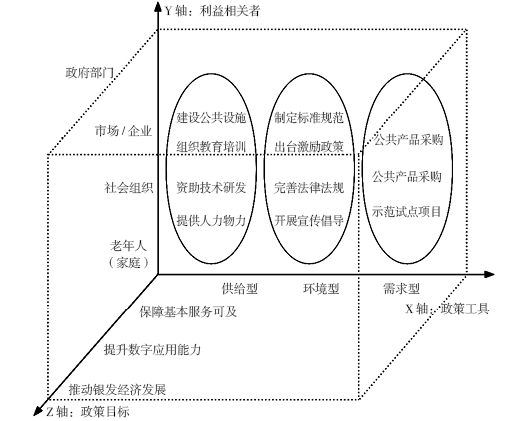
图 1 三维框架图
Figure 1 Three-dimensional framework diagram
政策工具维度(X维度)直接沿用Rothwell和Zegveld的三分法,分为供给型、环境型和需求型。供给型工具侧重政府直接投入,比如公共设施建设、数字技能培训和技术研发支持;环境型工具更关注制度规范和治理环境的塑造,包括法律法规、标准制定、宣传倡导和激励政策;需求型工具则强调市场需求引导,典型方式是政府采购、消费补贴和示范试点。
利益相关者维度(Y维度)涉及政府、市场、社会组织和老年群体四类主体。政府主要负责制度设计、资源调配和政策协调;市场主体承担适老化产品和数字服务的供给;社会组织更多在社区培训、志愿服务和社会支持方面发挥作用;老年人及其家庭既是政策服务对象,也是数字治理中不可忽视的参与方。
政策目标维度(Z维度)结合政策文本内容和治理实践,划分为三个层次:保障基本服务可及、提升数字应用能力、推动银发经济发展。前者是公平性和兜底性目标,中间是赋能导向,后者则体现了数字治理向产业化和市场化方向延伸的发展诉求。
在此基础上,通过对政策文本进行编码与交叉分析,进一步考察政策工具、利益相关者与政策目标之间的互动关系,从而揭示当前我国老年数字鸿沟治理中的结构特征与现实问题。
3 研究设计与政策文本来源
3.1 政策文本样本选择
为系统分析我国老年数字鸿沟治理的政策逻辑与工具配置,本文以中央层面发布的相关政策文件为分析样本。政策文本主要来自中国政府网、国务院政策文件库及相关部委官网(工信部、民政部、国家卫生健康委员会等),并辅以北大法宝数据库进行交叉核验。
样本筛选遵循的基本条件:政策内容须涉及老年人数字融入、智能技术适老化、数字公共服务或老年数字素养提升;层级限定为中央及国家部委正式文件;剔除重复通知、阶段性简报和失效文件,保留具有代表性和持续效力的文本;同时兼顾政策发布时间、部门覆盖范围与内容完整性,以保证样本的代表性。
按上述标准,最终选取2020—2025年中央层面发布的15份核心政策文件,如表1所示。之所以以2020年为起点,是因为疫情期间健康码、线上政务和数字化服务快速普及,老年人数字使用障碍问题集中暴露,推动了国家层面的系统性政策回应,这一阶段政策密集且问题代表性较强。
表 1 解决老年数字鸿沟问题相关政策文件
Table 1 Policy documents related to addressing the digital divide among the elderly
| 序号 | 发文单位 | 政策文件 | 成文时间 |
| 1 | 工业和信息化部中国残疾人联合会 | 关于推进信息无障碍的指导意见 | 2020年9月 |
| 2 | 国务院办公厅 | 关于切实解决老年人运用智能技术困难实施方案的通知 | 2020年11月 |
| 3 | 人力资源社会保障部 | 关于进一步优化人社公共服务切实解决老年人运用智能技术困难实施方案的通知 | 2020年12月 |
| 4 | 民政部办公厅 | 关于落实《关于切实解决老年人运用智能技术困难的实施方案》的通知 | 2020年12月 |
| 5 | 工业和信息化部 | 关于切实解决老年人运用智能技术困难便利老年人使用智能化产品和服务的通知 | 2021年2月 |
| 6 | 国务院 | 关于印发全民科学素质行动规划纲要(2021—2035年)的通知 | 2021年6月 |
| 7 | 国家卫生健康委全国老龄办 | 关于做好2021年智慧助老有关工作的通知 | 2021年6月 |
| 8 | 国家卫生健康委办公厅 | 关于实施进一步便利老年人就医举措的通知 | 2021年6月 |
| 9 | 教育部办公厅 | 关于广泛开展老年人运用智能技术教育培训的通知 | 2021年7月 |
| 10 | 国务院 | 关于印发十四五国家老龄事业发展和养老服务体系规划的通知 | 2021年12月 |
| 11 | 工业和信息化部 | 促进数字技术适老化高质量发展工作方案 | 2023年12月 |
| 12 | 国务院办公厅 | 国务院办公厅关于发展银发经济增进老年人福祉的意见 | 2024年1月 |
| 13 | 中央网信办、教育部、工业和信息化部、人力资源社会保障部 | 2025年提升全民数字素养与技能工作要点 | 2025年4月 |
| 14 | 民政部 | 民政部关于提升老年人数字素养的政策宣示 | 2025年8月 |
| 15 | 市场监管总局、民政部 | 养老服务标准体系建设指南 | 2025年9月 |
3.2 研究方法与编码过程
本文主要采用内容分析法与政策文本分析法,并借助NVivo15软件对政策文本进行结构化编码与量化统计。本文以“句子—语义单元”为基本分析单位,依据“政策工具—利益相关者—政策目标”三维分析框架建立一级节点与二级节点。其中,政策工具维度包括供给型工具、环境型工具与需求型工具;利益相关者维度包括政府部门、市场主体、社会组织以及老年人及其家庭;政策目标维度包括保障基本服务可及、提升数字应用能力以及推动银发经济发展。
为提高编码结果的准确性与一致性,本文在正式编码前对节点分类标准进行了统一界定,并对政策文本进行了预编码与反复校验。对于同时涉及多个维度的政策内容,允许进行交叉编码,以尽可能完整呈现政策文本中的多维治理关系。完成编码后,进一步通过词频统计、节点统计以及二维交叉分析等方式,对政策工具配置、主体参与结构与政策目标导向进行系统分析。
3.3 分析框架与研究路径
基于三维分析框架,本文重点围绕以下三个层面展开研究:
第一,分析政策工具配置结构,考察供给型、环境型与需求型工具的分布特征及其内部差异,揭示当前老年数字鸿沟治理中的政策工具偏好;
第二,分析利益相关者参与结构,考察政府、市场、社会组织以及老年群体在政策体系中的角色定位与互动关系,揭示多元主体协同治理状况;
第三,分析政策目标导向结构,考察当前政策在基础保障、能力提升与银发经济发展等层面的目标配置情况,并进一步分析政策工具、利益相关者与政策目标之间的交互关系。
在此基础上,进一步总结当前我国老年数字鸿沟治理中的结构特征与现实问题,并提出相应优化路径。
4 政策文本分析
4.1 政策文本高频词分析
为进一步识别当前我国老年数字鸿沟治理的核心关注领域,本文借助NVivo15对政策文本进行词频统计,并对无实质意义词汇进行筛除与合并处理。统计结果如
图2所示,“老年人”“服务”“智能”“数字”“适老化”“养老”“平台”“应用”“公共服务”等词汇出现频率较高,反映出当前政策体系主要围绕数字公共服务供给、智能技术适老化改造以及老年群体数字融入等议题展开。

图 2 中央层面弥合老年群体数字鸿沟词云统计图
Figure 2 Word cloud analysis of efforts at the central government level to bridge the digital divide among the elderly
从高频词分布看,当前政策文本的公共服务导向比较明显。“服务”“养老”“公共服务”这类词出现频率高,说明国家越来越关注老年群体的数字获得感和基本服务可及性,数字治理的重心正从单纯的技术建设转向公共服务均等化。同时,“智能”“平台”“应用”“数据”等词占比也不低,反映出数字技术已经渗透到养老、医疗、交通、社会治理等多个领域,老年数字鸿沟正在成为数字社会建设中的一个重要治理议题。
值得注意的是,“消费”“市场”“产业”“企业”这些指向市场化、产业化的词汇,出现频率明显低于“服务保障”类词。这说明当前政策还是以政府主导的公共治理逻辑为主,重点放在基本公共服务供给和数字包容上,对银发经济的市场潜力和需求侧激励机制关注不够。我国老年数字鸿沟治理仍处在基础保障优先的阶段,还没有真正形成市场驱动与社会协同并重的发展格局。
总体来看,当前中央层面政策已初步形成以数字公共服务、适老化建设与社会包容为核心的治理框架,但在市场机制培育、老年主体参与以及数字消费激励等方面仍存在一定拓展空间。
4.2 政策工具配置结构分析
按照政策工具理论框架,本文将治理措施分为供给型、环境型和需求型三类。编码结果显示,环境型工具占比最高,供给型次之,需求型明显偏弱,整体呈现“环境规制强、供给有支撑、需求激励弱”的结构特征。
其中,环境型工具主要体现在制度规范、政策引导、标准制定和宣传倡导上,比如适老化标准、公共服务规范、信息安全监管等。这在一定程度上说明国家更倾向于通过制度建设和规范引导来推动老年数字治理,反映出较强的行政主导逻辑。由于老年数字鸿沟问题兼具社会公平与公共服务属性,政府倾向于优先采用规范性与保障性政策工具,以降低老年群体在数字化转型中的边缘化风险。
供给型工具主要集中在数字基础设施建设、老年数字技能培训、智慧养老平台和社区服务供给上。近年来,社区智慧助老、线上线下融合服务、适老化产品研发支持都在推进,政府已经意识到数字能力建设的重要性。尤其是在社区层面,依托志愿服务、数字培训和基层平台,老年人的数字接入能力确实有了一定提升。
相比之下,需求型工具占比最低,主要是试点示范、政府采购和消费支持。这说明政策对市场需求激励和产业协同关注不够,还没有建立起有效的需求侧引导机制。银发经济发展很快,但适老化产品和数字服务的市场潜力还没真正释放出来,企业参与积极性和创新动力都不足。当前我国老年数字鸿沟治理已形成较明显的政府主导型政策工具结构,其优势在于能够快速推动公共服务覆盖与制度规范建设,但也容易导致市场机制不足、社会参与有限以及政策创新动力偏弱等问题。
4.3 利益相关者参与结构分析
老年数字鸿沟治理涉及政府、市场、社会组织和老年群体等多方主体,本质上属于协同治理问题。对政策文本中利益相关者相关内容进行编码后可以发现,当前政策体系呈现出几个特征:政府主导地位突出,社会组织参与程度有限,市场主体介入不足,老年群体则明显处于被动位置。
(1)政府部门占据核心主导地位
无论是在政策制定、资源配置还是公共服务供给层面,政府承担了主要责任。政策文本大量涉及制度建设、财政支持、公共服务优化和跨部门协同,说明行政推动仍是当前治理的主要路径。这种模式的优势在于效率较高,能够在较短时间内推动适老化改造和公共服务覆盖,尤其是在数字基础设施建设、基层服务供给和重点群体帮扶方面,政府的组织动员能力较强。
(2)社会组织发挥重要辅助作用
近年来,社区组织、志愿服务机构和基层社工队伍逐渐参与到老年数字培训和社会支持中。相关政策多次提及社区助老、志愿服务和公益培训,表明国家层面已开始重视基层社会力量的辅助价值。与政府部门相比,社会组织更贴近老年群体的日常生活场景,在情感支持、技能培训和日常陪伴方面具有自身优势。
(3)市场主体的参与程度相对有限
部分政策虽然提出推动适老化产品研发、智慧养老平台建设和数字服务创新,但整体上倡导性内容偏多,缺乏系统性的市场激励和产业支持政策。这意味着当前老年数字鸿沟治理仍主要依赖公共资源投入,市场化治理能力尚未有效释放。尤其在银发经济快速发展的背景下,适老化产业、数字消费市场与智慧养老服务之间的供需衔接问题仍然突出。
此外,老年群体及其家庭在政策体系中的主体性明显不足。现有政策更多将老年人视为被服务或被帮扶的对象,较少关注其参与治理、表达需求和自主提升数字能力等方面。当前老年数字鸿沟治理已初步形成政府主导、社会协同的格局,但市场主体与老年群体的参与度仍然偏低,多元主体之间的协同机制尚未真正建立。这种结构短期内有利于快速实现公共服务覆盖,但长期而言,治理资源集中于行政系统,或制约政策长效性与创新活力。
4.4 政策目标导向分析
当前老年数字鸿沟治理主要围绕三个目标展开:保障基本服务可及、提升数字应用能力、推动银发经济发展,但三者之间存在明显差异。保障基本服务是当前的主要目标,政策聚焦医疗、交通、政务、金融、养老等领域,强调保留线下渠道和适老化设计,防止老年人因数字技术快速扩张而被排斥于公共服务体系之外。提升数字应用能力是另一个重要目标,近年来数字培训、智慧助老等内容明显增加,说明政策正从被动保障转向能力赋能。相比之下,推动银发经济发展的相关内容占比偏低,虽然提及智慧养老、适老化产品研发等,但整体上更强调公共服务属性,对老年数字消费市场和产业创新关注有限。总体来看,当前治理呈现明显的保障特征,即优先解决基本生存与服务获取问题,而对数字发展权益、消费潜力及老年主体参与能力等深层目标关注不足。这种导向符合现阶段数字治理的发展特征,但也意味着未来政策需要向发展型、参与型、赋能型方向进一步转变。
5 老年数字鸿沟治理的结构性特征
通过对中央政策文本的系统分析可以发现,当前我国老年数字鸿沟治理已逐步形成较为完整的政策体系,但在治理理念、工具结构以及主体协同等方面仍呈现出明显的阶段性特征。
5.1 行政主导型治理逻辑较为明显
从政策工具结构而言,环境型工具长期占据主导,体现出我国依托制度约束、政策引领与公共服务保障推进老年数字治理的鲜明导向,也与政府主导整合资源、防范社会风险的数字化转型路径高度契合。老年数字鸿沟关乎民生公平与社会稳定,治理前期依靠政府兜底推进适老化改造、留存传统服务渠道,可快速缓解老年人数字化生活难题。但是行政主导模式易形成路径依赖,一定程度上抑制市场参与动能释放,也使得政策侧重短期问题纾解,长效制度设计相对不足。在数字社会持续演进背景下,单一行政推动难以适配多元化养老数字服务需求,老年数字治理亟需构建多元主体协同共治的全新发展格局。
5.2 补偿性治理特征较为突出
当前政策体系主要围绕帮助老年人适应数字社会展开,核心目标是降低数字技术对老年群体造成的排斥风险。从政策内容来看,大量措施集中于保留人工服务、优化界面设计、开展数字培训以及完善社区帮扶等方面,体现出明显的补偿性治理思路。[10]与此同时,现有治理体系更多将老年人视为被帮助者,而较少强调其作为数字社会参与主体的主动性与创造性。部分政策虽然提及数字素养提升,但总体上仍停留在基础技能培训层面,对老年群体数字参与权、数字表达能力以及数字发展机会关注不足。
5.3 多元主体协同机制尚未完全形成
从利益相关者结构看,当前治理已初步形成政府、社会组织与市场主体共同参与的格局,但主体间功能失衡明显。政府承担绝大多数制度供给和资源配置,社会组织发挥辅助服务功能,市场主体参与程度有限。尤其在适老化产品研发、数字消费场景建设和智慧养老服务创新方面,市场机制尚未激活。部分企业虽关注银发经济,但仍面临市场需求不明、标准不统一、政策支持不足等问题。此外,老年群体自身的参与程度偏低。政策制定更多采取自上而下方式,对老年人真实需求和数字使用体验关注有限,容易导致形式适老、实际难用的问题。老年数字鸿沟治理是一项系统工程,仅靠单一主体难以持续。未来需要推动政府、企业、社会组织和老年群体之间形成协同互动机制,通过资源共享、需求反馈和社会参与提升治理效能。[11]
5.4 治理目标正在由基础保障向发展赋能转变
从政策目标演变趋势来看,我国老年数字鸿沟治理正在经历由基本服务保障向数字能力赋能的阶段性转变。近年来政策内容开始逐渐关注数字素养提升、智慧养老发展,以及银发经济培育等更深层次议题。[12]国家治理理念已逐步超越单纯的风险防控,而是逐渐开始关注老年群体在数字经济与数字社会中的发展机会。特别是在人口老龄化与数字经济融合发展的背景下,老年群体既是数字公共服务的重要对象,也是数字消费市场的重要组成部分。然而,目前这种发展型治理导向仍处于初步阶段。相比基础服务保障,数字消费支持、数字创新参与以及老年数字权益保护等方面的政策仍较为薄弱。未来需要进一步完善需求侧政策工具,通过市场激励、产业扶持以及数字教育体系建设,推动老年数字治理由兜底保障向全面赋能方向转变。
6 老年数字鸿沟治理的优化路径
基于上述分析可以发现,当前我国老年数字鸿沟治理已形成较为完整的政策体系,但在政策工具配置、多元主体协同以及需求侧激励等方面仍存在一定不足。未来应进一步优化治理结构,推动老年数字治理由“基础保障型”向“发展赋能型”转变,不断提升老年群体在数字社会中的获得感与参与度。
6.1 优化政策工具结构,增强需求型工具供给
当前我国老年数字鸿沟治理以环境型工具为主导,在制度规范与公共服务保障方面发挥了重要作用,但需求型工具相对不足,市场激励机制仍较为薄弱。未来应进一步优化政策工具配置结构,推动供给型、环境型与需求型工具协调发展。
应继续强化数字公共服务供给,加大基层智慧养老设施、社区数字服务平台以及老年数字培训体系建设力度,进一步提升老年群体数字接入能力与服务可及性。[13]
重视需求侧政策工具建设,通过政府采购、财政补贴、试点示范以及税收优惠等方式,激励企业加大适老化产品与数字服务创新力度。[14]同时,可探索建立适老化产品认证体系与老年数字服务评价机制,推动形成更加规范化、标准化的银发数字市场。通过需求侧激励带动产业创新,不仅有助于提高市场主体参与积极性,也能够进一步满足老年群体日益多元化的数字需求。
6.2 完善多元主体协同机制,提升社会参与水平
老年数字鸿沟治理具有较强的复杂性与系统性,仅依靠政府力量难以实现长期治理目标。因此,未来需要进一步完善政府、企业、社会组织以及家庭之间的协同治理机制,推动形成多元主体共同参与的数字治理格局。
政府部门应进一步发挥统筹协调作用,完善跨部门协同机制,加强数字治理、养老服务、公共卫生以及社会保障等领域政策衔接,提升政策执行效率。同时,应适度下沉治理资源,增强社区在数字助老中的基础支撑能力。
市场主体应进一步强化社会责任意识,加大适老化产品研发与服务创新力度,推动智能终端、数字平台以及互联网应用向简洁化、人性化方向发展。特别是在智慧医疗、智慧养老以及数字金融等领域,应更加重视老年用户真实需求,提高产品适配性与使用便利性。[15]
社会组织与社区机构则应充分发挥基层服务优势,通过志愿服务、数字培训以及结对帮扶等方式,为老年群体提供更加精准化与持续性的数字支持。与此同时,还应进一步重视家庭数字反哺作用,鼓励子女与年轻群体参与老年数字教育,推动形成家庭、社区与社会协同支持体系。
6.3 强化老年群体主体地位,推动数字能力赋能
当前政策体系更多将老年群体视为数字帮扶对象,而对其主体性与参与性关注不足。未来治理理念应逐步由被动帮扶转向主动赋能,更加重视老年群体在数字社会中的参与权与发展权。
应建立更加系统化的老年数字教育体系。针对不同年龄、教育背景与数字使用能力的老年群体,分类开展数字技能培训,提高培训内容的针对性与实用性。培训内容不仅应包括智能设备基本操作,还应覆盖线上医疗、数字支付、网络安全以及信息识别等方面,提升老年群体综合数字素养。增强老年群体在政策制定与产品设计中的参与程度。当前部分适老化产品仍存在技术导向强于需求导向的问题,其重要原因在于老年用户参与不足。未来可通过用户反馈、社区协商以及体验评估等方式,将老年群体真实需求纳入治理体系,提高政策与产品的适配性。此外,还应更加重视老年群体数字权益保护。随着数字技术广泛应用,老年人面临网络诈骗、信息泄露以及算法歧视等风险不断增加。未来需要进一步完善老年数字权益保障机制,加强数字安全教育与法律保护,切实维护老年群体合法权益。
6.4 推动银发经济发展,培育数字治理长效机制
鼓励企业围绕老年群体需求开发智能养老、健康监测、远程医疗以及数字文娱等产品与服务,推动形成多层次、多元化的适老化产业体系。进一步完善产业支持政策,加大对智慧养老、适老化科技创新以及数字健康产业的政策扶持力度,推动数字技术与养老产业深度融合。[16]同时,应积极构建银发经济应用场景,推动数字技术在社区养老、居家养老以及健康管理等领域广泛应用,提高老年群体数字消费参与度。通过市场机制激发产业创新活力,不仅能够满足老年群体日益增长的数字需求,也有助于推动老年数字治理形成更加稳定与可持续的发展模式。
7 结论
在人口老龄化与数字化转型背景下,老年数字鸿沟问题已成为数字社会建设中的重要治理议题。基于政策工具理论,本文构建“政策工具—利益相关者—政策目标”三维分析框架,运用NVivo15对2020—2025年中央层面相关政策文本进行分析。研究发现,当前我国老年数字鸿沟治理已形成较为完整的政策体系,但整体上仍呈现明显的政府主导特征。从政策工具结构来看,环境型工具占据主导地位,供给型工具发挥支撑作用,而需求型工具相对不足;从利益相关者结构来看,政府部门处于核心地位,社会组织参与逐渐增强,但市场主体与老年群体参与程度仍有待提升;从政策目标导向来看,当前政策更加重视基本公共服务保障与数字能力提升,对银发经济发展与需求侧激励关注相对有限。
总体来看,我国老年数字鸿沟治理仍以保障优先为主要特征。未来应进一步优化政策工具结构,完善多元主体协同机制,强化老年群体数字能力建设,推动银发经济与数字治理深度融合,不断提升老年数字治理体系的包容性与可持续性。
参考文献
[1] Riggins F J,Dewan S.The digital divide: Current and future re-search directions [J].Journal of the Association for Information Systems,2005,6(12).
[2] Dimaggio P,Hargittai E,Celeste C,et al.From Unequal Access to Differentiated Use: A Literature Review an Agenda for Research on Digital Inequality[M].Social Inequality,2004:355-400.
[3] Othelia Eun-Kyoung Lee,DO-Hong Kim.Bridging the Digital Divide for older Adults via Tnter generational Mentor-Up[J].Research on Social Work Practice,2019,29(7).
[4] Augner Christoph.Digital divide in elderly:Self-rated computer skills are associated with higher education,better cognitive abilities and increased mental health[J].The European Journal of Psychiatry,2022,36(3).
[5] 张鑫.老年数字鸿沟的生成逻辑与治理策略[J].江苏社会科学,2023,(6):150-159,243.
[6] 刘建国,苏文杰.“银色数字鸿沟”对老年人身心健康的影响——基于三期中国家庭追踪调查数据(CFPS)[J].人口学刊,2022,44(6):53-68.
[7] 赵晓航,李建新.老年人数字行为的变迁机制与分化逻辑——基于2016—2022年中国家庭追踪调查数据的动态分析[J].云南民族大学学报(哲学社会科学版),2025,42(5):55-66.
[8] 李长远.数字平台赋能智慧养老敏捷治理:运行机理、现实掣肘与进阶路径[J].江淮论坛,2026,(3):46-54.
[9] Rothwellr,Zegveldw.Reindustrialization and technology[M].London:Logman Group Limited,1985.
[10] 姜向群,秦艳艳.养老补偿论:建立对城乡低收入老年人群体的公共资源补偿机制[C]//联合国亚太经社会,国家人口计生委,中国人民大学人口与发展研究中心.中国社会服务政策与家庭福利国际研讨会论文集.中国人民大学,2008:143-150.
[11] 王晓锋.数智化赋能老年人公共体育服务高质量发展的多维度困境与协同治理研究[C]//中国体育科学学会.第十四届全国体育科学大会学术成果汇编——墙报交流(体育社会科学分会).河南理工大学,2025:506-508.
[12] 国务院.十三五推进基本公共服务均等化规划:国发[2017]9号[A/OL].(2017-03-01)[2022-03-25].http://www.gov.cn/zhengce/content/2017-03/01/content_5172013.htm.
[13] 唐文浩.数字公共服务中老年人融入的结构性困境与主体性回应[J].人口与社会,2026,42(2):14-25.
[14] 成雅欣,刘慧君.数智赋能银发经济高质量发展的内在逻辑、关键问题与推进路径[J/OL].西安交通大学学报(社会科学版),1-17[2026-05-19].https://link.cnki.net/urlid/61.1329.C.20260508.1308.002.
[15] 冯佳琪.未来我国老年市场的消费能力分析[J].经济管理文摘,2021,(20):183-184.
[16] 任航,李程骅.数智化赋能城市适老化转型的逻辑机理与场景建构[J].人口与社会,2026,42(3):61-73.