
 Current Views: 361563
 Current Downloads: 210880
Study on China Physical Science
ISSN Print:2707-1936
ISSN Online:2707-1944
Contact Editorial Office



Subscribe to the latest published information from SCISCAN
山地文化语境下武术与茶艺类非遗的活态传承——基于峨眉、青城、绿林及蒙山四派的扎根分析
The Living Heritage of Martial Arts and Tea Art in the Context of Mountain Culture —Rooted Analysis based on the Four Sects of Emei, Qingcheng, Green Forest, and Mengshan


-
Information:
成都大学体育学院,成都
-
Keywords:
Mountain culture; Intangible cultural heritage living transmission of martial arts; Intangible cultural heritage living transmission of tea art; Grounded theory山地文化; 武术非遗活态传承; 茶艺非遗活态传承; 扎根理论
- Abstract: Mountainous regions nurture intangible cultural heritage categories such as Emei, Qingcheng, and Green Forest martial arts, as well as Mengshan tea art, with their ecological landscapes and reclusive culture shaping the techniques and spiritual essence of these traditions. Under the backdrop of urbanization and commercialized cultural tourism, these heritages have emerged from remote mountains, undergoing a transformation from “mountain seclusion to urban performance to value restoration”. However, they commonly face challenges like cultural alienation and transmission gaps. Existing research merely simplistically views mountains as geographical carriers, lacking comprehensive cultural contextual analysis and a comparative framework across martial and literary schools. This study conducts semi-structured interviews with four representative inheritors from major schools, employing grounded theory to construct a living transmission model. Findings reveal: the mountainous environment possesses dual attributes of nurturing and constraining, forming the foundational substrate for inheritance; the shared origins of martial arts and medicine, along with mountainous roots, constitute the core cultural essence of schools; institutional standards and educational transmission serve as parallel intermediary pathways; industrialization can reciprocally support cultural preservation; inheritors act as the full-chain implicit intermediaries, through whom external resources and constraints determine the subsequent developmental trajectory of schools. This research enriches the theoretical system of mountainous intangible heritage transmission, offering practical references for balancing cultural authenticity and market-driven development. 山地孕育峨眉、青城、绿林武术与蒙山茶艺等非遗门类,山林生态、隐逸文化塑造其技艺风格与精神内核。城市化与文旅商业化背景下,此类非遗走出深山,历经“山林隐匿—都市展演—价值回归”转型,普遍遭遇文化异化、传承断层等难题。现有研究仅简单将山地视作地理载体,缺乏整体性文化语境分析,亦缺少文武多门派对比机制探究。本文选取四大门派代表性传承人开展半结构化访谈,运用扎根理论构建活态传承模型。研究发现:山地环境兼具滋养与约束双重属性,构成传承前置基底;武医同源、山地起源构成门派核心文化内核;制度标准、教育传习为并行中介路径;产业化可反哺文化保护;传承人为全链条隐性中介,外部资源与约束均通过其决定门派后续的发展走向。本研究完善山地非遗传承理论体系,为平衡文化原真性与市场化发展提供一定实践参考。
- DOI: 10.35534/scps.0802024
- Cite: 易美林.山地文化语境下武术与茶艺类非遗的活态传承——基于峨眉、青城、绿林及蒙山四派的扎根分析[J].中国体育研究,2026,8(2):166-171.
天人合一的山地生态孕育峨眉、青城、绿林武术与蒙山茶艺等本土非遗,山林地貌、隐逸文化与移民社群共同塑造两类技艺的招式风格、精神内核与传统传习模式。城镇化与全域旅游快速推进下,山地原生社群逐步瓦解,传统武术防身、山林自给的实用价值被法治社会消解,大量门派被迫走出深山开展都市展演,由此产生文化守成与市场化发展的核心矛盾:下山产业化过程中如何保留山地原生文化基因,传承人怎样平衡山林守根与城市经营两种发展路径,成为川内山地非遗保护亟待解决的现实问题。梳理现有研究可知,学界已从政策、文旅、教育、数字化维度探讨体育非遗传承规律,但现有成果多将山地视作简单地理背景,缺少将山地自然、人文整合为整体文化语境的系统性分析,同时鲜有武术、茶艺多门派对比的扎根研究,难以厘清不同山地门派差异化演化逻辑。基于此,本文选取四类典型山地非遗门派,依托传承人深度访谈资料,运用扎根理论搭建传承机制模型,剖析山地非遗从山林隐匿、都市展演到价值回归的完整转型路径,为山地武术、茶艺活态保护提供理论参考。
1 文献综述
1.1 文献梳理
现有研究从多重视角探讨了非遗的传承与保护问题。在政策保护层面,学者们构建了体育非遗保护政策的三维分析框架[1]。对省级非遗保护政策进行了工具—主体—目标的系统分析[2]。在旅游开发层面,研究关注乡村非遗旅游活态传承的空间生产与价值共创机制[3],以及非遗进景区中多主体价值共创的逻辑[4]。在教育传承层面,现代学徒制下的工匠生成[5]与燕京八绝的多维互动传承模式[6],也为非遗传承提供了重要参考。在数字化传播层面,信息空间理论下的数字化保护与传承人数字素养研究成为新兴方向[7]。
在体育非遗领域,部分学者通过扎根理论与结构方程模型,系统揭示了体育非遗活态传承的影响因素体系,发现传承主体不仅自身对项目活态传承具有显著影响,同时还是政府保障、社会支持、人文环境、项目适应性创新、物质条件等其他因素发挥作用的枢纽[8]。戴朝等则从天府表达的视角,探究了天府传统体育文化的价值功能、现实审视与传承策略,指出传统体育项目的价值功能已发生转变,传承发展机制面临单一性与滞后性的挑战[9]。
虽有学者关注到山地环境与体育非遗的关联,但鲜有研究将山地作为一种整体的文化语境,深入剖析其如何内在地塑造了非遗的技艺逻辑、精神世界与传承模式,并阐释传承人在这一特定语境下的能动性与生命叙事[10]。基于此,本研究提出核心问题:在山地文化语境下,武术与茶艺类非遗项目经历了怎样的形成、演变与当代转型。
1.2 概念界定
非遗的活态传承是以传承人为核心载体,坚守非遗原生文化内核与原真性底线,结合当代社会环境适度创新发展,依靠教育、文旅、政策多元渠道完成代际传递,让传统技艺持续融入民众现实生活,实现动态可持续的传承模式。崔家宝等将体育非遗活态传承界定为:“基于非遗的活态性、流变性、功能性、本土性特点,在适应社会经济文化环境的前提下,通过传承人及传承群体对体育非遗项目进行适度创新,并在社会的共同参与下,使非遗传统文化功能及项目技能实现时代间的纵向传递,并回归本土民众文化生活的一种传承方式[11]。”
该定义强调活态传承应使非遗回归本土民众文化生活,这一论断与本研究中各门派对非遗的传承高度契合。陈炜等提出,活态传承是基于非物质文化遗产的活态流变性特点,以遗产文化的传承与原真性保护为原则,主要通过传承人的扶持和培养、文化生态空间的保护与优化、适当的生产性保护等路径,使得非物质文化遗产在保护与抢救的基础上实现传承、利用与发展,并最终回归民众生活的保护理念[12]。
2 研究设计与方法
2.1 扎根理论
本文以峨眉、青城、绿林、蒙山四大山地门派为案例开展半结构化访谈。峨眉武术访谈聚焦山地起源、武学哲学、文旅产业化探索;青城派以掌门深度访谈为主,梳理门派从实战技击到太极养生、道家智慧升维的演变脉络;绿林派扎根雅安山区,挖掘门派与本土山地社群的共生关系;蒙山派以龙行十八式长嘴壶、传统制茶技艺为核心,梳理茶艺培训、海内外传播网络构建路径。本文选用扎根理论自下而上提炼概念、范畴,从传承人原生访谈资料中挖掘山地非遗传承内在逻辑。
2.2 资料收集
本研究选取峨眉、青城、绿林、蒙山四大门派的掌门、省市级代表性非遗传承人、中老年资深习练者与青年新生代传承人作为访谈对象开展一对一深度访谈。围绕门派山地起源脉络、传统代际传习模式、下山转型发展困境、政府扶持政策、教学与产业发展等核心维度搭建半结构化访谈提纲;访谈过程全程录音并同步记录田野备忘录,持续访谈直至访谈资料不再涌现全新概念与信息,达到信息饱和标准。最终将全部访谈录音完整转录,构建标准化原始访谈文本资料库。
3 资料分析
3.1 开放式编码
开放式编码是扎根理论分析的第一步,其目的是从原始访谈资料中提炼出初始概念与范畴。本研究采取逐个事件贴标签的编码策略,用原始资料中的关键词或短语对标签进行命名,经过多轮比较与调整,将原始材料中出现频率较高的现象逐步提炼为范畴。为了减少研究者主观因素产生的影响,在编码过程中尽量使用原始素材中现成的表述作为概念和范畴的名称;对未能得到很好概括的句子,则尽量采用文献资料中的名词进行界定。通过对访谈资料的一级编码分析,本研究最终得到13个范畴,其相应的概念化内容与原始访谈资料如表1所示。
表 1 开放式编码过程
Table 1 Open coding process
| 范畴化 | 概念化 | 访谈资料 |
| 武医结合 | 武医同源、习武兼修中医、修道融合中医药、武人兼具行医职能 | 很多武术也要学中医;他是在青城山练的,白天跟他学不到东西,白天他要行医;还有古人的修炼,包括中医文化 |
| 武术起源 |
介绍绿林派、蒙山派、 青城派等的起源 |
绿林派起源的话是应该是属于在清朝的末期了;因为蒙山茶要在成都市场做推广,父亲编出了龙兴十八式;青城派不是清朝才开始的,是历代都很有名。 |
| 传承情况 | 移民文化融入技艺、口传心授隐秘传承、青年传承人接续、民间自发传承 | 武术在移民文化融入了很多东西;峨眉武术一直都是神秘的,它是属于秘密口传心授,他不是很张扬型的一些传授;现在有很多年轻传承人;更多的还是靠着民间的发展传承 |
| 自然环境 | 山地物种丰富、招式仿生自然、山水赋予创作灵感、山地滋养艺道灵气 | 峨眉山拥有5000多种植物;自然界的一些动植物的演变,模仿了很多东西,才创作了我们最早的白猿通背拳;很有灵气,水也是不可比拟的瀑布;灵感更多来自他所处的自然环境 |
| 限制条件 | 实战功能弱化、传统习武不适配现代、山地空间受限、生存习武价值衰减 | 如今的武术不可能再像以前那种习武到某种程度;武术这个层面对于求生、生存来说,目前它不符合现在当下的这个环境了;实际上是受到了空间的限制 |
| 发展过程 | 早期重实战打斗、武术关联社会治安、技艺随社会创新、习武兼具卫国谋生 | 早期武术都是在打斗上面;武术的发展跟社会的这个安全都还是有比较大的关系;创新也是根据这个社会发展来的;早期的武术练武习武者都是从军、保家卫国,还有一个是生存 |
| 推广过程 | 武术国际化传播、媒体展演引流、茶艺赋能茶叶销售、技艺易于对外推广 | 全球的话目前做得最好的就是武术推广做得最好;电视台做表演,然后推广蒙顶茶,也在卖蒙顶山的茶叶;这个技艺还真的是容易推广一个 |
| 政府作用 | 政府认定传承人、政府主导公共非遗推广、官方赋能门派发展 | 我就代表我们派的掌门人身份,这个不是我自己封的,这是政府给封的;龙行十八式应该是蒙山的一个公共资源,由政府来推广的话,会做得更好 |
| 学习作用 | 武学凝练哲学、习武强身健体、修习舒缓身心、提升个人素养 | 因为是在峨眉山,很多高人能把武学形成哲学;武术成就了我的,包括体质和视力,保护了我的视力,身体也健壮了;练完武术整个人就会很轻松 |
| 学习原因 | 传承弘扬武学、习武防身避险、强身健体需求、被动习练避战乱 | 要弘扬武术,让人更多人知道;当年练武还是因为我们当时为了防身;早学武术是被迫的。最早是强身健体,最初也不想学;能躲避战争也好 |
| 教学困境 | 学院派教学格式化、套路固化缺乏创新、习武依赖苦练无科学方法、真传技艺保守不传授 | 武术发展出现了问题,就是比如我们的学院派的格式化,格式化了之后,都会出现不能百花齐放;有点像太过于格式化,完全去讲套路;没有科学的方法,他就是苦练;宁愿教你一些强身健体的,也不愿意教你那些真正的功夫 |
| 附加产品 | 开发文创产品、带动餐饮业态、文旅旅游开发、布局康养产业 | 我们已经有相关文创产品了;无数餐饮一年基本上拉起来了;旅游的开发带动了峨眉武术;形成不同的产业,包括康养中心这些 |
| 标准建设 | 门派地方立项落地、缺乏统一服饰规范、无书面标准化教学体系 | 绿林派立项的话是立在雅安市雨城区;蒙山派目前为止也没有一个标准的服饰;没有一个书面的教学体系 |
3.2 主轴编码
主轴编码阶段是在开放式编码的基础上,通过分析各初始范畴之间的因果、情境、中介等逻辑关系,将其归纳为更具概括性的主范畴。开放式编码中得到的概念和范畴大多处于零散独立的状态,不利于对研究问题形成整体把握,因此,需在仔细分辨各初始范畴内涵异同的基础上,进一步提炼主范畴。
经过反复比较与归类,本研究将13个初始范畴归纳为5个主范畴,各主范畴及其对应的初始范畴、范畴内涵如表2所示。
表 2 主轴编码过程
Table 2 Spindle encoding process
| 主范畴 | 初始范畴 | 范畴内涵 |
| 文化内核与传承 | 武医结合 武术起源 传承情况 | 非遗项目在历史演进中积淀的核心文化要素,涵盖技艺起源传说、武医同源的传统智慧以及代际传递的隐秘方式,是山地非遗身份认同与文化根脉的基础 |
| 资源与环境条件 | 自然环境 限制条件 | 山地地理生态对非遗技艺风格与生存空间的双重作用:一方面通过丰富的物种与山水灵气赋予技艺创作灵感,另一方面因空间封闭性、实战功能弱化及现代生存价值衰减而形成制约,是活态传承的前置条件 |
| 扩散与产业化 | 发展过程 推广过程 附加产品 | 非遗项目从生成到传播的外部驱动因素,包括技艺随社会需求从实战向展演的功能演变、借助媒体与国际化渠道的推广扩散,以及政府认定与官方赋能在门派合法化进程中的关键支撑 |
| 教育与学习机制 | 学习原因 学习作用 教学困境 | 技艺传递的多元路径与内在障碍,涵盖从被动避险、强身健体到主动传承弘扬的动机谱系,习武在凝练哲学、强健身心方面的正向作用,以及学院派格式化、套路固化、苦练无方、真传保守等教学困境 |
| 制度与标准建设 | 政府作用 标准建设 | 非遗与现代经济体系的融合程度及制度化水平,包括文创开发、餐饮带动、旅游发展、康养布局等多元产业的延伸布局,以及在地方立项、服饰规范、书面教学体系等标准化建设方面存在的不足 |
3.3 选择性编码
选择性编码以山地武术与茶艺非遗活态传承机制为核心范畴,串联前文主轴编码所得五大主范畴,梳理完整故事线:山地资源与环境条件塑造门派差异化文化内核,文化内核依托制度与标准建设、教育与学习机制两条并行中介路径,共同推动非遗扩散与产业化发展;产业化产出反向反哺文化保护与规范完善,而传承主体贯穿全流程,成为所有要素落地的隐性中介。
4 模型阐述与研究发现
本研究依托峨眉、青城、绿林、蒙山四派访谈原始资料,经开放式、主轴、选择性三级编码提炼五大主范畴,搭建山地武术与茶艺非遗活态传承递进传导模型(图1)。该模型核心创新在于嵌入山地复合文化语境与门派异质性特征,既能够解释四类门派共享的底层传承规律,也可区分不同门派因山地禀赋、文化本源差异形成的传承差异。五大主范畴并非简单线性先后关系,而是存在多重复杂联动机制。
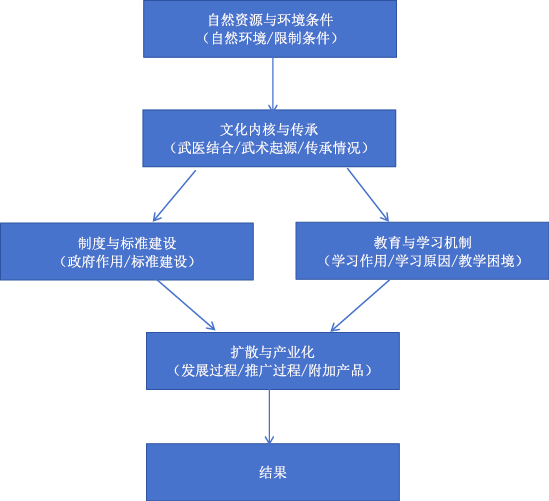
图 1 非遗活态传承路径图
Figure 1 Path diagram of active inheritance of intangible cultural heritage
4.1 环境与资源基础:活态传承的前置条件
资源与环境是山地非遗存续的底层土壤,分为自然滋养、现实限制双重维度。山地丰富的动植物资源、独特的山水地貌为技艺提供仿生创作原型,峨眉山多样物种衍生猴、蛇类仿生拳,青城山平缓谷地孕育柔和短打技法,蒙顶山云雾气韵塑造龙形茶艺身段,山林生态内化形成各门派独有的气韵风格。
同时,现代化发展消解了武术防身、山林自给的原生价值,偏远山区空间狭小、难以开展规模化教学。各门派发展约束差异显著:绿林派地处深山,空间与功能双重约束最强;蒙山派依托成熟茶旅配套,约束最弱;峨眉、青城拥有成熟景区,仅存在原生传习场地不足的问题。山地环境兼具滋养与桎梏双重属性,直接决定各门派后续的发展底色。
4.2 文化内核与传承:活态传承的核心根基
文化内核由山地环境长期塑造而成,分流至两条中介路径,是区分四大门派的根本标识,包含武医结合、门派起源、代际传承三层内涵。
武医同源层面,峨眉、青城依托道观草药资源形成完整的武医康养体系;绿林派仅有简易疗伤技法;蒙山茶艺无武医文化积淀,由此形成门派产业赛道的核心分化。起源叙事层面,青城道家文脉、峨眉佛道融合文脉、清末绿林底层移民武学文脉、蒙山禅茶产业文脉,四类差异化历史记忆塑造了各门派独特的精神追求,深刻影响门派下山后的发展重心。代际传承层面,峨眉武术形成民间、院校、景区多线并行的传承模式;青城派依托道观体系有序传习;绿林派仅靠民间自发传承,青年传承断层问题突出;蒙山派商业化培训体系成熟,但制茶本源技艺易被舞台表演掩盖。文化内核一旦在产业化进程中流失,将直接引发非遗文化异化问题。
4.3 制度与标准建设:活态传承的外部支撑
制度标准是文化内核市场化、规模化发展的外部传导渠道,主要包含政府作用、标准体系两大维度。官方认定、公共推广赋予门派合法传承身份,蒙山龙行十八式作为区域公共文旅资源获得全域政策扶持,峨眉、青城配套政策资源充足,绿林派仅获区级立项,资源供给严重不足。四大门派普遍存在统一服饰缺失、书面教学大纲不完善的问题,但负面影响程度各不相同,蒙山表演类技艺因缺少专属标识,品牌损耗最为显著;峨眉武术分支繁杂,无统一标准套路易造成技艺风格分裂;青城、绿林派受众范围窄,标准化短板影响更小,完善制度标准可大幅降低门派对外传播阻力。
4.4 教育与学习机制:活态传承的中介路径
教育传承与制度建设构成非遗传承内外双轮,承担文化内核纵向代际传递功能,涵盖学习动机、修习价值、教学困境三大阻力。学习动机随时代分化,中老年习青城、峨眉侧重养生,青年学茶艺以就业为目标,绿林爱好者多保留防身需求。修习价值分层,峨眉、青城可由招式升维至道武哲学,绿林仅实现强身,蒙山侧重茶礼心性熏陶。教学矛盾各有侧重,峨眉受院校格式化套路冲击,青城传统实战招式逐年流失,绿林教法粗放、老师傅保守不传核心,蒙山重舞台表演、弱化制茶技艺,教学体系失衡直接导致新生代传承人技艺残缺、传承不完整。
4.5 扩散与产业化:活态传承的结果与强化
产业化是双中介协同产出的最终结果,同时反向反哺文化保护、制度完善。传播维度方面,蒙山表演观赏性强,海内外推广门槛最低,峨眉内容多元,国际化成熟,青城受众单一,绿林缺少舞台价值,对外传播受限。而产业布局清晰分流,峨眉文旅、康养、文创多元均衡,青城专一中老年康养,绿林产业滞后,依赖补贴,蒙山绑定茶叶产销。产业化兼具正反效应,营收可修缮传习基地、编撰教材、培育新人,但若一味迎合市场删减武医、山地本源文化,会造成门派内核空洞。
4.6 主范畴间的逻辑关系与模型阐释
五大主范畴并非简单线性关系,整体形成四层联动逻辑。一是顺向传导:山地环境差异化塑造四大门派文化内核,文化内核同步依托制度、教育两条并行中介路径,最终形成各门派专属的传播模式与产业格局。二是双中介互补:制度建设侧重对外拓展市场、规范体系,教育传承侧重对内延续文脉、培育人才,二者缺一,无法完成“山林隐匿—都市展演—价值回归”完整转型。三是反向循环:产业化收益可反哺标准建设、教学优化与山地生态文化保护,产业薄弱门派则长期依赖财政支持。四是隐性中介:环境、政策、产业等所有外部要素,均需通过传承人落地践行,传承人的发展选择与传承理念,直接决定门派的未来发展走向。本模型既提炼山地武术、非遗通用传承规律,也通过四派异质性解释不同门派的差异化困境,为分类保护提供理论支撑。
5 结论与展望
5.1 研究贡献
第一,理论层面,本文构建了山地文化语境下武术、茶艺非遗一体化活态传承模型,突破现有研究仅将山地作为单纯地理背景的局限,厘清山地非遗完整的传承传导链条,明确传承主体贯穿全链条的隐性中介作用,丰富了体育非遗与山地非遗传承相关理论体系。
第二,案例层面,选取峨眉、青城、绿林武术与蒙山茶艺四类差异化门派开展对比扎根分析,厘清不同山地禀赋、文化本源下各门派的传承优势与短板,弥补现有研究单一门类、单案例研究的局限性,为山地非遗多案例质性研究提供参考范式。
第三,方法层面,严格完整执行扎根理论三级编码流程,依托多群体、多维度访谈实现研究资料信息饱和,以门派异质性佐证编码范畴的现实解释力,有效提升了山地非遗质性研究的严谨性与科学性。
5.2 管理启示
基于四大门派差异化的传承现状,山地非遗保护无法采用统一化方案,需分层分类制定活态传承优化路径:
其一,内核保护层面,各门派精准梳理专属文化标识,峨眉重点守护武医康养文化与仿生特色技艺,青城留存道家文化与传统实战招式,绿林完整保存底层移民武学与实战体系,蒙山兼顾原生制茶技艺与长嘴壶茶艺传播,杜绝产业化改造剥离核心文化,从根源规避非遗异化风险。
其二,制度教育层面,文旅部门牵头完善门派统一服饰、书面教学标准。融合传统师徒制与现代教学,破除老师傅技艺保守问题,针对绿林派加大青年传承人专项扶持力度,缓解人才断层。
其三,产业发展层面,峨眉打造文旅、康养多元业态,青城适度拓宽产业赛道,摆脱单一中老年康养依赖,绿林依托本土文旅政策开发民间武学体验项目,蒙山平衡茶叶销售与原生禅茶文化传播,降低产业绑定带来的文化流失风险。
5.3 研究局限与展望
本研究样本仅覆盖四川区域四大山地门派,研究结论对全国范围内其他山地非遗的普适性仍有待更多区域、更多门类案例验证。同时本研究仅采用质性扎根分析,未结合量化工具检验各范畴的作用强度,且未纳入短视频数字化传播等新兴影响因素,研究维度存在一定局限。
后续研究可拓展多地域山地武术、茶艺门派的对比调研,结合问卷调查、结构方程模型等量化方法验证传承模型,新增数字化传播研究维度,探究新媒体时代山地非遗“下山”传承的重塑机制,进一步完善山地非遗活态传承理论体系。
参考文献
[1] 杨红英,张重喜.体育非遗保护政策三维分析框架构建及实证研究[J].北京体育大学学报,2025,48(6):134-142.
[2] 代沁泉,熊回香,杜瑾,等.我国省级非物质文化遗产保护政策研究及启示——基于“工具—主体—目标”三维框架的探析[J].情报科学,2023,41(2):1-9,19.
[3] 李江敏,张佳泋,郝婧男.乡村非遗旅游活态传承的空间生产与地方认同研究[J].华中师范大学学报(自然科学版),2024,58(1):72-82.
[4] 宋晓,梁学成,张新成,等.非遗进景区:多主体价值共创的逻辑与机制——多案例研究[J].旅游学刊,2022,37(11):85-100.
[5] 张苧予,郑英.现代学徒制下的“工匠生成”何以可能?——基于非遗代表性传承人隐性知识转化的扎根研究[J].中国职业技术教育,2026,(7):80-89.
[6] 张姣姣,王剑.基于扎根理论的燕京八绝“多维互动传承模式”研究[J].民族教育研究,2020,(312):75-84.
[7] 谈国新,孙传明.信息空间理论下的非物质文化遗产数字化保护与传播[J].西南民族大学学报(人文社会科学版),2013,34(6):179-184.
[8] 崔家宝,周爱光,陈小蓉.我国体育非物质文化遗产项目濒危状况与保护措施研究[J].体育文化导刊,2019,(7):25-29.
[9] 戴朝,马文博,付翔,等.体育非物质文化遗产天府表达研究:价值功能、现实审视与传承策略[J].荆楚理工学院学报,2023,38(6):44-49.
[10] 高涵,李思青.民族地区非遗技艺传承人的数字素养:结构维度、现实困境与培育路径[J].民族教育研究,2025,36(6):128-137.
[11] 崔家宝,周爱光,陈小蓉.我国体育非物质文化遗产活态传承影响因素及路径选择[J].体育科学,2019,39(4):12-22.
[12] 陈炜,高翔.民族地区体育非物质文化遗产活态传承绩效评价指标体系及模型构建[J].青海民族研究,2016,27(4):81-85.