Current Views: 1268871
 Current Downloads: 791167
Education Study
ISSN Print:2707-0611
ISSN Online:2707-062X
Contact Editorial Office



Subscribe to the latest published information from SCISCAN
人工智能引导认知重评促进中学生情绪调节机制、实施路径与风险治理
Mechanisms, Implementation Pathways, and Risk Governance of Artificial Intelligence-Guided Cognitive Reappraisal for Promoting Emotion Regulation among Middle School Students


-
Information:
苏州科技大学教育学院,苏州
-
Keywords:
Artificial intelligence; Cognitive reappraisal; Middle school students; Emotion regulation; Mental health education人工智能; 认知重评; 中学生; 情绪调节; 心理健康教育
- Abstract: Middle school students are prone to emotional distress in contexts such as academic pressure, peer interactions, family expectations, and self-evaluation. School mental health education therefore requires more continuous, concrete, and operable emotion regulation support. Cognitive reappraisal, as an adaptive emotion regulation strategy, involves changing individuals’ interpretations and evaluations of emotional events, thereby influencing subsequent emotional experiences, expressions, and behavioral responses, and helping students reframe negative events from more rational, positive, or neutral perspectives. Artificial intelligence dialogue systems, characterized by structured questioning, real-time feedback, and repetitive training, provide a novel auxiliary approach for cognitive reappraisal training. Based on the practical needs of emotion regulation among middle school students, this paper analyzes the theoretical foundation and applicability of cognitive reappraisal, explores the mechanisms of artificial intelligence-guided cognitive reappraisal, and proposes school-based implementation pathways and risk governance strategies. The study suggests that artificial intelligence-guided cognitive reappraisal can transform abstract emotion regulation strategies into structured, operable, and repeatable training processes. However, its application should be positioned as an educational support tool rather than a substitute for teachers or professional psychological services, and should be implemented under teacher supervision, privacy protection, risk identification, and referral mechanisms. 中学生在学业压力、同伴交往、家庭期待和自我评价等情境中,容易出现情绪困扰,学校心理健康教育需要更加持续、具体和可操作的情绪调节支持。认知重评作为一种积极的情绪调节策略,通过改变个体对情绪事件的解释和评价,影响后续情绪体验、表达和行为反应,帮助学生以更合理、积极或中立的视角理解负性事件。人工智能对话系统具有结构化提问、即时反馈和重复训练等特点,可为认知重评训练提供新的辅助方式。本文从中学生情绪调节的现实需求出发,分析认知重评的理论基础及其适用性,探讨人工智能引导认知重评的作用机制,并提出学校实践路径与风险治理建议。人工智能引导认知重评,有助于将抽象的情绪调节策略转化为结构化、可操作、可重复的训练过程,但其应用应坚持教育辅助定位,在教师监督、隐私保护和风险转介机制下开展。
- DOI: 10.35534/es.0806125
- Cite: 陈翠,潘悦,狄吉祥.人工智能引导认知重评促进中学生情绪调节机制、实施路径与风险治理[J].教育研讨,2026,8(6):707-713.
1 中学生情绪调节的现实困境与学校支持需求
中学生正处于身心和社会认知快速发展的关键时期,常面临学业压力、家庭期待(家长对学业成绩的正常关注)、同伴交往(小组合作分工、同学误解、友谊约定未能遵守等)和学业自我评价等多重挑战,更易出现焦虑、烦躁、抑郁等情绪困扰[1,2]。这些情绪困扰对个体发展的影响,不仅取决于情绪自身,还取决于个体对情绪的识别、理解和调节能力。已有研究指出,情绪调节会影响情绪体验的强度、持续时间及后续行为反应[3]。情绪调节能力不足的学生,更容易出现焦虑、抑郁等心理问题,并表现出更明显的情绪波动并伴有心理困扰[4]。
在现实生活中,部分学生在面对考试失利、小组合作中的分工误会、教师评价或家长对学业成绩的正常关注时,往往缺乏有效的情绪调节策略,容易采用回避、压抑、反刍等应对方式。这些方式可能在短期内暂时减轻压力体验,但从长期来看,非适应性调节方式容易造成负性情绪积累,并进一步增加心理困扰风险[5]。因此,中学生心理健康教育不仅要关注学生是否出现负性情绪,更应关注其如何理解、表达和调节负性情绪。
在多种情绪调节策略中,认知重评具有较强的应用价值。认知重评强调通过改变个体对情绪事件的解释和评价,帮助学生以更新、更合理或更中立的视角看待负性事件,从而减轻或转化情绪反应[6]。对于中学生而言,考试失利、学习合作中的沟通不畅、学业自我评价受挫等事件,常常伴随消极解释。因此,将认知重评转化为学校心理健康教育中的结构化训练内容,具有一定适用性。
然而,在学校心理健康教育实践中,中学生情绪调节支持仍面临一定限制。一方面,学生情绪困扰具有日常性、情境性和反复性,仅依靠课堂讲授或个别辅导,难以充分满足学生持续化、个性化的情绪调节需求;另一方面,认知重评虽然具有应用价值,但如果缺少具体情境、互动引导和反复练习,学生也难以真正掌握并迁移到日常生活中。如何借助人工智能技术,将情绪表达、事件澄清、想法识别和认知调整过程,转化为可对话、可操作、可重复的训练,并在学校场域中明确其实施路径与风险边界,成为当前中学生心理健康教育中值得进一步探讨的问题。
2 认知重评的理论基础及其适用性
认知重评是情绪调节过程模型中的重要策略,属于先行关注策略。根据情绪调节过程模型,情绪反应不是由外部事件本身直接决定的,而是在个体对事件进行注意、理解和评价的过程中逐渐形成。认知重评的核心,是个体通过改变对情绪事件或情境意义的理解和评价,影响后续情绪体验、情绪表达和行为反应[7]。与表达抑制不同,认知重评不是在情绪产生之后单纯控制外在表现,也不是要求学生忽视或否认负性情绪,而是引导其重新理解事件意义,形成更加合理、积极或中立的解释,从而减轻负性情绪体验,并帮助学生以更理性的方式面对后续问题[8]。
认知重评能够发挥情绪调节作用,关键在于其改变了个体对负性事件的解释方式。在学校生活中,中学生面对考试失利、小组合作分工矛盾、教师批评或家长对学业成绩的正常关注时,负性情绪往往不仅来自事件本身,也来自其对事件的消极解释。例如,学生可能将一次考试失利理解为“我能力不行”,将一次小组合作分工矛盾理解为“同学不愿意和我合作”,将一次教师批评理解为“老师否定了我”,这些解释容易加重焦虑、低落和自我否定。认知重评则引导学生区分“事情本身”和“自己对事情的解释”,并尝试从问题解决、经验积累、他人视角或个人成长等角度,重新理解事件。已有元分析研究显示,在多种基于情绪调节过程模型的策略中,认知重评等前期调节策略能够通过改变个体对情绪事件的理解,进而调节情绪反应[9]。这说明,认知重评不是单纯的情绪安慰,而是可以围绕具体事件进行练习的认知性调节方法,为其转化为学校情绪调节训练内容提供了依据。
对于中学生而言,认知重评具有较强的适用性。中学阶段学生的抽象思维、自我反思和认知控制能力逐渐发展,已经开始具备从不同角度分析事件和调整解释方式的认知基础。同时,认知重评能力从儿童期到青少年期持续发展,其使用能力和效果,会受到年龄、认知发展水平和具体情境的影响[10]。这说明,中学生既具备学习认知重评的可能性,也需要在具体情绪情境中获得适当引导和反复练习。进一步来看,认知重评不仅具有发展的可训练性,也具有帮助青少年应对压力情境的情绪调节价值。针对青少年群体的研究发现,认知重评可能有助于削弱抑郁症状与压力后情绪反应之间的不良关联,提示其在帮助青少年应对压力和恢复情绪方面具有一定价值[11]。
因此,认知重评对于中学生情绪调节的意义,不仅在于缓解某一次负性情绪体验,更在于帮助其形成可迁移的情绪调节方法。在学校心理健康教育中,认知重评可以被转化为结构化训练过程,即引导学生识别情绪、澄清事件、发现消极解释、重新理解事件,并形成后续行动计划。通过持续练习,学生可以逐渐学会在学习压力、人际冲突和学业自我评价受挫等情境中,调整解释方式,减少压抑、回避和反刍等非适应性应对。由此可见,认知重评既具有明确的理论基础,也具有转化为中学生学校心理健康教育内容的现实可行性,这也为后续借助人工智能开展结构化引导提供了重要依据。
3 人工智能引导认知重评的机制与过程模型
3.1 人工智能引导认知重评的作用机制
人工智能引导认知重评,并不是简单地让学生与系统自由聊天,而是借助人工智能对话系统的结构化提问、即时反馈和重复训练功能,将认知重评过程转化为学生能够理解和参与的互动过程。已有研究指出,心理健康聊天机器人通常包含情绪支持、自我监测、反馈和认知重构等功能,能够为个体提供初步的情绪表达和心理支持[12]。基于认知重评的作用特点和人工智能对话系统的交互优势,人工智能引导认知重评促进中学生情绪调节的机制,主要体现在情绪表达支持、事件澄清、消极解释识别、意义重构和反馈巩固等环节。
首先,人工智能可以为学生提供情绪表达支持。中学生在面对学习压力、学习合作中的沟通不畅或学业自我评价受挫时,往往难以清楚表达自己的情绪体验,或者只笼统地说“烦”“难受”“不想说”。人工智能系统可以通过提出温和、具体的问题,引导学生说出当前的情绪状态,如焦虑、低落、委屈、愤怒或失落等,并鼓励其描述情绪出现的时间、强度和持续情况。与单向的心理健康知识讲授相比,人工智能对话系统能够根据学生的回答,继续追问或给予反馈,从而帮助学生将模糊的情绪体验转化为可以被识别和讨论的内容。
其次,人工智能可以帮助学生澄清引发情绪的具体事件。认知重评的前提,是学生能够明确“发生了什么”及“这件事为什么会影响自己”。在实际学校生活中,学生的负性情绪常常与考试成绩、同伴关系、教师评价、家长对学业成绩的正常关注和班级适应等情境有关,但他们未必能主动梳理事件经过。人工智能系统可以通过连续而适度的提问,帮助学生回顾事件背景、关键情节和自身最在意的部分,从而将情绪反应与具体事件联系。通过事件澄清,学生能够从单纯的情绪宣泄转向对问题情境的理解,为后续认知重评奠定基础。
再次,人工智能可以引导学生识别隐藏在情绪背后的消极解释。中学生的负性情绪往往并不只来自事件本身,也来自其对事件的解释方式。例如,学生可能将一次考试失利解释为“我很笨”“以后也不会学好”,将一次同伴冲突解释为“别人都不喜欢我”,将教师批评解释为“老师否定了我”,这些自动化想法容易加重焦虑、低落和自我否定。人工智能系统可以通过提问,引导学生区分“事情本身”和“自己对事情的想法”,帮助其发现情绪背后的消极解释,从而使认知重评具有明确的调整对象。在此基础上,人工智能可以进一步引导学生进行意义重构。认知重评的核心,在于改变个体对情绪事件意义的理解,而人工智能系统可以通过替代性视角、问题解决视角、成长视角和他人视角等方式,引导学生重新理解负性事件。例如,面对考试失利,系统可以引导学生思考“这次结果暴露了哪些可以改进的地方”“下一次可以尝试什么方法”;面对同伴误解,系统可以引导学生思考“是否存在沟通不充分的可能”“有没有机会进一步解释或修复关系”。已有基于认知行为取向的聊天机器人研究显示,自动化对话系统在提供即时反馈和心理支持方面具有一定应用潜力[13,14]。因此,人工智能引导认知重评的关键,不是替学生给出简单答案,而是通过结构化对话帮助学生形成新的解释角度。
最后,人工智能可以通过总结反馈和重复练习,巩固认知重评效果。在一次对话结束时,系统可以帮助学生概括本次情绪事件、原有消极想法、新的理解方式,以及后续可采取的行动计划,使学生将一次情绪表达转化为可迁移的调节经验。相关机器人情绪调节研究表明,机器人引导的多次会话,能够支持参与者表达情绪、理解情绪事件,并尝试重新解释负性经历,同时促进更充分的情绪表达和情绪控制感提升[15]。这说明,人工智能引导认知重评,不仅可以在单次互动中提供支持,也可以通过多次训练帮助学生逐渐熟悉并掌握认知重评方法。
3.2 人工智能引导认知重评促进情绪调节的过程模型
基于上述机制,本文将人工智能引导认知重评促进中学生情绪调节的过程概括为结构化过程模型(如图1所示)。该模型以中学生常见的负性情绪事件为起点,如考试失利、人际冲突、家庭期待和自我评价受挫等。当学生在这些情境中产生焦虑、低落、烦躁或自我否定等情绪时,人工智能系统通过结构化提问、即时反馈和重复练习,引导学生逐步完成认知重评过程。
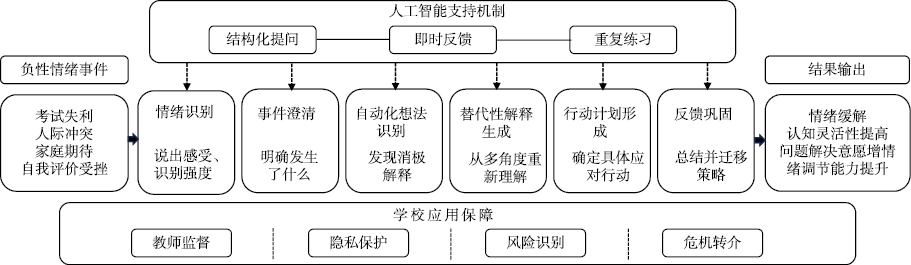
图 1 学校心理健康教育情境下的人工智能引导认知重评过程模型
Figure 1 Process model of AI-guided cognitive reappraisal in school mental health education
具体而言,该过程包括六个环节:第一,情绪识别,即引导学生觉察当前情绪状态,说出自己的感受并识别情绪强度;第二,事件澄清,即帮助学生梳理引发情绪的具体事件,明确“发生了什么”;第三,自动化想法识别,即引导学生发现隐藏在情绪背后的消极解释或不合理想法;第四,替代性解释生成,即帮助学生从更合理、积极或中立的角度重新理解事件;第五,行动计划形成,即引导学生在新理解的基础上,确定具体、可行的应对行动;第六,反馈巩固,即通过总结和迁移策略,帮助学生巩固认知重评经验,并尝试在后续学习和生活情境中加以运用。
通过这一过程,人工智能系统能够将认知重评从抽象的情绪调节策略,转化为结构化、可操作、可重复的学校心理健康教育训练流程。其结果主要表现为:学生负性情绪得到缓解、认知灵活性提升、问题解决意愿增强,以及情绪调节能力提高。同时,该过程需要置于学校心理健康教育情境,并通过教师监督、隐私保护、风险识别和危机转介等学校应用保障机制,确保人工智能干预的教育性、安全性和规范性。
4 人工智能引导认知重评的学校实践路径
人工智能引导认知重评要在学校心理健康教育中发挥作用,不能仅停留在技术工具引入层面,而应围绕学生发展特点、认知重评训练规律和学校教育情境进行系统设计。已有青少年数字心理健康干预研究指出,相关工具应结合青少年的发展阶段和干预目标,重视可及性、个性化和持续监测等关键要素[16]。据此,人工智能引导认知重评的学校实践路径,可从适用对象与应用场景、训练内容设计、对话流程构建、反馈语言规范和效果跟踪机制五个方面展开。
第一,明确适用对象与应用场景。人工智能引导认知重评,主要适用于学校心理健康教育中的一般性、发展性和预防性情绪调节支持场景,可应用于心理健康课、主题班会课、发展性团体辅导,以及个别辅导前的情绪初步梳理等环节。例如,学生因考试失利、学习压力、人际误解、学业自我评价受挫或家庭沟通不顺,而产生焦虑、低落、烦躁、委屈等情绪时,人工智能系统可以通过结构化对话,引导学生进行情绪表达、事件澄清和认知调整。此类情绪困扰多具有日常性、情境性和可调节性,适合通过认知重评训练帮助学生形成更合理、积极或中立的解释方式。同时,学校在使用人工智能系统时,应将其定位为心理健康教育的辅助工具,而不是心理诊断或专业治疗工具。对于一般性情绪波动,人工智能可以提供初步支持;但对于持续低落、强烈焦虑或其他明显心理危机情况,则不宜继续进行常规认知重评训练,而应及时转介给学校心理教师或专业人员处理。由此,明确适用对象、应用场景和使用边界,是人工智能进入学校心理健康教育实践的前提。
第二,围绕真实生活事件设计训练内容。认知重评的核心在于改变学生对具体情绪事件意义的理解,因此训练内容不宜停留在抽象概念讲解上,而应贴近中学生真实的学习和生活情境。学校可以围绕学习压力、考试失利、同伴冲突、课堂表现、教师评价、家长对学业成绩的正常关注和班级适应等常见主题,设计人工智能引导认知重评的对话任务。技术支持的认知重评训练研究提示,面向青少年的情绪调节训练,应尽量依托有意义的情绪化情境,并通过具体体验帮助学生理解和练习认知重评[17]。例如,在“考试失利”主题中,系统可以引导学生表达失落或焦虑情绪,澄清其最在意的是成绩下降、排名变化,还是担心被家长或教师否定;随后帮助学生识别“我不行”“我肯定学不好”等消极解释,并进一步引导其从发现问题、调整方法和积累经验等角度重新理解事件。通过真实生活事件的嵌入,学生更容易理解认知重评并不是简单地“想开一点”,而是在具体情境中重新分析事件、调整解释方式和寻找后续行动。
第三,形成分步骤、可操作的对话流程。人工智能引导认知重评不应是自由、随意的聊天,而应围绕明确的情绪调节目标展开。根据认知重评过程和人工智能对话系统的特点,学校可以将干预流程设计为“情绪识别与表达—事件澄清—消极解释识别—认知重评与意义重构—行动计划与反馈巩固”五个步骤。首先,系统引导学生说出当前情绪,如焦虑、低落、委屈或烦躁;其次,帮助学生描述引发情绪的具体事件,明确“发生了什么”;再次,引导学生发现情绪背后的自动化想法,如“我很差”“别人都不喜欢我”,系统通过问题解决、他人视角、成长视角和未来行动等方式,引导学生形成新的解释;最后,系统对学生的新理解进行总结,并鼓励其在后续学习生活中尝试运用。通过分步骤流程,认知重评可以将抽象的心理学概念,转化为学生能够参与、练习和迁移的具体过程。
第四,重视人工智能反馈语言的适龄性和支持性。中学生正处于情绪调节能力和认知理解能力持续发展的阶段,人工智能系统的语言表达应符合其年龄特点和心理接受水平。系统反馈应尽量温和、具体、简短,避免使用过于专业化、诊断性或评判性的语言。例如,当学生表达“我这次考差了,觉得自己很没用”时,系统不宜简单回应“你要积极一点”,也不宜直接判断其存在心理问题,而应先接纳其情绪,如“这次成绩让你很失落,也让你开始怀疑自己”,再进一步引导其区分“一次考试结果”和“整体能力”之间的关系。人工智能的提问,也应避免连续追问和过度深入,一次只提出一个清晰问题,给学生预留思考和表达空间。当反馈语言具有适龄性、支持性和教育性,学生才更容易在安全的互动氛围中完成认知重评训练。
第五,建立训练效果的跟踪与反馈机制。人工智能引导认知重评的学校应用不应停留于单次对话体验,而应形成持续跟踪和反馈机制。学校可以在保护学生隐私的前提下,记录学生参与训练的次数、主题类型、情绪变化和认知重评完成情况,并结合学生自评、教师观察和阶段性反馈,对训练效果进行持续把握。对于一般性情绪困扰,系统可以帮助学生回顾前次训练中形成的新解释和行动计划,促进其将认知重评方法迁移到新的生活情境中;对于反复出现强烈负性情绪或表达明显风险信号的学生,应及时提醒教师关注并进行后续评估。通过跟踪与反馈,人工智能系统才能逐渐从一次性互动工具,转化为学校心理健康教育中的持续性辅助训练平台。
总体来看,人工智能引导认知重评的学校实践路径,应坚持“适用对象清晰、训练内容真实、对话流程结构化、反馈语言适龄、效果跟踪持续”的基本原则。其价值不在于替代心理教师或专业心理服务,而在于为学校提供可重复、可操作、可嵌入日常心理健康教育的情绪调节训练方式,帮助中学生在真实生活事件中逐步学习认知重评方法,提升情绪识别、事件理解和自我调节能力。
人工智能引导认知重评的学校实践路径如图2所示。
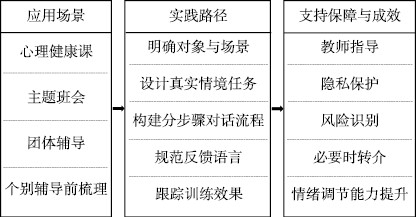
图 2 人工智能引导认知重评的学校实践路径
Figure 2 School-based implementation pathway for AI-guided cognitive reappraisal
5 人工智能引导认知重评的风险治理与伦理边界
人工智能引导认知重评为学校心理健康教育提供了新的辅助方式,但其应用对象是中学生,涉及情绪表达、个人经历和心理状态等较为敏感的内容,因此必须明确风险治理和伦理边界。已有研究指出,大语言模型在心理健康场景中具有一定应用潜力,但其实际应用效果、安全性和评价方法仍需进一步完善,因此在学校心理健康教育中的使用边界仍需明确[18]。关于会话式人工智能心理健康应用的研究也提示,此类工具在使用过程中可能涉及隐私保护、责任边界、过度依赖、潜在安全风险和危机处置等伦理问题,因此需要建立清晰的人工监督和风险转介机制[19]。因此,学校在使用人工智能引导认知重评时,应明确教育辅助定位,建立教师监督、风险识别和危机转介机制。
首先,应明确人工智能系统的功能边界。人工智能引导认知重评适合用于一般性情绪表达、事件梳理和认知调整训练,不应承担心理诊断、危机评估或专业治疗功能。系统在对话过程中,可以引导学生表达情绪、澄清事件和重新理解负性经历,但不能直接判断学生是否患有心理疾病,也不能替代心理教师或专业心理咨询人员作出干预决定。尤其当学生出现持续低落、强烈自责等风险信号时,人工智能系统应及时停止常规认知重评训练,并提示学生寻求教师或专业人员帮助。
其次,应建立风险分级与处置机制。学校可以根据学生表达内容、情绪强度、持续时间和对学习生活的影响程度,将人工智能互动中的风险大致分为低风险、中风险和高风险三个层级。需要说明的是,风险分级并不是心理诊断,而是为了帮助学校判断人工智能系统是否可以继续进行常规情绪调节训练,以及是否需要教师进一步介入。具体处置方式如表1所示。
表 1 人工智能引导认知重评的风险分级与处置方式
Table 1 Risk stratification and response strategies for AI-guided cognitive reappraisal
| 风险等级 | 典型表现 | AI系统处理 | 学校处理 |
| 低风险 | 一般焦虑、烦躁、失落、委屈等情绪,与具体事件相关,未明显影响日常学习生活 | 继续完成认知重评训练,引导学生表达情绪、澄清事件,并尝试重新解释 | 教师进行一般性关注,鼓励学生在日常情境中运用认知重评方法 |
| 中风险 | 持续低落、强烈自责、明显回避,情绪困扰已影响学习、人际交往或日常生活 | 减少深度追问,避免继续强化负性体验;提示学生向心理教师、班主任或可信任成人求助 | 心理健康教师进行后续了解与评估,必要时联系家长并提供进一步支持 |
| 高风险 | 出现自伤暗示、轻生表达、遭受欺凌或暴力、严重绝望感,或其他明显危机信号 | 立即停止常规对话,触发危机提示,引导学生尽快联系教师、家长或专业帮助 | 启动学校危机干预流程,及时通知相关责任人员,并根据情况进行专业转介 |
再次,应重视学生隐私和数据安全。人工智能引导认知重评的过程中,可能涉及学生的情绪状态、学习与人际经历、家庭沟通情况和个人困扰等敏感信息。学校在使用相关系统前,应明确数据收集范围、使用目的、保存期限和管理权限,坚持最小必要原则,避免收集与情绪调节训练无关的信息。对于学生互动记录和情绪数据,应仅用于心理健康教育支持、训练效果跟踪和风险识别,不应随意公开、评价或用于与学生发展无关的管理目的。同时,学校应向学生及其监护人说明系统的辅助性质、数据使用方式和隐私保护要求,使学生在知情和相对安全的条件下参与训练。在技术实现层面,学校宜优先采用校内私有化部署或教育主管部门认可的合规平台;如确需调用云端人工智能服务,应避免上传学生姓名、班级、联系方式等可识别信息,并明确第三方服务商的数据处理责任和合规要求。学生互动数据应进行匿名化编号和脱敏处理,在传输和存储过程中采取加密措施,并通过权限分级、访问控制和日志审计限制数据查看范围。对于完整原始对话记录,应设置明确保存期限并定期删除,仅保留必要的统计性信息和风险提示信息。
最后,应防止人工智能替代教师陪伴和专业支持。人工智能系统虽然能够提供结构化提问和即时反馈,但其对学生复杂情境的理解仍然有限,也难以真正发挥人类教师在情感陪伴、价值引导和危机判断中的作用。学校在应用人工智能引导认知重评时,应将其嵌入心理健康课程、团体辅导或日常心理支持体系,由心理健康教师或班主任进行必要的组织、说明和监督。对于一般性情绪困扰,人工智能可以作为辅助训练工具;对于复杂心理问题或危机情境,则必须回归到教师支持、家校协同和专业转介体系。
总体而言,人工智能引导认知重评的学校应用,应坚持“辅助而非替代、支持而非诊断、训练而非治疗”的基本边界。只有在明确适用范围、建立风险分级机制、保护学生隐私并落实教师监督的前提下,人工智能才能更安全地服务于中学生情绪调节能力培养,成为学校心理健康教育的有益补充。
参考文献
[1] 王浩,周怡,戴品远,等.浙江省中学生焦虑抑郁症状共病状况分析[J].中华流行病学杂志,2023,44(12):1921-1927.
[2] 张亚利,靳娟娟,俞国良.2010~2020中国内地初中生心理健康问题检出率的元分析[J].心理科学进展,2022,30(5):965.
[3] Gross J J.The emerging field of emotion regulation:An integrative review[J].Review of General Psychology,1998,2(3):271-299.
[4] Schäfer J Ö,Naumann E,Holmes E A,et al.Emotion regulation strategies in depressive and anxiety symptoms in youth:A meta-analytic review[J].Journal of Youth and Adolescence,2017,46(2):261-276.
[5] Aldao A,Nolen-hoeksema S,Schweizer S.Emotion-regulation strategies across psychopathology:A meta-analytic review[J].Clinical Psychology Review,2010,30(2):217-237.
[6] Gross J J,John O P.Individual differences in two emotion regulation processes:Implications for affect,relationships,and well-being[J].Journal of Personality and Social Psychology,2003,85(2):348.
[7] Gross J J.Emotion regulation:Affective,cognitive,and social consequences[J].Psychophysiology,2002,39(3):281-291.
[8] Gross J J.Antecedent-and response-focused emotion regulation:Divergent consequences for experience,expression,and physiology[J].Journal of Personality and Social Psychology,1998,74(1):224.
[9] Webb T L,Miles E,Sheeran P.Dealing with feeling:A meta-analysis of the effectiveness of strategies derived from the process model of emotion regulation[J].Psychological Bulletin,2012,138(4):775.
[10] Willner C J,Hoffmann J D,Bailey C S,et al.The development of cognitive reappraisal from early childhood through adolescence:A systematic review and methodological recommendations[J].Frontiers in Psychology,2022,13:875964.
[11] Shapero B G,Stange J P,Mcarthur B A,et al.Cognitive reappraisal attenuates the association between depressive symptoms and emotional response to stress during adolescence[J].Cognition and Emotion,2019,33(3):524-535.
[12] Abd-alrazaq A A,ALajlani M,Alalwan A A,et al.An overview of the features of chatbots in mental health:A scoping review[J].International Journal of Medical Informatics,2019,132:103978.
[13] Fitzpatrick K K,Darcy A,Vierhile M.Delivering cognitive behavior therapy to young adults with symptoms of depression and anxiety using a fully automated conversational agent (Woebot):A randomized controlled trial[J].JMIR Mental Health,2017,4(2):e7785.
[14] Fulmer R,Joerin A,Gentile B,et al.Using psychological artificial intelligence (Tess) to relieve symptoms of depression and anxiety:Randomized controlled trial[J].JMIR Mental Health,2018,5(4):e64.
[15] Laban G,Wang J,Gunes H.A robot-led intervention for emotion regulation:From expression to reappraisal[J].IEEE Transactions on Affective Computing,2026.
[16] Hong S H,Chun T K,Nam Y J,et al.Digital mental health interventions for adolescents:An integrative review based on the behavior change approach[J].Children,2025,12(6):770.
[17] Kitson A,Antle A N,Slovak P.Co-designing a virtual reality intervention for supporting cognitive reappraisal skills development with youth[C]//Proceedings of the 22nd Annual ACM Interaction Design and Children Conference.New York:Association for Computing Machinery,2023:14-26.
[18] Hua Y,Na H,Li Z,et al.A scoping review of large language models for generative tasks in mental health care[J].npj Digital Medicine,2025,8(1):230.
[19] Meadi M R,Sillekens T,Metselaar S,et al.Exploring the ethical challenges of conversational AI in mental health care:Scoping review[J].JMIR Mental Health,2025,12(1):e60432.