 Current Views: 1096950
 Current Downloads: 688093
Theory and Practice of Psychological Counseling
ISSN Print:2664-1828
ISSN Online:2664-1836
Contact Editorial Office



Subscribe to the latest published information from SCISCAN
应用移空技术矫治双相情感障碍服刑人员偷窃冲动的个案报告
A Case Report on the Application of Yikong Skill in Correcting Theft Impulse of a Female Inmate with Bipolar Disorder


-
Information:
北京市天河监狱,北京
-
Keywords:
Yikong Skills; Bipolar disorder; Theft impulse移空技术; 双相情感障碍; 偷窃冲动
- Abstract: This case report describes the application of the Yikong Skills for the psychological correction of stealing impulse in a female inmate with bipolar disorder. The client presented with physical and psychological symptoms such as chest tightness, shoulder pain, and persistent depressive mood, and impulsive stealing behavior, which recurred even after being imprisoned. Following the principle of “addressing only one symptom at a time” in Yikong Skills, three Yikong sessions were conducted sequentially targeting chest tightness, shoulder pain, and depressive mood, together with initial interview, closing interview, and follow-up, totaling six interviews. The results showed that the impact scores of the three target symptoms decreased from 9.5 to 3 (chest tightness), 7.5 to 0 (shoulder pain), and 7 to 2 (depressive mood), indicating significant improvement or clinical remission. After the intervention, the client no longer exhibited stealing behaviors, showed stable mood, improved interpersonal relationships, and performed well in the prison setting. This case demonstrates that the Yikong Skills can effectively alleviate somatic and emotional symptoms in inmates with bipolar disorder, reduce the risk of addictive behavior relapse, and is operable and safe without relying on in-depth exploration of root causes. 本研究报告了应用移空技术对一名患有双相情感障碍女性服刑人员偷窃冲动进行心理矫治的实践过程。来访者存在胸闷、肩疼、持续性抑郁情绪等躯体与心理症状,入监后仍反复出现偷窃行为。根据移空技术“一次只处理一个症状”的原则,依次针对胸闷、肩疼和抑郁情绪开展三次移空咨询,结合初始访谈、结束访谈及随访,共进行六次访谈干预。结果显示,三次移空咨询后,各靶症状影响度评分分别从9.5分降至3分(胸闷)、7.5分降至0分(肩疼)、7分降至2分(抑郁情绪),临床症状显著改善或临床痊愈。来访者后续未再出现偷窃行为,情绪稳定,人际关系改善,监区表现良好。案例表明,移空技术能有效缓解双相情感障碍服刑人员的躯体和情绪症状,降低偷窃冲动行为复发风险,且不依赖对问题根源的深挖,具有较强的可操作性和较高的安全性。
- DOI: 10.35534/tppc.0805031
- Cite: 张鑫. (2026). 应用移空技术矫治双相情感障碍服刑人员偷窃冲动的个案报告. 心理咨询理论与实践, 8(5), 250-261.
1 来访者基本情况及诉求问题
来访者为女性,大学文化程度。
主要诉求与症状:存在盗窃冲动,控制不住自己,入监后仍反复出现偷窃他人少量物品的行为,存在难以控制的偷窃冲动,行为后伴随强烈内疚感,内心痛苦、胸闷;肩膀疼,感觉有东西往内扣着压;入监后性格趋于沉默寡言,存在持续的抑郁情绪,既往存在自伤意念与行为史。
2 移空咨询实施过程
移空技术不强求来访者对心理困扰的言语表述,而只强调对心身状态整体体验的聚焦,并借助意识放松状态下问题象征物的呈现,促成症状缓解与问题解决(夏宇欣 等,2013a)。根据移空技术“一次只解决一个症状”的原则(刘天君,2019),针对来访者的诉求开展3次靶症状咨询,加上初始访谈、结束访谈及随访,共开展6次访谈干预。
2.1 初始访谈
首先,进行评估。在首次访谈中,评估来访者是否适合采用移空技术干预。咨询师引导来访者进行具体想象和描述苹果、矿泉水等常见物品,来访者能比较详细地描述和表达,说明其具有较好的具象思维和无象思维能力。结合来访者大学文化背景和设计专业素养,有较好的言语和绘画表达能力,适合采用移空技术。
其次,咨询师向来访者系统讲解移空技术临床的操作流程,初步了解来访者想要处理的问题,完成干预前沟通后,双方签署知情同意书。
2.2 第一次移空咨询
在初始访谈后的第三天,进行第一次移空咨询,共包括10个操作步骤(夏宇欣 等,2013b)。
2.2.1 三调放松
一是调身,让来访者坐于椅子的前三分之一处,端正坐姿,伸直腰背,双手掌心向下平放在大腿之上,轻闭双眼;二是调息,让来访者缓慢地进行深呼吸,只注意呼气,不管吸气,并适当留有余地,不要完全呼尽,让一次呼吸能够平缓过渡到下一次;三是调心,让来访者随呼气将头脑的一切意念,包括思维、情绪排出脑外。
来访者表现:刚开始明显有些紧张,称自己没有安全感,无法正常闭眼。经再次引导做了一轮三调放松后,来访者才达到身心放松的状态。
2.2.2 确定靶症状
(1)选择靶症状。询问来访者当下主观负性感觉和情绪状态,来访者表示胸闷、有时候堵得无法呼吸;想到自己盗窃的行为,自我内疚感很重,自述被抓当时就产生强烈自我否定情绪,因此曾出现自伤行为,但胸前还是堵得难受。另外,有时还肩膀疼,情绪低落,持续性的抑郁情绪状态。随后,咨询师询问来访者需要当下优先处理的症状,来访者选择胸闷作为本次干预的靶症状。
(2)测量症状影响度。针对胸闷这一靶症状,来访者给出9.5分的影响度分值。
2.2.3 存想象征物
咨询师引导来访者想象胸闷这个生理带来的躯体感受,来访者自述身体内的胸腔处有一团气流,并且延伸到了身体外部;呈椭圆形,长1米、宽1米、高30厘米,重量1~1.5千克,白色,无任何气味(如图1所示)。
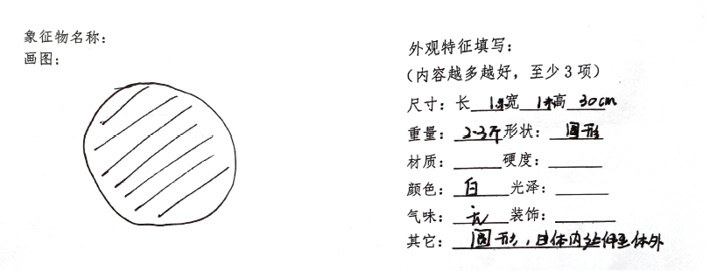
图1 白色气团
Figure 1 White gaseous mass
2.2.4 存想承载物
咨询师引导来访者想象可以装下象征物的承载物,来访者自述用“吸尘器”,并在咨询师引导下,对承载物“吸尘器”进行完整的具象化想象。
存想象征物“吸尘器”:长20厘米、宽10厘米、高1.2米,重量1.5千克,灰色,形状像吸尘器,是不规则物体造型;材质为塑料,质地坚硬,漆面带有光泽感,无气味(如图2所示)。
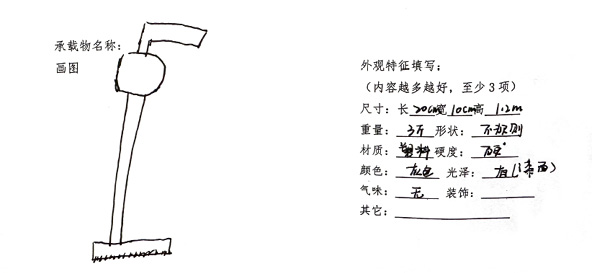
图2 吸尘器
Figure 2 Vacuum cleaner
2.2.5 填写记录表A纸
来访者详细描述象征物和承载物特征后,咨询师鼓励来访者将最初的评分及所想象的象征物、承载物的形象画在记录纸上,并在旁记录象征物和承载物的主要特征。
2.2.6 三调放松
咨询师参照静态作业流程,再次引导来访者进行三调放松。来访者表现平静、投入,感到身心放松后,缓缓睁开眼睛。
2.2.7 清洁与置放
检查清洁象征物和承载物。来访者表示不愿意清洁象征物,在仔细审视象征物和承载物后,仅用毛巾对承载物进行了擦拭清洁。
将象征物置于承载物内。因象征物大部分在体内,咨询师引导来访者自然将其从体内取出象征物,并置于承载物内。在这一过程中,咨询师发现承载物是不方便移出的气体,便引导来访者模拟手术情境,在胸口想象划开一道5厘米的创口,将承载物有吸力功能的一端放进身体,采用抽气的方式,将象征物转移至承载物中。起初来访者有些害怕,将承载物“吸尘器”的动能开关开至最低档。约五分钟后,来访者感知体内气体无明显变化,咨询师继续引导来访者尝试加大动力,而后来访者感知象征物“气体”开始转移。咨询师适时询问转移进度,约14分钟后,来访者表示已经完全转移。随后引导其对胸腔开口处进行想象缝合,模拟缝合30针,经碘伏消毒后用纱布包扎固定。
锁定与加固。来访者检查了承载物表面,确认无漏气缺口,表示密封性很好、状态稳固。
2.2.8 移动与空境
咨询师向来访者说明,整个移动过程需在其正前方、与视线平齐的心理视野中进行,纵向往返移动,且只看置放了象征物的承载物,忽视其他事物。
初始移动。咨询师引导来访者将已经处理好的象征物和承载物置于想象的空间,先放至眼前,停顿片刻看清楚,然后移至1米、5米、1米,重复了2轮。咨询师询问移动后的感受,此时来访者表示没有明显异样感觉。
可见移动。引导来访者做10次往返移动,3米→10米→15米→20米→30米→20米→15米→
20米→30米→40米。来访者表示自己视力偏弱,超过30米就看不清楚了,移动至50米时仅看到一个小点,觉得移动位置在30米最合适。
超距移动。引导来访者进行远距离移动,50米→100米→200米。这时,来访者表示完全看不见了,但是能感觉到;移动至1000米时,来访者表示不仅看不见,也感觉不到了,也不惦记。咨询师提示来访者在这个看不到也感觉不到的地方停留一会,体会安静、放松的感觉,并说明这一状态就是“心理空境”。来访者在此状态中停留了约2分钟。
2.2.9 移回与评估
在这个环节,来访者表示不愿意移回放置了象征物的承载物。再次评估自身胸闷的感受,靶症状影响度分值为3分。
咨询师:“现在有什么感受?”
来访者:“感觉一切都归零了,很轻松,心情平和多了。”
咨询师:“具体是什么归零?”
来访者:“情绪归零,事情归零,更多的是感觉回到了第一次盗窃的时候,拿着衣服那一刻,我选择放下了。”
咨询师:“你现在怎么看待你盗窃这件事?”
来访者:“其实我被压抑太久了,我什么都不缺,只是长期存在压抑情绪,这样的行为曾作为情绪宣泄方式,并非理性选择。我不应该放纵自己,未能有效管理情绪,最终触犯了法律。”
2.2.10 家庭作业
因来访者未选择将承载物移回,因此无填写记录纸B的步骤,咨询师为其布置三调放松及一些具象思维练习任务。
2.3 第二次移空咨询
第一次移空咨询结束后的第六天,开展第二次移空咨询。
2.3.1 三调放松
来访者在第二次咨询时,明显进入状态速度很快,能跟上指令,紧张感大大缓解,还表示自己在这几天咨询间隙的时间,通过自己练习三调放松,能在自己情绪紧张、内心急躁的时候放松下来。
2.3.2 确定靶症状
来访者在感受了自己的身心症状之后,表明当下的肩疼这一症状感受很明显。经测评,该靶症状影响度分值为7.5分。
2.3.3 存想象征物
咨询师引导来访者将肩疼这一症状想象成具体事物,并进行辨析和深度想象。来访者自述左右肩膀都像有人的手在往下压着,很重很硬,也很冰冷,就像机器人的手。
存想象征物“机械臂”:形状与人的手臂特征相似,左右肩膀上各一只;材质为实心铁质,银色,有表层的油漆味,表面陈旧,左边侧机械臂重2千克,右边侧机械臂重3千克(如图3所示)。
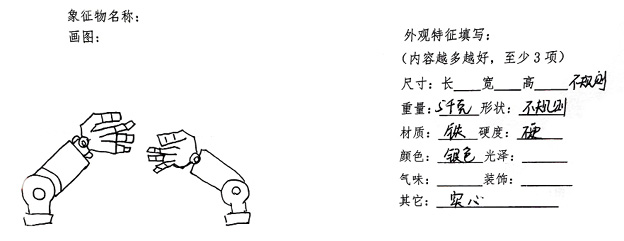
图3 机器臂
Figure 3 Robotic arm
2.3.4 存想承载物
咨询师继续引导来访者想象适合置放象征物的承载物,来访者选择了一块吸铁石作为承载物。
存想承载物:白色,形状与贝壳相似;贝壳长宽高分别为80厘米、60厘米、50厘米,重量5千克。贝壳外部为彩光琉璃材质,内部通体嵌有黑色磁铁,磁吸力很强(如图4所示)。
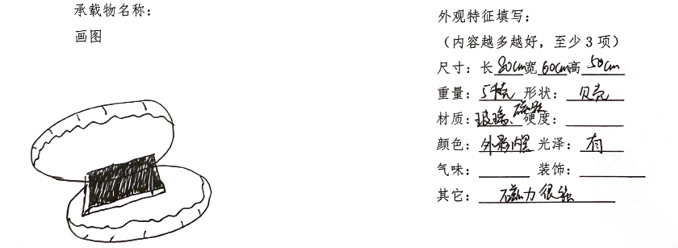
图4 贝壳
Figure 4 Shell
2.3.5 填写记录纸A
从“机械臂”图中可以看出,来访者画得很细节,细致的描绘有利于加深具象想象。
2.3.6 三调放松
咨询师再次引导来访者轻闭双眼,内容与静态作业标准。来访者比较平静,在做完调心放松后,面露一丝笑容,表示很期待后面的环节。
2.3.7 清洁与置放
在清洁这一环节上,来访者花了比较长的时间。来访者描述,象征物经过长年累月的暴露于肩膀处,不仅有很多灰尘,还有很多伤痕、生锈的痕迹。来访者逐一对不同位置进行了擦拭和修复,整个过程清洁很仔细。接着,将承载物“贝壳”打开,将有强磁吸的部分对准象征物“机械臂”,象征物立刻被磁吸吸走,然后承载物“贝壳”自动关闭,放置后确认牢固。
2.3.8 移动与空境
来访者在移动过程中,对于舒适的距离表现出强烈的纠结。当象征物的承载物远离视线时,来访者就会呈现紧张和担忧的状态,甚至是一度落泪;处于比较近距离的状态时,来访者又呈现出焦虑状态,想其离自己远一点。在可见范围反复移动中,来访者最后确定16米是最合适的距离。到超距移动时,来访者明确表示不愿意承载物消失,最后未完成空境体验。
2.3.9 移回与评估
通过逐步近距离的移回置放象征物的承载物,咨询师引导来访者仔细观察移回“机器臂”和“贝壳”的变化。来访者自述,“机械臂”已经不再是原来的铁臂了,贝壳也不再是原来有磁吸力的贝壳。
移回后的象征物“机器臂”:材质性质发生改变,变成了一双人的手,有温度、很柔软;位置也有改变,没有压着肩膀,而是从胸前拥抱的姿势。来访者表示感觉很温暖,产生被接纳的感受(如图5所示)。
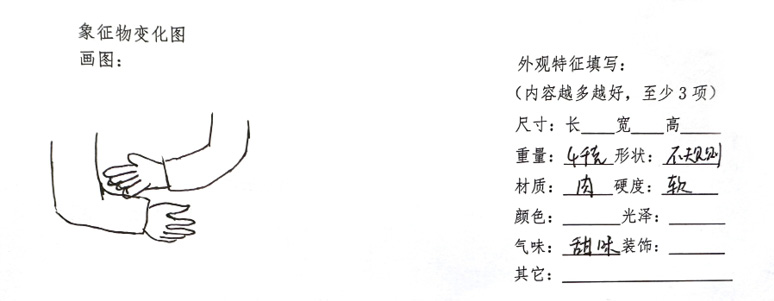
图 5 手臂
Figure 5 Arm
移回后的承载物贝壳:大小和外观材质无明显变化,但内部的黑色磁铁消失了,变成了一颗直径约10厘米的珍珠,色泽光亮(如图6所示)。
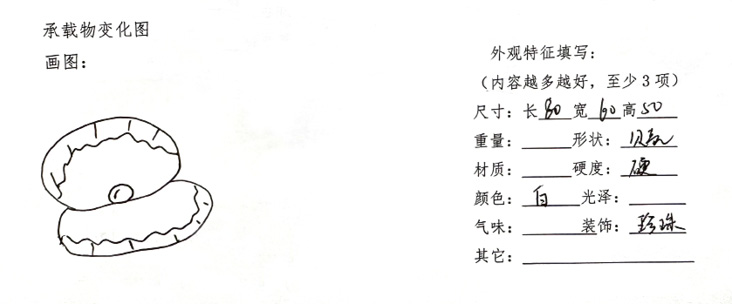
图 6 贝壳珍珠
Figure 6 Shell and pearl
咨询师询问当下肩疼的感受,来访者表示现在是从未有过的轻松,疼痛感完全没有影响了,本次靶症状影响度评分为0分。
2.3.10 填写记录纸B
咨询师引导来访者将现在的靶症状影响度评分,以及所存想的移回象征物、承载物的形象画在记录纸上。
2.4 第三次移空咨询
第二次移空咨询结束后的第五天,开展第三次移空咨询。
2.4.1 三调放松
放松内容同上。来访者刚队列训练回来,调呼吸环节时间比前两次都长,持续八分钟左右,最后到达平静的状态。
2.4.2 确定靶症状
咨询师引导来访者表述当下的负性情绪和感受,来访者自述觉得自己很没有用,事业失败、爱情破碎、朋友背叛,当下一直处于抑郁的情绪状态,情绪低落的感受一直缠着自己,自我价值感极低。经测评,该靶症状影响度分值为7分。
2.4.3 存想象征物
咨询师请来访者具体描述和形容当下的感受。来访者表述眼前有一只狗,很难受地躺在地上、一动不动,自己走到哪儿,它跟到哪儿,怎么都无法摆脱。
存想象征物“柴犬”:年龄约10岁,棕色耳朵,四只脚都有些奶黄色的毛,背上的毛有些稀疏,毛长大约1厘米;趴着30厘米高、长80厘米,体重10千克,当下状态为生病、无法四处活动(如图7所示)。
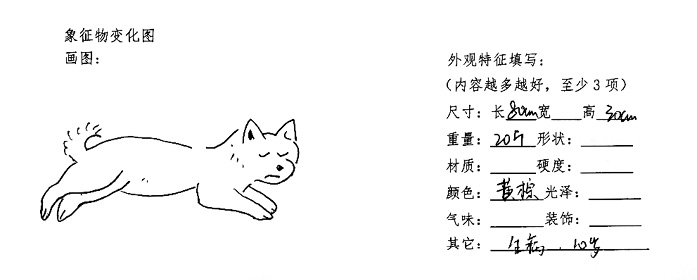
图7 柴犬
Figure 7 Shiba inu
2.4.4 存想承载物
咨询师继续引导来访者存想承载物。来访者表示要找很坚硬的箱子收纳,喜欢自然的质感,选择手工木制的箱子作为承载物。
存想承载物木箱子:箱板厚度2厘米,长、宽、高均为1米,整板拼接无缝隙,为密闭空间;材质为檀木,表面有木材自然的纹路,硬度和密度很高,重量约15千克(如图8所示)。
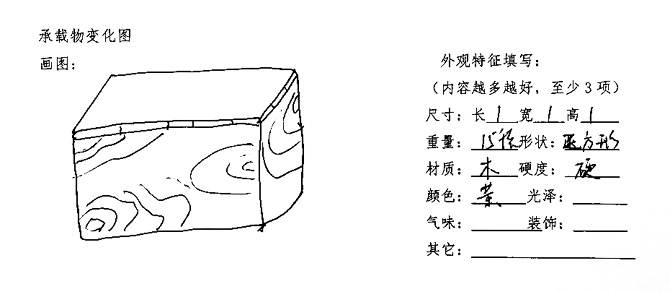
图 8 木箱
Figure 8 Wooden box
2.4.5 填写记录纸A
咨询师鼓励来访者将最初的评分,以及所存想的象征物、承载物的形象画在记录纸上,并在旁记录二者的主要特征。
2.4.6 三调放松
开始动态作业的三调放松环节,来访者已经能够自行调身,在引导下很熟练地进行调息和调心,整个过程很顺畅。等来访者完全平静时,来访者缓缓睁开眼睛。
2.4.7 清洁与置放
咨询师引导来访者对象征物“柴犬”和承载物“木箱”进行清洁和置放。来访者用宠物刷梳理了象征物“柴犬”后背的毛发,将之抱着放置于承载物“木箱”中;接着表示要加固承载物“木箱”,于是使用锤子将各个切面的连接处进行敲打加固,最后确认箱体已经非常稳固。
2.4.8 移动与空境
鉴于第二次移空咨询时来访者关注到环境中的事物,此次咨询师与来访者进一步说明,只关注置放了象征物的承载物,忽视其他事物。
(1)初始移动。咨询师引导来访者将已经处理好的象征物“柴犬”和承载物“木箱”置于想象的空间里,逐步近距离移动,往返重复了2轮,来访者比较熟悉流程,整个过程很顺畅。
(2)可见移动。引导来访者做10次往返移动,移动至30米时仅能看到一个小点,觉得移动观测距离在25米最合适。
(3)超距移动。继续引导来访者做远距离移动,当距离200米,来访者表示已经完全看不见了,但是能感觉到还在;移动至500米时,来访者表示这个距离看不见,也感觉不到。咨询师提示来访者在这个地方停留一会,什么都不要想,体会安静、放松的感觉。来访者在“心理空境”状态中停留了约4分钟。
2.4.9 移回与评估
当咨询师询问来访者是否将放置象征物的承载物移回时,来访者表示不愿意移回。来访者再次评估自身抑郁负性情绪,靶症状影响度评分为2分。
2.4.10 填写记录纸B
来访者未选择移回象征物和承载物,无记录纸B的填写。本次咨询的小结中,来访者表示很轻松,也很舍不得咨询结束。咨询师对其进行安抚,并表示后面还有访谈安排。
2.5 结束访谈
最后一次移空咨询的第二天,开展整个咨询的结束访谈,咨询师询问来访者整个过程的收获与改进建议。
咨:“我们的移空咨询已经结束了,你有什么感受呢?”
访:“心理疾病好几年,第一次被直击内心。不解决问题,直接移走问题,现在这些事情还在,但是对我没有影响了。第一次体验感觉十分奇妙又很放松,就像把心中的一块巨石移开喘一口气,一点一点通过距离和时间带走负面情绪和感受,让一切归零。在这几次的咨询中,每一次的归零,痛苦感都会少一些,我相信多次使用移空治疗一定会让情绪带来的身心困扰逐渐减弱,当我的情绪再次出现波动和失控的时候,继续学习和使用移空治疗,主动积极地为心理减压,保持良好心态。”
咨:“有哪些方面是你觉得可以再提升的,或者说哪些方面的改变会让你更投入、更有效?”
访:“第一次三调呼吸的时候感觉引导词节奏有些稍快;另外,第三次移空咨询的位置在劳动车间大厅,感觉环境有些嘈杂,很容易分神;还有就是,家庭作业缺乏跟进机制,如果没有自觉性就不会去进行练习。”
咨:“好的,谢谢你的建议。”
2.6 随访
最后一次咨询结束后的一周,咨询师进行随访工作。通过随访了解到,来访者现在负性的情绪及生理感受大部分已经得到缓解,整体症状的影响度为2分,表示对日常生活没什么影响了。来访者的身心无不良反应,睡眠改善、情绪更稳定,更愿意与人相处和沟通。来访者评价移空咨询的有效分,为最高的5分,安全性也为5分。
3 移空咨询效果
3.1 定量评估
干预数据如表1所示。
表1 干预数据
Table 1 Intervention data
|
靶症状 |
干预前症状影响度 |
干预后症状影响度 |
有效程度 |
|
|
第一次移空咨询 |
胸闷 |
9.5 |
3 |
显效 |
|
第二次移空咨询 |
肩疼 |
7.5 |
0 |
临床痊愈 |
|
第三次移空咨询 |
抑郁情绪 |
7 |
2 |
显效 |
从日常临床评估来看,干预前症状影响度为A,干预后症状影响度为B。若A为9,B为4及以下,为显效,则“胸闷”症状达到显效标准;若A为任意数,B为0,则临床痊愈,表明“肩疼”症状达到临床痊愈标准;若A为7,B为3及以下,为显效,表明“抑郁情绪”症状达到显效标准。
3.2 定性评估
第一次和第三次移空咨询中,承载物已空、象征物消失,表示症状的影响消除,临床治愈。第二次移空咨询移回的象征物和承载物发生形态异变,表明症状的负性影响性质发生改变。
来访者自第一次移空咨询之后,就再没出现偷窃其他服刑人员物品等类似情形。其情绪状态改善显著,从最初在亢奋和抑郁中反复横跳,到后期能将自己状态长久地保持在适宜的位置。另外,遵守监规纪律,未出现扣分情况,在担任班长期间,事务性工作多次得到监区民警的肯定,连续三周获得“学习之星”称号。根据其他服刑人员反映,来访者在人际交往上有很大进步,刚入监区沉默寡言,拒绝与人交流,到后来能与人主动敞开心扉,与其他服刑人员和谐相处,还帮助新入监服刑人员适应环境。
4 咨询过程中的个性化事件
在第二次移空咨询“移动与空境”环节中,来访者出现流泪表现,表示既不想放置象征物的承载物距离自己太近,也不愿意其消失。咨询结束后进行个别谈话,帮助来访者修复亲情认知,增加社会支持感受。
咨:“刚刚流泪的时候在想什么?”
访:“母亲曾作出极端负面评价,称我的行为不可理喻、令人难以接受。那一刻,我感觉自己的心都碎了。”
咨:“为什么不想将放置了机械臂的贝壳移走?”
访:“因为感觉它已经是我的一部分了,自我有意识起,就一直跟着我,就像母亲的叨叨和一直以来的安排一样。”
咨:“那这些重量会不会是来源于母亲的压力?”
访:“母亲是个极其强势的人,我必须按照她的想法做事,必须按照她的规划进行生活,我没有一个选择是出自我自己个体的,要是我不服从,我母亲就拿自杀威胁我,我真的不知道怎么办。”
咨:“既然是这么大的压力和束缚,那要不就完全脱离?
访:“但这是我母亲啊,我根源还是很爱她的,我也离不开她,走到今天这一步,我一点儿也不恨她,我内心还是渴望她能接纳我。”
咨:“如果母亲接纳你了,你现在有什么感受?”
访:“我会超级开心,有人无条件支持我、理解我、爱我,这是我觉得最幸福的事情,我也要对之前的事情断舍离,向前看,不辜负母亲。”
5 反思
第一,当来访者有多个靶症状影响度评分大于等于7分时,原则上一次移空技术治疗只处理一个症状。但在实际情况中,各类靶症状之间存在不同程度的关联,同类症状可以合并处理,异类症状在咨询过程中也可以及时调整干预方案。
第二,来访者有一定具象思维、无象思维能力,是使用移空技术的前提(刘天君,2023)。不同来访者的想象能力有高有低,并不是无法改变,可以在治疗过程通过训练增强这方面的能力,如布置具象化练习类家庭作业。
第三,部分来访者有轻微的强迫特质,需要特别精确距离,以及象征物与承载物的长宽高等参数,并反复进行想象和思考。咨询师需要尊重、有耐心,每个细节的确认或许都会影响效果。
第四,移空治疗在日常的治疗技术中是特别的存在,因为其不探究和深挖问题的缘由,而是直接解决问题本身,在解决情绪困扰上已证实有显著成效(夏宇欣 等,2014)。但对于服刑人员矫治工作来说,挖掘犯罪原因并解决犯因,降低再犯风险,这是极其重要的一部分。因此,在移空技术干预之外,还可以辅助沙盘治疗和表达性艺术治疗,引导来访者“挖掘”并“看见”自己的犯罪成因。
(注:本案例公开发表已取得来访者知情同意与授权。)
参考文献
[1] 刘天君. (2019). 移空技术操作手册. 北京: 中国中医药出版社.
[2] 夏宇欣, 吴晓云, 刘天君. (2013a). 移空技术小组活动对慢性应激反应的干预效果. 中国临床心理学杂志, 21(3), 450-454, 457.
[3] 夏宇欣, 吴晓云, 刘天君. (2013b). 移空技术的特点分析及其未来研究展望. 中国临床心理学杂志, 21(5), 852-855, 862.
[4] 刘天君. (2023). 将中华传统文化的核心观念融入现代心理治疗. 健康研究, 43(6), 601-605, 630.
[5] 夏宇欣, 魏玉龙, 吴晓云, 刘天君. (2014). 移空技术改善压力情境下的情绪困扰. 中医学报, 29(3), 365-369.