Current Views: 2605890
 Current Downloads: 1619707
Psychology of China
ISSN Print:2664-1798
ISSN Online:2664-1801
Contact Editorial Office



Subscribe to the latest published information from SCISCAN
九型人格的历史发展:从远古符号到现代人格心理学体系
The Historical Development of the Enneagram: From Ancient Symbol to Modern Personality Psychology


-
Information:
英国国际心理学管理学院,伦敦
-
Keywords:
Enneagram; Historical development; Philosophy; Theoretical critique; Personality psychology; Gurdjieff九型人格; 历史发展; 哲学; 理论批评; 人格心理学; 葛吉夫
- Abstract: The Enneagram is a complex discipline for analyzing personality types and facilitating psychological growth, its historical threads interwoven with diverse cultural traditions. This paper aims to systematically clarify the developmental trajectory of the Enneagram from ancient lore to a modern systematic theory and to critically examine its academic standing. Employing a combined methodology of systematic documentary analysis (searching databases such as Web of Science and PsycINFO) and historical investigation, it integrates and scrutinizes multilingual sources. Research indicates that the Enneagram symbol may have originated from mathematical and esoteric traditions in Central Asia, was transmitted by medieval scholars, and was introduced to the Western world in the early twentieth century by George Ivanovich Gurdjieff. The formal establishment of the modern Enneagram of Personality theory is credited to Oscar Ichazo, who first systematically correlated the nine personality types with their core inner motivations. Subsequently, Claudio Naranjo provided its psychological foundation, while scholars such as Don Richard Riso and Russ Hudson, and Helen Palmer and David Daniels respectively pioneered the two predominant schools of “Academic Study” and “Oral Tradition,” propelling its global dissemination and systematization. Additionally, figures such as Kathy Hurley and Theodorre Donson played a significant role in global mentor training and theoretical integration. This paper contends that the evolution of the Enneagram represents the historical process by which ancient oral wisdom, through creative transformation by successive integrators, ultimately coalesced into a globally utilized tool. However, its academic credibility faces key challenges, including insufficient psychometric evidence, the constructed nature of its historical narrative, and the inherent tension between its spiritual roots and scientific paradigms. Through this critical review, this paper argues that the modern identity of the Enneagram is the historical product of the complex interaction between its spiritual origins and scientific paradigms, providing a clear framework for clarifying its theoretical status and guiding future empirical research directions. 九型人格(Enneagram)是一门剖析人格类型与促进心灵成长的复杂学问,其历史脉络交织着多种文化传统。本文旨在系统厘清九型人格从古代传说演变为现代系统理论的发展路径,并对其学术地位进行批判性审视。通过系统的文献分析(检索WebofScience、PsycINFO等数据库)与历史考证,对多语言资料进行了整合与辨析。研究表明,九型人格的图形符号可能发轫于中亚地区的数学与秘传思想,经由中世纪学者的传递,在20世纪初由乔治·葛吉夫引入西方视野。现代九型人格理论体系的正式创立应归功于奥斯卡·依察诺,他首次将九种性格类型及其核心内在驱动力进行了系统化对应。此后,克劳迪奥·纳兰霍为其奠定了心理学基础,而唐·理查德·里索与拉斯·赫德森、海伦·帕尔默与戴维·丹尼尔斯等学者则分别开创了“学院研究”与“口述传统”两大主流学派,推动该学问实现了全球化传播与体系化构建。此外,凯西·赫尔利与西奥多瑞·唐森等人在全球导师培养与理论整合方面亦发挥了重要作用。本文认为,九型人格的发展历程,本质上是古老的口传智慧经过历代整合者的创造性转化,最终形成一套全球性应用工具的历史。然而,其学术公信力仍面临心理测量学证据不足、历史叙事存在建构性以及灵性根源与科学范式存在内在张力等关键挑战。本文通过这一批判性梳理,旨在揭示九型人格的现代身份是其灵性根源与科学范式复杂互动的历史结果,为厘清其理论定位与规划未来的实证研究方向提供了一个清晰的框架。
- DOI: 10.35534/pc.0802028
- Cite: 汪庭弘. (2026). 九型人格的历史发展: 从远古符号到现代人格心理学体系. 中国心理学前沿, 8 (2), 178-186.
1 引言
九型人格,其名源于希腊语“Enneagram”,由“ennea”(九)和“grammos”(图形)组成,是一套阐述九种基本人格模式及其相互动力关系的体系。该体系在当代心理学、领导力培育及灵性发展领域具有显著影响力,然而如果要追究其真正起源,因历史、战乱,以及宗教派系等多种因素而无法明确;学界与实务界对其确切源头尚未达成共识,因其早期知识依赖口耳相传,致使可信的文献记录颇为稀缺。尽管如此,自20世纪中叶以来,九型人格经历了快速的现代化与系统化转型,从一种隐秘的传承演变为结构明晰、可供教学与验证的实用心理学工具。
本文的核心目标在于,通过对现有文献的梳理与考辨,勾勒出九型人格相对清晰的历史发展轮廓,并在此基础上,引入批判性视角,审视其作为一个人格心理学理论所面临的学术挑战。文章将首先探讨其图形符号在古代与中世纪的起源传说,继而分析乔治·葛吉夫在当代引入该符号的关键角色,随后阐述奥斯卡·依察诺在建立现代类型学理论中的奠基性工作。接着,本文追踪克劳迪奥·纳兰霍之后的理论分野与全球传播路径,重点剖析里索—赫德森学派与帕尔默—丹尼尔斯学派的形成及其深远影响,同时客观呈现其他重要贡献者(如凯西·赫尔利与西奥多瑞·唐森)在全球导师培养与体系整合方面的作用。最终,本文将在讨论部分系统评估该理论的学术严谨性、历史叙事的建构性及其在科学与灵性之间的内在张力(此处“灵性”侧重意识转化与心灵成长的哲学维度,而非特定宗教教义的践行),力图将其置于更广阔的人格心理学学术语境中进行考察。
2 研究方法论
本研究主要采用理论发展史综述的方法论框架,依托文献研究与历史研究相结合的具体路径展开。
2.1 文献检索与分析法
通过系统检索 Web of Science,PsycINFO,Google Scholar 等学术数据库,结合引文回溯,以“Enneagram” “history” “validity” “personality assessment” “Gurdjieff” “Ichazo”等为关键词,搜集了从20世纪初至2023年的相关文献。所分析的资料主要包括四类:
(1)该领域内部的经典著作与论述(如依察诺、纳兰霍、里索等人的作品);
(2)相关的学术论文、传记及会议记录;
(3)主流心理学界对九型人格的批评性、验证性研究及元分析文献(Hook et al.,2021;Sutton,
2012);
(4)权威人格心理学教科书与手册中的相关评述(如McCrae & Costa,2008)。核心参考文献力求涵盖内部传承与外部批判的双重视角。
2.2 历史研究法与叙事建构分析
依据时间顺序,对汇集到的文献材料进行考证、比较与综合,致力于重建关键事件与理论承继的链条。本研究特别注意到,所依赖的早期历史叙述多来源于20世纪整合者的回溯性陈述,因此,文中对存在争议或缺乏独立实证支持的环节均予以明确标注。本文亦将九型人格的历史叙事本身作为一个分析对象,探讨其线性发展谱系可能具有的建构性特征。
2.3 研究局限
鉴于九型人格早期历史所具有的口传性与隐秘性特征,许多环节缺乏原始文献的直接佐证。因此,本文的部分论述不可避免地建立在后世研究者的整合与推断之上。未来研究的推进,有赖于更多原始档案的发掘、跨学科考证的开展,尤其是严格设计的实证研究的积累。
3 远古起源与中世纪符号的演变
现代九型人格体系的理论内核,深深植根于西方文明的哲学与宗教土壤之中。其关于人性缺陷、转化动力与类型划分的思想,可在诸多古老传统中找到回响,为20世纪现代九型人格体系的建立提供了哲学基础、伦理心理学雏形与符号学先例,如图1所示。
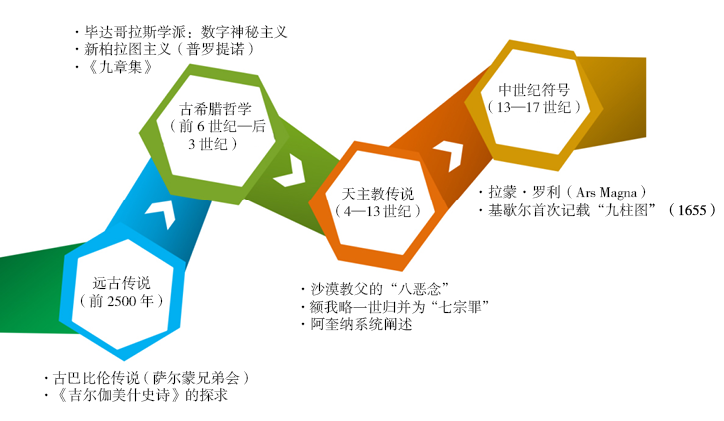
图 1 九型人格理论思想渊源示意图
Figure 1 Schematic diagram of the theoretical and ideological origins of the enneagram
3.1 远古传说与哲学基石
一种流传甚广但缺乏考古证据支持的观点认为,九型人格的智慧可追溯至公元前2500年的古巴比伦地区,与一个被称为“萨尔蒙兄弟会”(Sarmoung Brotherhood)的智者团体相关联(Bennett,1974)。这一传说将九型人格的源头与人类对生命终极奥秘的古老探求(例如《吉尔伽美什史诗》中的叙述)联系起来。尽管缺乏实证,但此类传说构成了九型人格起源叙事的重要部分,为其赋予了古老而神秘的光环,相关文化背景想象图如图2所示。
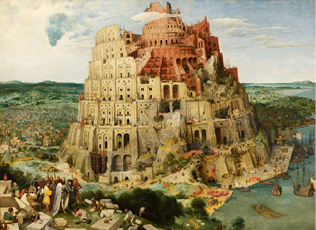
图 2 古巴比伦城想象图
Figure 2 Imaginary view of ancient Babylon
其后,古希腊哲学,特别是毕达哥拉斯学派和新柏拉图主义,为九型人格提供了重要的哲学与数学背景。毕达哥拉斯学派将数字视为宇宙的本源和神圣秩序的体现,数字“九”因其作为第一个奇数的平方(32)而被赋予特殊意义,象征着完整与轮回(Ichazo,1991)。新柏拉图主义哲学家普罗提诺(Plotinus,公元205—270年)在其代表作《九章集》(The Enneads)中,系统地阐述了“太一”流溢出理智与灵魂,最终万物复归太一的宇宙论模型。该著作不仅书名与“九”相关,其关于层次、转化与回归的思想结构,也被后世一些九型人格研究者视为重要的哲学先驱(Goldberg,1993),如图3所示。
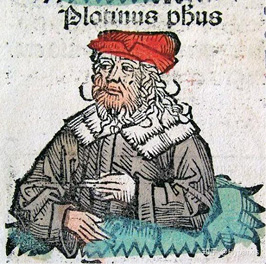
图 3 普罗提诺(公元205—270年)画像
Figure 3 Portrait of Plotinus (205-270 AD)
3.2 七宗罪与类型动力学的前身
天主教“七宗罪”的教义,是九型人格“激情”理论的直接而具体的来源。这一教义的形成历经数百年神学提炼,最终在13世纪由道明会神学家圣多玛斯·阿奎纳(St. Thomas Aquinas,1225—1274年),如见图4所示,在《神学大全》中进行了权威的系统阐述。奥斯卡·依察诺创造性地继承了这一深厚的罪宗心理学传统。他完整采纳了这七种“激情”,并为了与九种人格类型相对应,增加了“欺骗”(对应第三型)与“恐惧”(对应第六型),从而构建了驱动九型人格类型的核心动机体系。这使得九型人格在剖析人性的“阴影”面时,具有了扎实的宗教心理学基础。
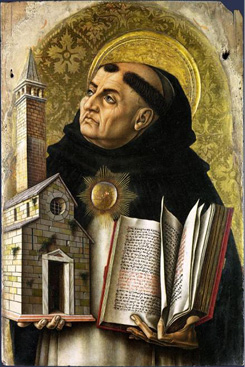
图 4 道明会神学家圣多玛斯·阿奎纳(1225—1274)
画像
Figure 4 Portrait of St. Thomas Aquinas(1225-1274),Dominican Theologian
3.3 中世纪符号的雏形
在中世纪,一些学者对通过几何图形探索真理表现出浓厚兴趣。13世纪的加泰罗尼亚哲学家拉蒙·罗利(Ramon Lull,1232—1315年)发明了“伟大艺术”(Ars Magna),即一套通过旋转同心圆盘上刻写的概念来组合知识的“逻辑机器”,其图形化的系统思维方法在形式上与后来的符号探索有相通之处。第一个在出版物中明确使用“九柱图”(Enneagram)名称并给出几何图形的,是17世纪的耶稣会学者亚桑西斯·基歇尔(Athanasius Kircher)。在其1655年出版的《算术》(Arithmologia)一书中,他展示了一个由三个相互嵌套的等边三角形构成的九点图形,如图5所示。需要指出的是,基歇尔的图形与葛吉夫后来传播的现代九柱图在几何结构上完全不同,且未与人格类型学产生关联。然而,这一记载是“九柱图”作为一个特定神秘几何符号在近代欧洲学术界独立存在的确凿证据(Webb,1980)。
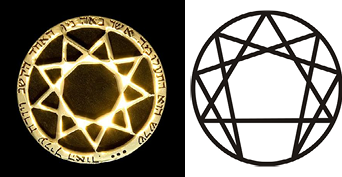
图 5 不同历史时期的“九柱图”符号对比
Figure 5 Comparison of enneagram symbols in different historical periods
4 现代体系的奠基与整合(20世纪上半叶)
20世纪见证了九型人格从古老的几何符号蜕变为一套成熟人格理论的关键历程。三位人物构成了这一转型的核心链条,为之后里索—赫德森学派与帕尔默—丹尼尔斯学派两大主流方向的形成奠定了理论基础,传承关系如图6所示。
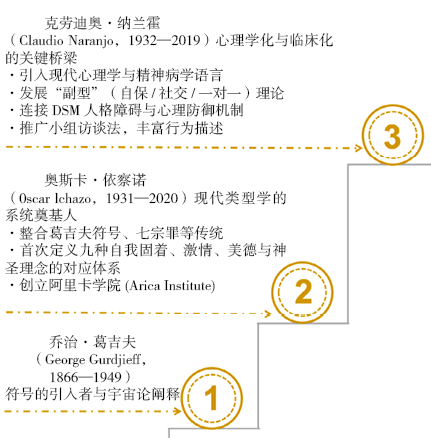
图 6 20世纪九型人格理论核心奠基者传承关系图
Figure 6 Genealogy of the core founders of enneagram theory in the 20th Century
4.1 乔治·葛吉夫:动态符号的引入与宇宙论阐释
乔治·伊万诺维奇·葛吉夫(George Ivanovich Gurdjieff,1866—1949)被公认为是首位将九柱图符号系统性地引入西方现代思想领域的人物,如图7所示。他将九柱图作为其庞杂教学体系(常被称为“第四道”)的核心象征之一,用以阐释宇宙法则及人类意识进化的过程(Gurdjieff,1950)。葛吉夫强调九柱图是一个“活生生的象征”,并通过“神圣舞蹈”(或称葛吉夫律动)进行动态教学,如图8所示,其关注焦点在于宇宙论与意识转化,而非人格分类学(Bennett,1973)。这为九型人格奠定了深厚的灵性和宇宙论基调。
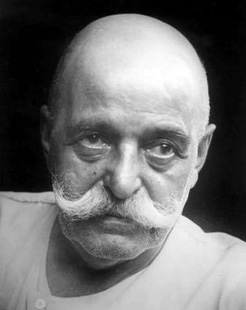
图 7 乔治·伊万诺维奇·葛吉夫(1866—1949)
Figure 7 George Ivanovich Gurdjieff (1866-1949)
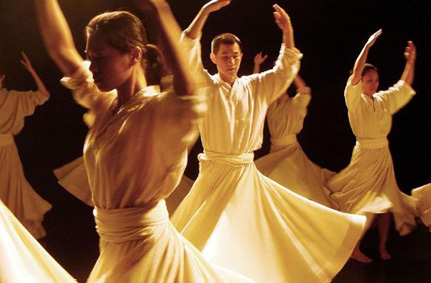
图 8 神圣舞蹈(或称葛吉夫律动)
Figure 8 Sacred dances (also known as Gurdjieff Movements)
4.2 奥斯卡·依察诺:现代类型学的奠基人
玻利维亚裔思想家奥斯卡·依察诺(Oscar Ichazo,1931—2020)被尊为“当代九型人格之父”,如图9所示。他在20世纪五六十年代,进行了一次关键的理论整合。他综合了葛吉夫的动态九柱图、新柏拉图主义、卡巴拉生命之树,尤其是天主教的“七宗罪”传统,创造性地构建了现代九型人格的核心框架。依察诺的关键创举在于:他首次明确地将九种“自我固着”(Ego Fixations)、九种“激情”(Passions)、九种“美德”(Virtues)和九种“神圣理念”(Holy Ideas)系统性地、固定地对应到九柱图的九个点上(Ichazo,1991)。他于智利创立阿里卡学院(Arica Institute)进行传授。1970年,包括心理学家克劳迪奥·纳兰霍在内的一群美国人前往阿里卡学习,此举成为九型人格理论进入北美并走向全球化的关键事件。
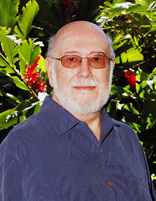
图 9 奥斯卡·依察诺(1931—2020)
Figure 9 Oscar Ichazo (1931—2020)
4.3 克劳迪奥·纳兰霍:心理学与病理学的桥梁
著名精神病学家克劳迪奥·纳兰霍(Claudio Naranjo,1932—2019)于1970年赴阿里卡学院研修,随后将依察诺的理论带回美国,并运用现代心理学语言对其进行了至关重要的深化与拓展,如图10所示。他的主要贡献体现在以下几个方面:
(1)发展副型理论(自保、社交、一对一),丰富了各类型的行为表现描述;
(2)将九型人格类型与《精神疾病诊断与统计手册》(DSM)中的人格障碍倾向及心理防御机制联系起来,增强了其临床适用性;
(3)推广小组访谈法,收集了大量鲜活的一手资料,使类型描述变得生动而精确(Naranjo,1997)。纳兰霍的工作使九型人格彻底脱离了单一的灵修语境,成为一个可与现代心理学深度对话的分析工具。
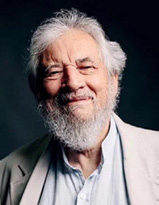
图 10 克劳迪奥·纳兰霍(1932—2019)
Figure 10 Claudio Naranjo (1932-2019)
纳兰霍的工作促使九型人格正式融入了现代心理学的话语体系,并为后来多个重要流派的形成奠定了基础。
5 全球化、体系化与主要学派的形成(20世纪下半叶至今)
自20世纪70年代末开始,九型人格理论在美国迅速发展并逐渐分化出三大主流学派,由此推动了其在全球范围内的传播,发展概览如图11所示。
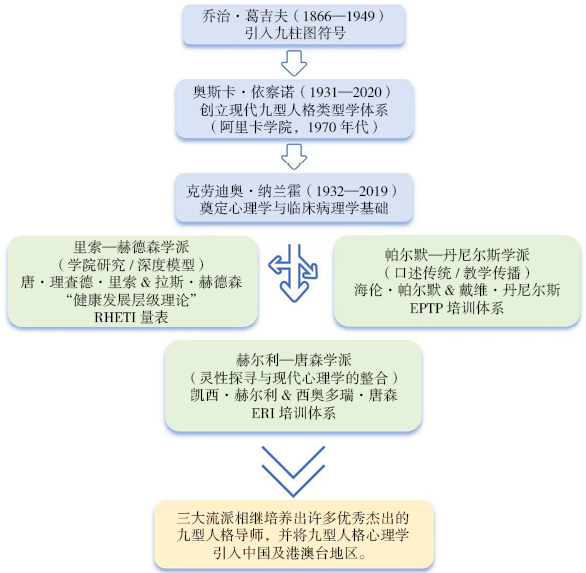
图 11 发展概览
Figure 11 Overview of development
5.1 学院研究与深度模型创建者:里索和赫德森
唐·理查德·里索(Don Richard Riso,1946—2012)最为重要的贡献是在1977年提出了“健康发展层级”(Levels of Development)理论,如图12所示。该理论描绘了每一种性格类型从健康到不健康状态的连续动态谱系(Riso,1987)。1991年,拉斯·赫德森(Russ Hudson)加入并与里索成为合作伙伴,如图13所示。他们共同完善了理论体系,开发了“里索—赫德森九型人格类型指标”(RHETI),其学派以结构严谨、逻辑清晰著称,代表了九型人格研究中的“学院”方向(Riso & Hudson,1999)。
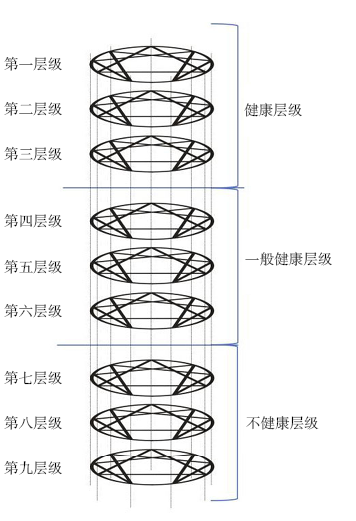
图 12 健康发展层级(Levels of Development)
Figure 12 Levels of development
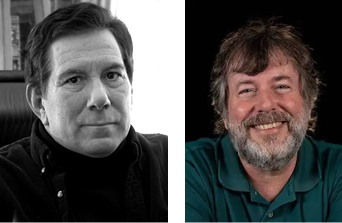
图 13 唐·理查德·里索(1946—2012)& 拉斯·赫德森
Figure 13 Don Richard Riso (1946-2012) & Russ Hudson
5.2 口述传统与教学传播者:帕尔默与丹尼尔斯
海伦·帕尔默(Helen Palmer)与戴维·丹尼尔斯博士(David Daniels M D,1934—2017)共同开创了九型人格的“口述传统”(Oral Tradition)学派,如图14所示。帕尔默通过深度访谈的方法,邀请同类型的个体在团体中分享亲身体验,从而使理论阐释极具感染力(Palmer,1988)。丹尼尔斯博士作为斯坦福大学医学院的临床教授,为这一传统注入了科学的严谨性。他们共同创立的“九型人格专业培训计划”(EPTP),建立了一套全球性的导师认证与培训体系(Palmer & Daniels,1991)。1994年,帕尔默在斯坦福大学主导召开了第一届国际九型人格大会,直接促成了国际九型人格协会(IEA)的成立。
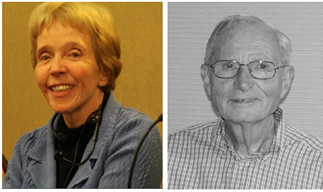
图 14 海伦·帕尔默与戴维·丹尼尔斯博士
(1934—2017)
Figure 14 Helen Palmer & David Daniels, M.D.
(1934-2017)
5.3 灵性探索与心理学的整合与传播者:赫尔利与唐森
在两大主流学派之外,其他个人与组织也为九型人格的体系整合与全球传播做出了实质性贡献。其中,凯西·赫尔利(Kathy Hurley)与西奥多瑞·唐森(Theodorre Donson,2009年逝世)夫妇的工作尤为突出,如图15所示。他们共同创立的“国际九型人格资源学府”(Enneagram Resources Institute,ERI),侧重于理论的深度整合与灵性维度的探索,致力于培养高水平的专业导师(Hurley & Donson,1996)。ERI的培训体系融合了多种灵性传统与现代心理学见解,形成了独特的教育路径,在全球范围内(包括华语世界)培养了大量优秀的九型人格实践者与导师,对九型人格知识的专业化与规范化传播起到了重要的支撑作用。
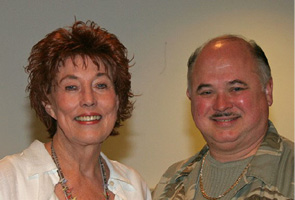
图 15 凯西·赫尔利与西奥多瑞·唐森(2009年逝世)
Figure 15 Kathy Hurley & Theodorre Donson (Passed away in 2009)
5.4 传入华语世界与本土化
九型人格于20世纪90年代末至21世纪初传入华语地区。徐志忠神父被普遍视为在香港及华语世界进行先驱性引介工作的重要人物,他创办的相关学会对早期推广产生了影响。随后,蔡敏莉系统地将海伦·帕尔默的EPTP体系引入中国大陆,而熊淑仪则系统性地引入了里索—赫德森体系,汪庭弘博士等人侧重于将ERI体系在企业领域的应用与本土化发展。此后,越来越多中国内地导师相继涌现,加速了中国本土导师队伍的专业化进程,也促进了九型人格体系在中国的多元化
发展。
6 讨论:转型、争议与学术审视
九型人格的历史呈现出一条从秘传智慧到现代心理学工具的清晰转型轨迹。然而,这一转型过程始终伴随着内在的张力,其学术地位也面临一系列根本性质疑。
6.1 本研究的理论贡献
6.1.1 对人格心理学的贡献
本文超越了以往对九型人格效度的简单争论,首次通过系统的历史发生学分析,揭示了其作为一种混合型知识体系的内在结构与发展逻辑。具体情况如下。
(1)提供了理论化的历史路径图。本文清晰地勾勒了九型人格从葛吉夫的宇宙论符号,到依察诺的类型学编码,再到纳兰霍及后续学派的心理学化与体系化的完整转型链条。这一梳理为解决其“科学身份模糊”问题提供了历史性解释,指出其当前面临的测量挑战,部分根源在于其知识源头中灵性与科学范式的初始交融。
(2)构建了批判性整合的分析框架。本文将内部传承叙事与外部学术批判置于同一分析平面,打破了实践社群与学术界之间的话语壁垒。这种双重视角的整合,为未来任何试图评估或应用九型人格的研究,提供了一个兼顾其历史深度与科学严谨性的基准框架。
(3)明确了其在人格谱系中的定位。通过将其与大五人格等主流模型进行对比,并分析其与“七宗罪”、心理防御机制等经典概念的渊源,本文将九型人格定位为一种侧重于内在动机、防御模式与发展动力的“过程导向”人格模型,而非静态的特质分类。这为探索其与动机心理学、临床心理学及积极心理学的对话开辟了潜在接口。
6.1.2 对历史学与知识社会学的贡献
本文不仅追溯了一段思想史,更将九型人格的历史叙事本身作为分析对象,从而做出了方法论上的贡献。
(1)剖析了新兴学科的“创世叙事”模式。通过对九型人格从“萨尔蒙兄弟会”传说至现代学派形成这一过程的考证,本文生动展示了一个知识体系如何通过建构古老的、跨文化的渊源来确立其合法性与权威性。此案例为理解其他心理学派或替代理论(如占星学、某些心理治疗流派)的起源叙事提供了可借鉴的分析范式。
(2)呈现了知识全球流动与本土化的微观案例。本文详细追踪了九型人格从南美(阿里卡)到北美,再分流至欧洲、亚洲的传播路径,并特别关注了其在华语世界的本土化过程(如徐志忠、蔡敏莉、汪庭弘等人的工作)。这一历程为研究全球化时代“灵性—心理学”知识的跨国旅行、翻译与适应,提供了一个鲜活的微观样本。
(3)示范了思想史研究中的批判性综合方法。面对口传历史与文献匮乏的挑战,本文明确区分了“可考证的传承”与“建构性的叙事”,并指出了二者的不同功能。这种方法上的透明性与反思性,为处理类似具有秘传背景的思想体系历史研究,提供了方法论上的参考。
6.2 从秘传智慧到心理学的转型轨迹
它最初是一种依赖于口传与秘密团体的智慧传承(葛吉夫时期),经由依察诺的系统化编码,转变为一种明确的人格类型学模型。随后,在纳兰霍及其后学者的努力下,完成了关键的“心理学化”与“体系化”过程,从而使其具备了现代学科所要求的可教学性与广泛适用性。
6.3 批判性评述与未决问题
尽管体系成熟且应用广泛,九型人格的学术公信力仍面临严峻挑战。
6.3.1 心理测量学证据的不足
这是主流心理学界对其持保留态度的核心原因。相较于具有大量跨文化实证数据支持的大五人格模型(McCrae & Costa,2008),九型人格类型量表(如RHETI)的信度与效度研究多发表于相关领域内部出版物,在主流心理学期刊上发表的、方法学严谨的验证研究仍属凤毛麟角(Sutton,2012)。有限的实证研究常面临重复验证困难与因子结构不稳定等问题(Hook et al.,2021)。其分类系统的实证可检验性与可重复性亟待通过更严格、透明的科学研究来加强。
6.3.2 历史叙事的建构性
本文所梳理的线性历史谱系,在很大程度上依赖于20世纪几位关键整合者(特别是依察诺)的回溯性陈述。这种“溯源至古”的叙事方式,是许多新兴理论体系确立其合法性与深度的常见策略(Dynes,2018)。因此,对九型人格“史前史”的考察,或许更应被视为其理论神话或集体记忆的一部分,其功能在于提供意义与连续性,而非提供确凿无疑的史学证据。承认这一点,并非否定其现代价值,而是要求以更清醒的学术态度审视其知识生产方式。
6.3.3 灵性根源与科学范式的内在张力
九型人格源于追求意识转化的灵性传统(如葛吉夫的工作),但其现代应用多强调其作为人格评估与发展工具的科学性与实用性。这种张力可能导致其核心的“转化性”维度在“心理学化”过程中被简化或剥离,从而引发关于其本质究竟是“灵修道路”还是“人格工具”的持续争议。这一张力也反映在其学术研究与应用实践的分离上:学术界追问其效度,而实践社群则珍视其带来洞察与成长的体验价值。
6.4 未来研究方向
未来的研究若想提升其学术地位,或至少建立更具建设性的对话,需在以下方向努力:首先,优先开展严格设计的、预注册的、发表在同行评议主流期刊上的实证研究,以检验其信效度及与其他成熟人格模型(如大五人格、依恋理论)的构念关联。其次,鼓励从知识社会学和历史学的角度,对其叙事建构过程进行更客观的分析。最后,在应用层面,理论与实践者需更自觉地反思并调和其灵性根源与科学应用之间的张力,或许可以探索一种“基于证据的实践”框架,既不牺牲其深度,又能回应科学共同体的合理质疑。
7 结论
综上所述,九型人格的发展史是一部跨越千年的思想融合与理论创新史。它植根于人类认识自我的古老追寻,并在20世纪通过葛吉夫、依察诺、纳兰霍等数代整合者的创造性工作,从一个神秘的几何符号演进为一套结构完整的人格体系。由里索—赫德森和帕尔默—丹尼尔斯开创的两大主流理论方向,以及众多推广者与整合者的努力,共同塑造了其全球化的当代面貌。如今,它已成为个人成长、团队建设与领导力发展领域的重要工具。
然而,本文的梳理与批判性分析揭示,九型人格的现代身份是其灵性根源与科学范式复杂互动的历史产物。其自身充满张力的发展历程也向我们昭示,一个源于深层人类经验与灵性传统的体系,在试图进入以实证和测量为主导的现代科学殿堂时,所必然遭遇的挑战与困境。九型人格未来的学术生命力与专业信誉,不仅取决于其社群内部的传承,更取决于它能否以开放、严谨的态度直面这些挑战:即通过生产更坚实的科学证据来回应质疑,通过更清醒的历史反思来理解自身,并在实践中诚实地对待其灵性内核与实用工具之间的辩证关系。唯有如此,它才能在科学与人文的对话中,找到自己独特而稳固的位置。
参考文献
[1] Bennett J G. (1973). Gurdjieff: Making a new world. Turnstone Books.
[2] Bennett J G. (1974). Enneagram studies. Coombe Springs Press.
[3] Dynes J. (2018). The mythmaking of modern psychology: Creating narratives of origin. Journal of Theoretical and Philosophical Psychology, 38(2), 76-89.
[4] Goldberg M. (1993, October). The Enneagram wars. LA Weekly, pp. 15-21.
[5] Gurdjieff G I. (1950). Beelzebub’s tales to his grandson. Harcourt, Brace & Co.
[6] Hook J N, Hall T W, Davis D E, Van Tongeren D R & Conner M. (2021). The Enneagram: A systematic review of the literature and directions for future research. Journal of Clinical Psychology, 77(4), 865-883.
[7] Hurley K & Donson T. (1996). My best self: Using the Enneagram to free the soul. HarperOne.
[8] Ichazo, O. (1991). Letters to the school. Arica Institute Press.
[9] McCrae R R & Costa P T Jr. (2008). The five-factor theory of personality. In O P John, R W Robins & L A Pervin (Eds.), Handbook of personality: Theory and research (3rd ed., pp. 159-181). Guilford Press.
[10] Naranjo C. (1997). Transformation through insight: Enneatypes in life, literature, and clinical practice. Hohm Press.
[11] Palmer H. (1988). The Enneagram: Understanding yourself and the others in your life. HarperOne.
[12] Palmer H & Daniels D. (1991). The Enneagram professional training program (EPTP) manual[Unpublished training manual].
[13] Riso D R. (1987). Personality types: Using the Enneagram for self-discovery. Houghton Mifflin.
[14] Riso D R & Hudson R. (1999). The wisdom of the Enneagram: The complete guide to psychological and spiritual growth for the nine personality types. Bantam Books.
[15] Sutton A. (2012). But is it science? The epistemological status of the Enneagram. The Humanistic Psychologist, 40(2), 188-203.
[16] Webb J. (1980). The harmonious circle: The lives and work of G. I. Gurdjieff, P. D. Ouspensky, and their followers. G. P. Putnam’s Sons.