Current Views: 31160
 Current Downloads: 20516
Guide to Education Innovation
ISSN Print:2789-0732
ISSN Online:2789-0740
Contact Editorial Office



Subscribe to the latest published information from SCISCAN
The Impact of Perceived Emotional Invalidation on Non-Suicidal Self-Injury Among University Students: A Serial Mediation Model of Depression and Loneliness


-
Information:
China Three Gorges University, Yichang
-
Keywords:
Perceived emotional invalidation; Depression; Loneliness; Non-Suicidal Self-Injury
- Abstract: This study aimed to examine the relationship between perceived emotional invalidation and Non-Suicidal Self-Injury among university students, with a specific focus on the serial mediating effects of depression and loneliness. A cohort of 3,800 undergraduates participated in this survey-based research, utilizing standardized measures including the Non-Suicidal Self-Injury Questionnaire, the Patient Health Questionnaire-9 (PHQ-9) for assessing depressive symptoms, the Perceived Emotional Invalidation Scale, and the Loneliness Scale. The results indicated three primary findings: (1) Significant positive correlations were observed among perceived emotional invalidation, depression, loneliness, and Non-Suicidal Self-Injury; (2) Perceived emotional invalidation emerged as a substantial positive predictor of Non-Suicidal Self-Injury; (3) Depression and loneliness collectively functioned as sequential mediators in the association between emotional invalidation and self-injurious behaviors. In conclusion, perceived emotional invalidation influences Non-Suicidal Self-Injury through both direct pathways and indirect mechanisms mediated by depression and loneliness.
- DOI: 10.35534/gei.0601001
- Cite: Zhang, B., Ren, Q., & Gao, X. H. (2026). The Impact of Perceived Emotional Invalidation on Non-Suicidal Self-Injury Among University Students: A Serial Mediation Model of Depression and Loneliness. Guide to Education Innovation, 6(1), 1-10 .
1 Introduction
Non-Suicidal Self-Injury (NSSI) is prevalent on college campuses and is often accompanied by other serious comorbidities, thus attracting increasing scholarly interest. NSSI refers to the deliberate destruction of body tissue (e.g., cutting, burning) without suicidal intent and is commonly used to regulate negative affect or relieve distressing cognitions (Gu et al., 2025). NSSI has become increasingly common among college students; according to Nock (2009), NSSI has been experienced at least once by 14% to 21% of adolescents and young adults, and nearly 25% go on to repeat NSSI. This estimate has been widely cited in later studies as a standard reference point for assessing NSSI prevalence. Other studies have found that NSSI rates vary across age groups, with approximately 7% of preadolescent children, 14% to 46% of adolescents, 12% to 20% of young adults, and 1% to 6% of older adults engaging in NSSI (Dhingra & Ali, 2016). There are also gender differences in methods of self-injury, with females more likely to cut and males more likely to hit themselves (Dhingra & Ali, 2016). The incidence of NSSI among Chinese adolescents continues to increase, making it an increasingly important public health issue. A survey found an NSSI detection rate of 13.73% among university students in one province (Wu & Liu, 2019). NSSI may result in a variety of psychological and behavioral problems. Studies have found a significant correlation between depressive mood and NSSI; the rate of self-injury detection among depressed students can reach up to 50%. University students who engage in NSSI experience more severe depressive symptoms and poorer emotion regulation ability (Qin, 2023). Based on Nock’s integrated theoretical model, this study aims to examine the effect and mechanism of perceived emotional invalidation on Non-Suicidal Self-Injury behaviors among college students. The results are expected to offer theoretical and practical suggestions for preventing and intervening in self-harm behaviors and improving psychological health in this population.
Based on Nock’s integrative model, NSSI is viewed as an emotion regulation strategy. It is assumed that distal risk factors, such as perceived emotional invalidation, may increase people’s psychological vulnerability, which promotes NSSI as a proximal behavior through mediating pathways such as difficulties in emotion regulation (Zhao & Yang, 2024). In this model, self-injury is seen as an adaptive response to quickly reduce negative affect when one feels his or her emotions are invalidated. Perceived emotional invalidation is a significant predictor of NSSI. When college students have difficulty identifying and describing their emotions accurately, their emotional awareness is impaired, which significantly increases the risk of self-injurious behaviors, mainly because people who do not use adaptive emotion regulation strategies tend to engage in self-harm to obtain short-term emotional relief (Zhang et al., 2023). The empirical studies show a strong positive correlation between emotional awareness deficits and NSSI in adolescents and university students, indicating that the higher the level of difficulties in emotional perception, the more likely they are to self-injure. Thus, perceived emotional invalidation is a significant predictive indicator of NSSI in university students.
Perceived emotional invalidation involves experiences in social contexts wherein expressions of emotion are responded to in ways that convey that such emotions are not appropriate or valid (Zielinski & Veilleux, 2018). Empirical evidence indicates that male adolescents who perceive emotional invalidation in the family context have a significantly increased risk for suicide attempts over 6 months. In contrast, female adolescents are more likely to engage in NSSI when perceiving emotional invalidation in peer relationships (Yen et al., 2015). Such perceived invalidation can also lead to difficulties in identifying, accepting, and regulating emotions, resulting in emotional dysregulation, which may prompt some individuals to engage in NSSI as a way of reducing psychological distress. A large-scale study on individuals aged 15-20 found that emotional dysregulation did mediate the relationship between perceived emotional invalidation and NSSI (Wijana et al., 2021). However, research on the relationship between perceived emotional invalidation and NSSI among university students is scarce. The present study seeks to examine the relationship between these variables in a university sample in depth and to investigate possible underlying mediating mechanisms. Clarifying this pathway will shed light on how perceived emotional invalidation relates to NSSI. In conclusion, more empirical effort is needed to deepen and broaden our understanding of the link between perceived emotional invalidation and NSSI among university students.
Beyond the direct effect of perceived emotional invalidation on NSSI in university students, it is important to investigate the mediated pathways that could account for this association. According to Nock’s integrative model, emotional invalidation as a distal risk factor might directly contribute to NSSI via a negative reinforcement mechanism. That is, when students perceive their emotions as being invalidated, they may engage in self-injury to escape from negative affective states, using physical pain to distract themselves from emotional distress, thus obtaining temporary relief (Zhao & Yang, 2024). Apart from this direct pathway, perceived emotional invalidation might also impact NSSI indirectly via mediating variables. It has been found that an inability to identify or regulate negative emotions effectively can result in emotional accumulation, which may trigger or worsen depressive symptoms (Liao et al., 2022). Difficulties in emotion regulation are positively correlated with the severity of depression, which might be due to the fact that poor emotion regulation intensifies negative emotional experiences, making individuals more susceptible to depression. These results further confirm the predictive role of perceived emotional invalidation in the development of depression. Emotional dysregulation and depression increase the risk of NSSI in university students. Depression in particular has been identified as an independent predictor of lifetime self-injury. Chronic and repeated NSSI is often fueled by depressive states, with the frequency of self-injury rising with the severity of depression (Wilcox et al., 2012). Thus, depression may play a mediating role in the association between perceived emotional invalidation and NSSI.
Abnormalities in emotional processing are a significant vulnerability factor for loneliness, whereby difficulties in processing emotions can increase feelings of social disconnection (Trtica et al., 2023). A meta-analysis of 29 studies by Luo and Shao (2023) found a significant negative relationship between loneliness and positive affect, indicating that problems with processing positive emotions may directly influence loneliness. This further highlights the role of impaired emotional functioning in predicting loneliness. Furthermore, inefficient emotional processing, such as decreased accuracy in recognizing emotional states, can be conceptualized as a reflection of perceived emotional invalidation, which ultimately results in increased loneliness (Leathem et al., 2021). A survey of 65 undergraduate psychology students found that most reported moderate (73.8%) or high (24.6%) levels of loneliness, with NSSI also having largely moderate severity (87.7%). Additionally, there was a significant positive correlation between loneliness and NSSI (Awalinni & Harsono, 2023). Likewise, a study of 414 middle school students in Sichuan Province, China, found that loneliness was significantly positively related to NSSI and was a strong predictor of self-injurious behavior (Huang et al., 2023). In conclusion, loneliness may operate as a mediator between perceived emotional invalidation and NSSI.
Nock’s integrated model of NSSI suggests that NSSI is an adaptive coping strategy that includes mechanisms related to emotion regulation and interpersonal functioning, focusing on the role of emotion dysregulation and social factors in the development of NSSI. Poorer emotional recovery in university students under high psychological pressure predicted later increases in depressive symptoms (Pea et al., 2016), indicating that perceived emotional invalidation might be a risk factor for depression vulnerability. Depression was found to be related to loneliness and NSSI. Several empirical studies have examined the relationships between depression, loneliness, perceived emotional invalidation, and self-injury. For example, loneliness indirectly affected NSSI via lowered psychological resilience (Zhang et al., 2023). Another study suggested that loneliness might be related to NSSI through processes such as experiential avoidance, supporting the existence of a causal chain in which depression worsens feelings of loneliness (Niu, 2023). In summary, loneliness not only has a direct correlation with self-injurious behaviors but may also have indirect effects by reducing resilience or impeding emotion regulation abilities (Zhang et al., 2023). Therefore, it seems reasonable to assume that depression and loneliness together constitute a serial mediation path between perceived emotional invalidation and NSSI.
In conclusion, the present study seeks to examine the direct influence of perceived emotional invalidation on NSSI in university students and the mediating effects of depression and loneliness in this association. The following hypotheses are formulated: (1) Perceived emotional invalidation will positively predict NSSI in university students;
(2) Depression will mediate the link between perceived emotional invalidation and NSSI; (3) Loneliness will mediate the relationship between perceived emotional invalidation and NSSI; (4) Depression and loneliness will serially mediate the path from perceived emotional invalidation to NSSI in university students.
2 Methods
2.1 Participants and Procedure
A university in Hubei Province was selected for this study, and a total of 4,020 undergraduate students were initially recruited through cluster random sampling. Following data collection, all responses were screened for validity. Questionnaires with abnormal completion times or patterned responses were excluded. After this process, 3,800 valid questionnaires were retained, resulting in a valid response rate of 94.5%. Among the valid samples, 1,637 participants were male, and 2,163 were female.
2.2 Instruments
2.2.1 Non-Suicidal Self-Injury Questionnaire
The Non-Suicidal Self-Injury Questionnaire, developed by You (2012), was employed in this study. This scale consists of 7 items — for example, “I intentionally scratched myself severely enough to draw blood or leave scars.” Responses are rated on a 4-point scale (1 = never, 4 = six times or more), with higher total scores indicating greater risk of Non-Suicidal Self-Injury. The measure demonstrated excellent internal consistency in the current sample, with a Cronbach’s α coefficient of 0.954.
2.2.2 The Patient Health Questionnaire-9
Depressive symptoms were assessed using the Patient Health Questionnaire-9 (PHQ-9), an instrument developed by Williams (2005) based on the diagnostic criteria for major depressive disorder in the Diagnostic and Statistical Manual of Mental Disorders (4th ed.; DSM–IV). The scale comprises nine items, each corresponding to one of the core symptoms of depression (e.g., “Feeling tired or having little energy”). Responses are made on a 4-point Likert scale (1 = not at all, 4 = nearly every day), with higher total scores indicating more severe depressive symptoms. In the present study, the PHQ-9 demonstrated excellent internal consistency, with a Cronbach’s α of 0.931.
2.2.3 The Perceived Emotional Invalidation Scale
The Perceived Invalidation of Emotion Scale (PIES), developed by Zielinski and Veilleux (2018), was employed to assess perceived emotional invalidation. This scale comprises 10 items (e.g., “When I share my emotions or feelings, others look down on me or make judgments”). Responses are rated on a 5-point Likert scale ranging from 1 (never) to 5 (always), with higher total scores indicating more severe perceived emotional invalidation. In the current study, the scale demonstrated excellent internal consistency, with a Cronbach’s α of 0.924.
2.2.4 The Loneliness Scale
Loneliness was assessed using the Loneliness Scale developed by Hughes, Waite, Hawkley, and Cacioppo (2004). The scale consists of three items (e.g., “How often do you feel that you lack companionship?”). Items are rated on a 5-point Likert scale ranging from 1 (hardly ever) to 5 (always), with higher total scores reflecting more severe feelings of loneliness. In the present study, the scale showed high internal consistency, with a Cronbach’s α coefficient of 0.898.
2.3 Statistical Analysis
Data analysis was conducted using SPSS 25.0 and Mplus 8.3. First, SPSS 25.0 was employed to perform tests for common method bias, correlation analyses among variables, and hierarchical regression analysis. Subsequently, structural equation modeling (SEM) was implemented in Mplus 8.3 to examine the sequential mediating effects of depression and loneliness in the relationship between perceived emotional invalidation and Non-Suicidal Self-Injury, using the bias-corrected bootstrap method.
3 Results
3.1 Descriptive Statistics and Correlations of Variables
Pearson correlation analysis was conducted to examine the relationships among perceived emotional invalidation, depression, loneliness, and NSSI in university students. As shown in Table 1, all variables were significantly and positively correlated with each other, with every pairwise correlation coefficient reaching statistical significance.
Table 1 Descriptive Statistics and Correlation Analysis (N = 3800)
|
Variable |
M |
SD |
1 |
2 |
3 |
4 |
|
Perceived emotional invalidation |
1.86 |
0.74 |
1 |
|||
|
Depression |
1.56 |
0.55 |
0.55** |
1 |
||
|
Loneliness |
1.56 |
0.79 |
0.58** |
0.71** |
1 |
|
|
Non-Suicidal Self-Injury |
1.05 |
0.26 |
0.27** |
0.27** |
0.29** |
1 |
Note: * p < 0.05, ** p < 0.01, *** p < 0.001.
3.2 Mediation Effect Analysis
To further explore the underlying mechanisms connecting perceived emotional invalidation, depression, loneliness, and NSSI, this study employed the Bootstrap resampling method to test the potential sequential mediating roles of depression and loneliness (Wen & Ye, 2014; Lau & Cheung, 2012). Specifically, this approach involved generating 1000 random resamples to calculate 95% confidence intervals, which were used to assess the statistical significance of the indirect effects. As shown in Table 2, the Bootstrap 95% confidence intervals for the mediating effects of depression and loneliness in the relationship between perceived emotional invalidation and NSSI did not contain zero, suggesting that both mediators significantly contributed to the association. More precisely, perceived emotional invalidation exerted not only a direct effect on NSSI but also three distinct indirect pathways: Path 1 demonstrated a specific indirect effect through depression alone (indirect effect = 0.021); Path 2 revealed mediation exclusively via loneliness (indirect effect = 0.007); and Path 3 illustrated a sequential mediation through both depression and loneliness (indirect effect = 0.008). The total indirect effect was 0.048, and the overall effect (i.e., the sum of direct and indirect effects) amounted to 0.092.
Table 2 Mediating Effects of Depression and Loneliness between Perceived Emotional Invalidation and Non-Suicidal Self-Injury
|
path |
Point Estimate |
SE |
Z-value |
Significance |
95% CI Lower |
95% CI Upper |
|
Perceived Emotional Invalidation → Depression → NSSI |
0.021 |
0.006 |
3.802 |
*** |
0.010 |
0.033 |
|
Perceived Emotional Invalidation → Loneliness → NSSI |
0.007 |
0.002 |
4.354 |
*** |
0.004 |
0.010 |
|
Perceived Emotional Invalidation → Depression → Loneliness → NSSI |
0.008 |
0.002 |
4.354 |
*** |
0.004 |
0.011 |
|
Total Indirect Effect |
0.048 |
0.009 |
5.638 |
*** |
0.031 |
0.066 |
|
Total Effect |
0.092 |
0.013 |
7.118 |
*** |
0.067 |
0.117 |
Note: NSSI = Non-Suicidal Self-Injury; CI = Confidence Interval; SE = Standard Error. * p < 0.05, ** p < 0.01, *** p < 0.001.
3.3 Mediation Effect Analysis
As shown in Table 3, after controlling for demographic variables such as gender, age, and only-child status, the direct effect of perceived emotional invalidation on NSSI remained statistically significant (effect = 0.044). Perceived emotional invalidation also demonstrated a significant direct effect on depression, with a path coefficient of 0.414. Moreover, depression exhibited a significant direct effect on NSSI (β = 0.052), suggesting that depression partially mediates the association between perceived emotional invalidation and NSSI. In addition, perceived emotional invalidation significantly predicted levels of loneliness (effect = 0.159), and loneliness, in turn, had a significant direct effect on NSSI (β = 0.043), indicating that loneliness also functions as a partial mediator in this relationship. Furthermore, a significant direct effect was found from depression to loneliness (effect = 0.448), supporting the existence of a sequential mediation pathway involving both depression and loneliness in the link between perceived emotional invalidation and NSSI. As depicted in Figure 1, this proposed chain mediation mechanism was empirically supported.
Table 3 Direct Effects in the Chain Mediation Model
|
Path |
Point Estimate |
SE |
Z-value |
Significance |
95% CI Lower |
95% CI Upper |
|
Gender → Depression |
0.029 |
0.015 |
1.915 |
0.055 |
0.000 |
0.058 |
|
Age → Depression |
0.000 |
0.000 |
-0.026 |
0.979 |
0.000 |
0.000 |
|
Only-child Status → Depression |
0.025 |
0.015 |
1.662 |
0.096 |
-0.004 |
0.054 |
|
Gender → Loneliness |
-0.016 |
0.009 |
-1.652 |
0.099 |
-0.035 |
0.003 |
|
Age → Loneliness |
0.000 |
0.000 |
0.054 |
0.957 |
-0.001 |
0.000 |
|
Only-child Status → Loneliness |
-0.003 |
0.010 |
-0.328 |
0.743 |
-0.024 |
0.014 |
|
Gender → Non-Suicidal Self-Injury |
-0.015 |
0.008 |
-1.847 |
0.065 |
-0.031 |
0.002 |
|
Age → Non-Suicidal Self-Injury |
0.000 |
0.000 |
0.331 |
0.741 |
0.000 |
0.001 |
|
Only-child Status → Non-Suicidal Self-Injury |
-0.015 |
0.009 |
-1.757 |
0.079 |
-0.032 |
0.000 |
|
Perceived Emotional Invalidation → Depression |
0.414 |
0.014 |
29.544 |
*** |
0.385 |
0.442 |
|
Perceived Emotional Invalidation → Loneliness |
0.159 |
0.013 |
12.074 |
*** |
0.133 |
0.185 |
|
Depression → Loneliness |
0.448 |
0.008 |
52.833 |
*** |
0.431 |
0.464 |
|
Depression → Non-Suicidal Self-Injury |
0.052 |
0.013 |
3.925 |
*** |
0.026 |
0.077 |
|
Loneliness → Non-Suicidal Self-Injury |
0.043 |
0.009 |
4.526 |
*** |
0.024 |
0.061 |
|
Perceived emotional invalidation → Non-Suicidal Self-Injury |
0.044 |
0.011 |
3.981 |
*** |
0.024 |
0.067 |
Note: CI = Confidence Interval; SE = Standard Error. * p < 0.05, ** p < 0.01, *** p < 0.001.
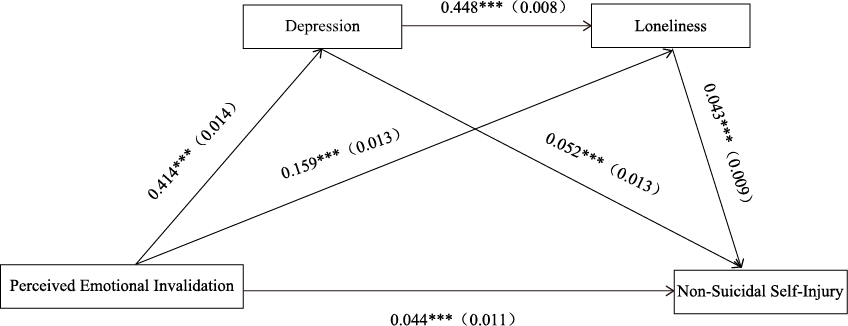
Figure 1 Chain Mediating Effects of Depression and Loneliness between Perceived Emotional Invalidation and Non-Suicidal Self-Injury
Note: The values in parentheses are standard errors. * p < 0.05, ** p < 0.01, *** p < 0.001.
4 Discussion
This study found that perceived emotional invalidation not only predicted NSSI in college students but also had significant indirect effects through three mediating paths. Depression was a partial mediator between perceived emotional invalidation and NSSI; loneliness was also a partial mediator. Additionally, depression and loneliness formed a serial mediating path through which perceived emotional invalidation influenced NSSI. Thus, the results supported Hypothesis 1, that is, the positive predictive effect of perceived emotional invalidation on NSSI. The results were also consistent with the integrated model proposed by Nock. This model explains NSSI from a functional perspective by highlighting its functions in emotion regulation, social cognition, and learning mechanisms. Specifically, perceived emotional invalidation might be a key individual vulnerability factor. Under the background of genetic liability or early adversity (e.g., childhood maltreatment) leading to psychological vulnerabilities (e.g., elevated negative emotionality, low distress tolerance), and interpersonal problems, individuals would be more likely to engage in NSSI when confronted with highly distressing stressors or complicated social situations. Emotion regulation deficits combined with maladaptive social-cognitive correlates of NSSI (e.g., self-punishment) increased the likelihood of engaging in NSSI. This study further confirmed the significant positive correlation between impaired emotional perception and NSSI (Zhang et al., 2023), thus extending the application of this theoretical model to college students.
Perceived emotional invalidation was also found to predict NSSI indirectly via depression, partially mediating the relationship between perceived emotional invalidation and NSSI. Thus, H2 was supported. When college students express their emotions in interpersonal situations and receive negative or critical reactions, depressive symptoms might be elicited. With the accumulation of such invalidating experiences, the level of depression might become more severe, and some individuals might turn to NSSI as a maladaptive coping mechanism for dealing with chronic emotional pain. Previous studies have shown that there is a strong connection between depressive mood disorders and NSSI, suggesting that depression increases the risk of self-injurious behaviors (Kerr et al., 2010). Beyond the depression pathway, the present study also found loneliness to be a partial mediator between perceived emotional invalidation and NSSI, thus supporting H3. A survey of 414 junior high school students in Sichuan Province found a significant positive correlation between loneliness and NSSI, with self-control as a mediating variable further confirming the mediating role of loneliness (Huang et al., 2023). Other studies have also shown a stable correlation between loneliness and NSSI (Zhang et al., 2023).
Furthermore, this research identifies a serial mediation pathway involving “depression → loneliness”, indicating that perceived emotional invalidation can increase depressive symptoms, which in turn intensify feelings of loneliness, ultimately elevating the risk of NSSI. Hence, Hypothesis 4 is supported. In line with Nock’s integrative model, when college students face academic or other stressors and feel that others invalidate their emotional expressions, negative emotional responses might be intensified. Studies have shown that such responses can lead to depression and even promote NSSI through increased loneliness (Yuan, 2023; Hamza et al., 2021). More concretely, biased social feedback may erode one’s sense of belonging, intensify loneliness, and decrease the utilization of adaptive coping strategies, thus increasing the possibility of self-injurious behavior. This process involves complicated interactions between stressful events, emotional cognition, social interaction, and psychological adaptation (Cacioppo & Hawkley, 2009; Fedewa, 2014).
In conclusion, this study has revealed the psychological mechanism by which perceived emotional invalidation predicts NSSI in university students through a serial mediation process involving depression and loneliness. The results suggest that multilevel intervention strategies should be adopted, such as emotion regulation training to help individuals perceive and express their emotions correctly, professional psychological intervention to alleviate depressive symptoms, and improved social support to alleviate loneliness. Moreover, it is suggested that a coordinated school-family collaboration framework be developed, along with early screening protocols to identify those at risk, to facilitate integrated prevention of NSSI.
5 Limitations and Future Directions
Firstly, due to the cross-sectional design used in this study, it is difficult to determine whether there are causal relations between variables; we can only discuss correlations and mediating paths. In future research, longitudinal or experimental designs should be used to further investigate the temporal order and causal mechanisms of the variables. Secondly, since the sample was recruited from only one university, the results cannot be generalized to other populations. Future studies should broaden the sampling frame to include participants from different areas and educational backgrounds to improve the external validity of the study. In addition, all the variables in this study were measured by self-report scales, which may lead to common method bias. The validity and depth of data could be enhanced by including behavioral experiments, physiological indicators, or third-party reports. Another limitation is that although the chain-mediated role of depression and loneliness was verified in this study, other possible variables, such as social support and emotion regulation strategies, were not included. Future studies could use latent profile analysis or cross-lagged modeling with longitudinal data to investigate more complicated mediating and moderating mechanisms. Finally, the results suggest that it might be helpful to develop interventions targeting perceived emotional invalidation to decrease NSSI by reducing depression and loneliness. Well-designed prevention and intervention programs based on these findings would help translate theoretical knowledge into practical application.
6 Conclusion
The present study extended knowledge of the mechanisms by which perceived emotional invalidation is associated with NSSI in university students. Specifically, the present study identified a chain-mediated effect of depression and loneliness on the association between perceived emotional invalidation and NSSI. The results suggested that perceived emotional invalidation is first associated with depression, which in turn was associated with loneliness. Finally, loneliness was associated with NSSI. That is, perceived emotional invalidation may lead to depression, then to loneliness, and finally to NSSI. These results are consistent with emotion regulation theory and social connection theory. In addition, the results suggest that perceived emotional invalidation may be a risk factor for NSSI, and this risk may be mediated by depression and loneliness in sequence. Therefore, interventions aimed at reducing NSSI should not only target improving emotion regulation ability but also consider the communication environment around the individual. This study contributes to the theoretical basis for developing a multi-level mental health prevention system for universities.
References
[1] Awalinni, A., & Harsono, Y. T. (2023). Hubungan antara kesepian dan perilaku non-suicidal self-injury pada mahasiswa psikologi di Kota Malang [The correlation between loneliness and non-suicidal self-injury behavior in psychology students at Malang City]. Jurnal Psikologi Teori dan Terapan, 14(1), 43–59.
[2] Wijana, M. B., Ghaderi, A., Enebrink, P., & Liljedahl, S. I. (2021). Validation, emotion dysregulation and self-harm: Results from an anonymous large-scale Internet-based study of young people. BMC Psychiatry, 21(1), 1–10.
[3] Cacioppo, J. T., & Hawkley, L. C. (2009). Perceived social isolation and cognition. Trends in Cognitive Sciences, 13(10), 447–454.
[4] Dhingra, K., & Ali, P. (2016). Non-suicidal self-injury: Clinical presentation, assessment and management. Nursing Standard, 31(5), 42–49.
[5] Fedewa, A. S. (2014). Identifying and understanding nonsuicidal self-injury among college students (Unpublished doctorial dissertation), Wayne State University, Detroit.
[6] Gu, H. L., Huang, J., & Li, J. C. (2025). Identity confusion and adolescent non-suicidal self-injury: The mediating role of alienation and the moderating role of difficulties in emotional regulation. Psychological Development and Education, (1), 126–134.
[7] Hamza, C. A., Goldstein, A. L., Heath, N. L., & Ewing, L. (2021). Stressful experiences in university predict non-suicidal self-injury through emotional reactivity. Frontiers in Psychology, 12, 610670.
[8] Huang, X., Liu, H., Lan, Z., & Deng, F. (2023). The effect of loneliness on non-suicidal self-injury behavior in Chinese junior high school adolescents: A moderated mediation model. Psychology Research and Behavior Management, 16, 1831–1843.
[9] Hughes, M. E., Waite, L. J., Hawkley, L. C., & Cacioppo, J. T. (2004). A short scale for measuring loneliness in large surveys: Results from two population-based studies. Research on Aging, 26(6), 655–672.
[10] Kerr, P. L., Muehlenkamp, J. J., & Turner, J. M. (2010). Nonsuicidal self-injury: A review of current research for family medicine and primary care physicians. Journal of the American Board of Family Medicine, 23(2), 240–259.
[11] Leathem, L. D., Currin, D. L., Montoya, A. K., & Karlsgodt, K. H. (2021). Socioemotional mechanisms of loneliness in subclinical psychosis. Schizophrenia Research, 238, 145–151.
[12] Liao, C., Gu, X., Wang, J., Li, K., Wang, X., Zhao, M., & Feng, Z. (2022). The relation between neuroticism and non-suicidal self-injury behavior among college students: Multiple mediating effects of emotion regulation and depression. International Journal of Environmental Research and Public Health, 19(5), 2885.
[13] Luo, Q., & Shao, R. (2023). The positive and negative emotion functions related to loneliness: A systematic review of behavioural and neuroimaging studies. Psychoradiology, 3, 1–17.
[14] Niu, X. D. (2023). Chain mediating roles of loneliness and experiential avoidance in the relationship between authenticity and suicidal ideation. Advances in Psychology, 13(2), 491–498.
[15] Nock, M. K. (2009). Understanding non-suicidal self-injury: Origins, assessment, and treatment. Annual Review of Clinical Psychology, 5, 39–64.
[16] Pea, M. L., Brose, A., Gotlib, I. H., & Kuppens, P. (2016). Affective updating ability and stressful events interact to prospectively predict increases in depressive symptoms over time. Emotion, 16(1), 73–82.
[17] Qin, Y. (2023). The association between depression and non-suicidal self-injury among college students. MEDS Public Health and Preventive Medicine, 3(6), 1–8.
[18] Trtica, L. M., Volarić, M., Kurevija, T., Mihaljević, S., Krivdić Dupan, Z., & Wittlinger, T. (2023). Psycho-social and health predictors of loneliness in older primary care patients and mediating mechanisms linking comorbidities and loneliness. BMC Geriatrics, 23(1), 801.
[19] Wilcox, H. C., Arria, A. M., Caldeira, K. M., Vincent, K. B., Pinchevsky, G. M., & O’Grady, K. E. (2012). Longitudinal predictors of past-year non-suicidal self-injury and motives among college students. Psychological Medicine, 42(4), 717–726.
[20] Wu, J., & Liu, H. (2019). Features of nonsuicidal self-injury and relationships with coping methods among college students. Iranian Journal of Public Health, 48(2), 270–277.
[21] Yen, S., Kuehn, K., Tezanos, K., Weinstock, L. M., Solomon, J., & Spirito, A. (2015). Perceived family and peer invalidation as predictors of adolescent suicidal behaviors and self-mutilation. Journal of Child and Adolescent Psychopharmacology, 25(2), 124–130.
[22] Yuan, Q. (2023). The association between depression and non-suicidal self-injury among college students. MEDS Public Health and Preventive Medicine, 3(6).
[23] Zhang, B., Zhang, W., Sun, L., Jiang, C., Zhou, Y., & He, K. (2023). Relationship between alexithymia, loneliness, resilience and non-suicidal self-injury in adolescents with depression: A multi-center study. BMC Psychiatry, 23(1), 445.
[24] Zhao, J. N., & Yang, X. F. (2024). A review of theoretical research on non-suicidal self-injury behavior in adolescents and progress in related qualitative research. Advances in Social Sciences, 13(6), 684–694.
[25] Zielinski, M. J., & Veilleux, J. C. (2018). The Perceived Invalidation of Emotion Scale (PIES): Development and psychometric properties of a novel measure of current emotion invalidation. Psychological Assessment, 30(11), 1454–1467.