Current Views: 31162
 Current Downloads: 20516
Guide to Education Innovation
ISSN Print:2789-0732
ISSN Online:2789-0740
Contact Editorial Office



Subscribe to the latest published information from SCISCAN
The Effects of Career-specific Parental Behaviors on College Students’ Employability: A Moderated Mediation Model


-
Information:
1. Students’ Affairs Office, China Jiliang University, Hangzhou;
2. Shaoguan Secondary Vocational Technical School, Shaoguan
-
Keywords:
Career-specific parental behaviors; Career exploration; Adolescent-parent career congruence; Employability
- Abstract: Objective: This study examined the mechanism of career-specific parental behaviors on college students’ employability based on theories of career development stages, ecosystem theory, and the social cognitive theory of career exploration. Methods: The Employability Scale, the Career-specific Parental Behaviors Scale, the Adolescent-Parent Career Congruence Scale, and the Career Exploration Scale were used to study 864 college students. Results: The results showed that: (1) Career-specific parental behaviors significantly and positively predicted college students’ job search behaviours and job search self-efficacy; (2) Career exploration mediated the effects of career-specific parental behaviors on college students’ employability; (3) The variable of adolescent-parent career congruence moderated the effects of career exploration on college students’ employability, as well as the direct path effects. Conclusion: Career-specific parental behaviors affect college students’ employability through career exploration, and this effect is moderated by adolescent-parent career congruence.
- DOI: 10.35534/gei.0601005
- Cite: Wang, T. B. & Gong, W. (2026). The Effects of Career-specific Parental Behaviors on College Students’ Employability: A Moderated Mediation Model. Guide to Education Innovation, 6(1), 42-56.
1 Introduction
According to the Government Work Report, there will be more than 11.7 million college graduates in 2024, and the number of graduates will continue to show an upward trend in the next few years. The huge scale of graduates makes the employment situation more severe, and the employment problem of college students is getting more and more attention from all walks of life. Research has found that the employability of college students is the core content of successful employment. The stronger the employability of college students, the greater the possibility of an employment success rate and high-quality employment (Heijde & Van der Heijden, 2006). Employability of college students refers to the combination of ability, character, desire, social resources and other characteristics that college students need to have in order to choose and obtain employment; it is a competent characteristic for successful employment, and it is the concentration of college students’ comprehensive quality in their career, which provides the possibility of successful employment for college students (Heijde & Van der Heijden, 2006; Yu et al., 2014). According to the career capital theory view (Inkson & Arthur, 2001), career success depends on individual human capital, social capital and psychological capital (Yu et al., 2014). Through the steps of literature summary, interview, open-ended questionnaire, pre-test and re-test, Yu Haibo et al. finally obtained the 8-dimensional structural model of the employability of college students in China, which emphasized the improvement of the resources of employment possibilities in the three aspects of competency characteristics, personality characteristics and social capital and then improved the employability of college students. By exploring the influencing factors and mechanisms of college students’ employability, we can provide empirical evidence for improving college students’ employability and then promote college students’ successful employment.
Career-specific parental behaviors refer to the specific guidance behaviours taken by parents in the process of their children’s career development (Juliadietrich & Kracke, 2009). Career-specific parental behaviors can be categorised into three dimensions: first, support, in which parents encourage their children to explore career development possibilities and provide advice when needed; second, interference, in which parents impose their own career preferences on their children, controlling their children’s career preparations and aspirations; and third, absence, in which parents do not have the ability or willingness to participate in their children’s career development (Zhao et al., 2022). Ecosystem theory suggests that the family is the environment that individuals are in direct contact with and has the most significant influence on individual career development, and in their view, parents play a key role in career decision-making and employability enhancement (Mortimer et al., 2002). Empirical studies have shown that career-specific parental behaviors can have an impact on college students’ employability, and an encouraging and supportive family atmosphere enhances employability (Pan, 2021; Xia et al., 2020). Although research has shown that career-specific parental behaviors affect employability, the process by which career-specific parental behaviors affect college students’ employability is not clear. Therefore, it is necessary to examine the mediating mechanism of career-specific parental behaviors on college students’ employability, and the mediating mechanism can help further understand how career-specific parental behaviors affect college students’ employability. Through a review of relevant research and literature, this study suggests that career exploration is a mediating variable worth considering, which refers to career exploration as a process by which an individual learns about himself/herself and acquires a sense of identity between himself/herself and the world of work, in order to have a clearer orientation towards the establishment of future career development goals (Werbel, 2000; Pavlova & Silbereisen, 2014). Firstly, career construct theory suggests that individuals need to build and utilise their individual resources to pursue their goals, and that family support can enhance college students’ confidence and ability to set career goals and explore career information. Social cognitive career theory suggests that environmental factors are an important influence on career development, in which parental support is indispensable (Lent & Brown, 2013; Yang & Gong, 2022). Empirical studies have also shown that parental support and assistance in career choice can increase children’s behaviour in career exploration (Lent & Brown, 2013). A study of 244 college students in China, as well as their parents, found that parental career support positively predicted their children’s career exploration behaviours (Guan et al., 2015). Chasanah argued that, due to the lack of social experience, college students receive more information and ideas from their parents, and parental support can help and facilitate individuals in career exploration (Chasanah et al., 2019). Secondly, Super’s stage theory of career development suggests that career exploration has a very important place in career development and that career exploration can promote career development and employability (Zhang et al., 2015; Gushue, 2006). According to the relational model of employability proposed by Thijssen et al. in 2008, the impact of employability on employment relies on a series of favourable transformative conditions. These conditions involve not only the individual’s own traits and factors, but also the context and environment at the organisational level. Among these transformative conditions, career exploration is particularly important as one of the key factors influencing an individual’s employability (Thijssen et al., 2008). Empirical studies have shown that active career exploration has a positive predictive effect on college students’ employability (Kanfer & Hulin, 1985; Wang, 2013). In summary, career-specific parental behaviors may improve college students’ employability by facilitating their career exploration. Accordingly, this study proposes Hypothesis 1: Career exploration mediates the effect of career-specific parental behaviors on college students’
employability.
The analysis of the mediating effect of career-specific parental behaviors on college students’ employability can help us understand the process of career-specific parental behaviors affecting employability, but the effect of career-specific parental behaviors on college students’ employability may be moderated by other factors, and the moderating effect can better explain the “conditions” under which career-specific parental behaviors affects college students’ employability (Wen & Ye, 2014). On the basis of summarising previous research, this study suggests that adolescent-parent career congruence is a moderating variable worth considering. Adolescent-parent career congruence refers to the level of congruence that adolescents perceive between their parents and themselves in terms of career interests, plans, goals, and values (Sawitri et al., 2013). According to resource conservation theory (Hobfoll et al., 2003), individuals invest new resources to gain access to employment opportunities and employment resources. Career exploration is one of the resources that college students invest in to get better employment. Environmental Factors-Family support pairs and adolescent-parent career goal congruence play a key role in employability enhancement (Duan et al., 2020). Parent-adolescent career congruence predicts children’s future exploration and self-efficacy. Adolescent career aspirations and adolescent-parent career congruence can influence career aspirations, career behaviours, career resilience, and career competence. Adolescent-parent career congruence influences career exploration behaviours (Deng et al., 2020). Complementary congruence in adolescent-parent career congruence predicted the development of employability (Sulistiobudi & Prasetio, 2023). Therefore, adolescent-parent career congruence may moderate the impact of career exploration on college students’ employability. This study proposes Hypothesis 2: Adolescent-parent career congruence moderates the impact of college students’ career exploration on
employability.
Empirical studies have shown that some parents are more attentive to their children’s preferences, more open to their children’s career exploration behaviours, more supportive of their children’s career choices, and more aligned with their children’s career goals (Schultheiss et al., 2001). Children in a climate of family career support are more likely to be proactive during career preparation, to engage in proactive career exploration behaviours both internally and externally, and to perform better in their careers (Dietrich & Kracke, 2009). In other words, when parents are involved in their children’s career building, if there is a congruence of career philosophies and goals, it will promote their children’s positive career exploration and coping, thus affecting employability. The present study proposes Hypothesis 3: Adolescent-parent career congruence moderates career-specific parental behaviors and thus has an impact on employability.
In summary, this study not only examined the mediating role of career exploration between career-specific parental behaviors and college students’ employability, but also further examined whether the mediation model was moderated by adolescent-parent career congruence. A moderated mediation model was constructed to test the mechanism of the influence of career-specific parental behaviors on college students’ employability. There are 2 main purposes of this study: (1) To test whether career exploration mediates the relationship between career-specific parental behaviors and college students’ employability; (2) To examine whether adolescent-parent career congruence moderates the effects of career exploration on college students’ job search behaviours, as well as the effects of direct pathways. The first question will explore “how” career-specific parental behaviors affect college students’ employability, and the second question will explore “when” this effect occurs.
2 Research Methodology
2.1 Participants
A total of 969 college students from five undergraduate colleges and universities in a certain region were selected as survey respondents using the cluster sampling method. After eliminating 104 invalid questionnaires, 864 valid questionnaires were retained, with a validity rate of 89.16%. The average completion time of the questionnaire was about 15 minutes. The main researchers were teachers of the course “Career Development and Employment Guidance for College Students” who received professional training before the survey. The consent of the college leaders, teachers and the participants themselves was obtained before the assessment. The panel test was conducted according to the principle of convenience sampling, emphasising voluntary participation, data confidentiality and anonymous completion of the questionnaire.
2.2 Tools
2.2.1 Scale of Employability
The employability scale developed by Yu, Haibo et al. were used (Yu et al., 2014), which consists of 36 items and is scored on a 5-point scale, ranging from “1=strongly unconformable” to “5=strongly conformable”, and the coefficients of the 8 dimensions α are: Occupational identity 0.867, optimism 0.877, interpersonal relationship 0.851, teamwork 0.861, learning ability 0.820, problem solving 0.865, social support 0.827, network differences 0.601, Optimism and Cheerfulness 0.877, Interpersonal Relationships 0.851, Teamwork 0.861, Learning Ability 0.820, Problem Solving 0.865, Social Support 0.827, and Network Differences 0.616. The α coefficient for this scale in this measurement was 0.912. Validated factor analyses showed that RMSEA = 0.071, CFI = 0.908, NNFI = 0.896, and SRMR = 0.092.
2.2.2 Career-specific Parental Behaviors Scale
The Career-specific Parental Behaviors Scale was developed by Dietrich & Kracke (Dietrich & Kracke, 2009). It consists of three dimensions — Parental Career Support, Parental Career Interference, and Parental Career Absence — with five items per dimension, totaling 15 items. A Likert 5-point scale was used (1 = not compliant, 5 = fully compliant), where higher scores on a dimension indicate a stronger individual tendency on that dimension. In this study, the alpha coefficients for the scale were 0.889 for the overall measure, with subscale alphas of 0.889, 0.906, and 0.864, respectively. The model fit indices were RMSEA = 0.158, CFI = 0.954, NNFI = 0.908, and SRMR = 0.031.
2.2.3 Adolescent-Parent Career Congruence Scale
The complementary congruence dimension of The Adolescent-Parent Career Congruence Scale (The Adolescent-Parent Career Congruence Scale) developed by Sawitri and others was selected to examine the degree to which adolescents and their parents are similar and compatible in their career perceptions and choices (Sawitri et al., 2013). The scale consists of 5 questions, all positively scored, with higher scores indicating better adolescent-parent career congruence. There are 5 entries in total. The alpha coefficient for this scale in this measurement was 0.864. RMSEA = 0.108, CFI = 0.974, NNFI = 0.947, and SRMR = 0.026.
2.2.4 Career Exploration Scale
The Career Exploration Scale (CES), developed by Stumpf, was used in this study (Stumpf et al., 1983). The 12-item CES consists of two dimensions, Environmental Exploration and Self-Exploration, with six items in each dimension, and alpha coefficients of 0.887 and 0.858, respectively, was 0.909. RMSEA = 0.105, CFI = 0.910, NNFI = 0.886, and SRMR = 0.057.
3 Results
3.1 Common Method Bias Test
Because this study used the questionnaire measurement method, common method bias may arise when collecting data, so the common method bias test was carried out after the questionnaire was recovered using the Harman one-way test (Zhou & Long, 2004). The results show that there are 24 factors with eigenvalues greater than 1, and the first factor explains 26% of the variance, which is less than 40%; after the first factor is rotated, processed and measured, the explanatory power of this factor for the variance is also only 14%, which is far less than the critical 40%. This result indicates that there is no serious common methodological bias.
3.2 Descriptive Statistics and Correlation Analysis of Variables
Family economic status, place of birth, etc. (There was no correlation between variables such as gender, major, and whether or not they were only children and the dependent variable). Demographic variables were correlated with the variables and were included as control variables in the analysis. The mean, standard deviation and correlation coefficients of the variables are shown in Table 1. The correlation analysis found a significant positive two-by-two correlation between the variables, supporting the subsequent mediation
moderation test.
Table 1 Results of Descriptive Statistics and Correlation Analysis
|
M |
SD |
1 |
2 |
3 |
4 |
5 |
6 |
|
|
1. Career-specific Parental Behaviors |
2.55 |
0.70 |
1 |
|||||
|
2. Career Exploration |
3.10 |
0.64 |
0.42** |
1 |
||||
|
3. Adolescent-Parent Career Congruence |
3.64 |
1.00 |
0.44** |
0.26** |
1 |
|||
|
4. Employability |
3.35 |
0.46 |
0.43** |
0.54** |
0.36** |
1 |
||
|
5. Socio-economic Status of the Family |
12.05 |
3.17 |
0.34** |
0.16** |
0.20** |
0.21** |
1 |
|
|
6. Place of Birth |
1.50 |
0.50 |
-0.20** |
-0.13** |
-0.12** |
-0.17** |
-0.45** |
1 |
Note: N = 864, ** p < 0. 01; Place of birth: 1 = urban, 2 = rural.
3.3 Moderated Mediation Model Tests
3.3.1 Testing the Mediation Model of Parental Career Interference on Employability
According to the steps for testing moderated mediation models recommended by Wen Zhonglin and Ye Baojuan (Wen & Ye, 2014), first, after controlling for demographic variables such as family socio-economic status and place of origin (results shown in Table 2), parental career interference did not positively predict employability (β = 0.02, t = 1.17, p > 0.05). Then, the moderating effect on the first half of the path was tested; the interaction term between parental career interference and adolescent-parent career congruence significantly predicted career exploration (β = -0.04, t = -2.15, p < 0.05). Finally, the direct effect and the moderating effect on the second half of the path were tested. Parental career interference significantly and positively predicted career exploration (β = 0.11, t = 5.10, p < 0.001), and career exploration significantly and positively predicted college students’ employability (β = 0.34, t = 16.43, p < 0.001). After including the variables of career exploration and adolescent-parent career congruence, parental career interference still did not positively predict employability (β = -0.00, t = -0.13, p > 0.05). Therefore, career exploration fully mediated the effect of parental career interference on college students’ employability. Additionally, the interaction term between career exploration and adolescent-parent career congruence did not significantly predict employability (β = -0.05, t = -3.37, p < 0.01), and the interaction term between parental career interference and adolescent-parent career congruence did not significantly predict employability (β = 0.01, t = 1.05, p > 0.05).
Table 2 Moderated Mediation Model Test
|
Variable |
β |
t |
β |
t |
β |
t |
|
Family Socio-economic Status |
0.02 |
4.23*** |
0.01 |
1.73 |
0.01 |
2.30* |
|
Place of Origin |
-0.09 |
-2.56* |
-0.08 |
-1.84 |
-0.05 |
-1.75 |
|
Parental Career Interference (X) |
0.02 |
1.17 |
0.11 |
5.10*** |
-0.00 |
-0.13 |
|
Career Exploration (M) |
0.34 |
16.32*** |
||||
|
adolescent-parent career Congruence (U) |
0.17 |
7.94*** |
0.10 |
7.38*** |
||
|
Parental Career Interference (X) × adolescent-parent career Congruence (U) |
-0.04 |
-2.15* |
0.01 |
1.05 |
||
|
Career Exploration (M) × adolescent-parent career Congruence (U) |
-0.05 |
-3.37** |
||||
|
R² |
0.05 |
0.12 |
0.37 |
|||
|
F |
15.66*** |
22.34*** |
70.78*** |
Note: N = 864, * p < 0.05, ** p < 0.01, *** p < 0.001.
The model is shown in Figure 1.
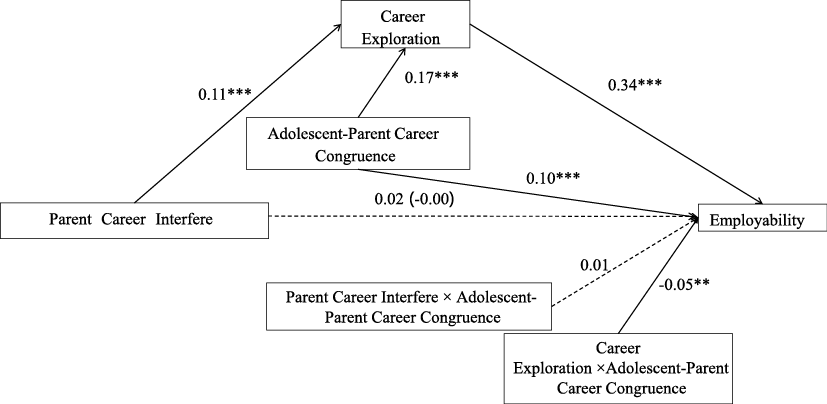
Figure 1 Moderated Mediator Model Diagram
3.3.2 Testing the Mediation Model of Parental Career Absence on Employability
According to the steps for testing moderated mediation models recommended by Wen Zhonglin and Ye Baojuan (Wen & Ye, 2014), first, after controlling for demographic variables such as family socio-economic status and place of origin (results shown in Table 3), parental career absence negatively predicted employability (β = -0.04, t = -2.57,
p < 0.01). Then, the moderating effect on the first half of the path was tested; the interaction term between parental career absence and adolescent-parent career congruence did not significantly predict career exploration (β = -0.02,
t = -1.32, p > 0.05). Finally, the direct effect and the moderating effect on the second half of the path were tested. Parental career absence significantly and positively predicted career exploration (β = 0.05, t = 2.14, p < 0.05), and career exploration significantly and positively predicted college students’ employability (β = 0.34, t = 16.66, p < 0.001). After including the variables of career exploration and adolescent-parent career congruence, parental career absence still negatively predicted employability (β = -0.03, t = -2.34, p < 0.05). Therefore, career exploration partially mediated the effect of parental career absence on college students’ employability. Additionally, the interaction term between career exploration and adolescent-parent career congruence significantly predicted employability (β = -0.05, t = -3.28, p < 0.05), while the interaction term between parental career absence and adolescent-parent career congruence did not significantly predict employability (β = -0.00, t = -0.38, p > 0.05).
Table 3 Moderated Mediation Model Test
|
Variable |
β |
t |
β |
t |
β |
t |
|
Family Socio-economic Status |
0.02 |
3.86*** |
0.02 |
2.71** |
0.01 |
1.84 |
|
Place of Origin |
-0.09 |
-2.50* |
-0.09 |
-1.85 |
-0.05 |
-1.71 |
|
Parental Career Absence (X) |
-0.04 |
-2.57** |
0.05 |
2.41* |
-0.03 |
-2.34* |
|
Career Exploration (M) |
0.34 |
16.66*** |
||||
|
adolescent-parent career Congruence (U) |
0.16 |
7.50*** |
0.10 |
7.15*** |
||
|
Parental Career Absence (X) × Adolescent-Parent Career Congruence (U) |
-0.02 |
-1.32 |
-0.00 |
-0.38 |
||
|
Career Exploration (M) × Adolescent-Parent Career Congruence (U) |
-0.05 |
-3.28* |
||||
|
R² |
0.06 |
0.09 |
0.37 |
|||
|
F |
17.50*** |
17.50*** |
71.77*** |
Note: N = 864, * p < 0.05, ** p < 0.01, *** p < 0.001.
The model is shown in Figure 2.
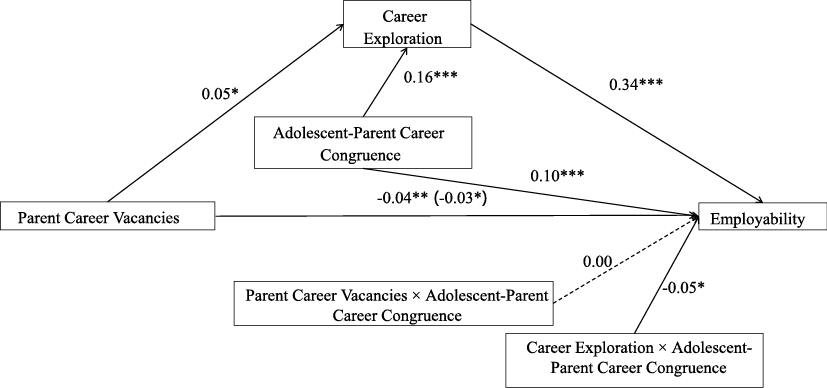
Figure 2 Moderated Mediator Model Diagram
3.3.3 Testing the Mediation Model of Parental Career Support on Employability
According to the steps recommended by Wen Zhonglin and Ye Baojuan (2014b) for testing moderated mediation models, first, after controlling for demographic variables such as family socioeconomic status and place of birth (the results are shown in Table 4), career-specific parental behaviors significantly and positively predicted employability (β = 0.26, t =12.23, p <0.001). The first half of the path moderated effects were then conducted to validate that the interaction terms of career-specific parental behaviors and adolescent-parent career congruence were not significant predictors of career exploration (β = 0.03, t = 1.30, p > 0.05). Finally, a direct effect and should be post-half-path moderated effect validation was conducted, career-specific parental behaviors significantly and positively predicting career exploration (β = 0.34, t = 10.40, p < 0.001) and career exploration significantly and positively predicting employability for college students (β =0.30, t =14.14, p <0.001), and after putting in the variables of career exploration and adolescent-parent career congruence, career-specific parental behaviors still significantly and positively predicted employability (β = 0.10, t = 4.70, p < 0.001), therefore, career exploration partially mediated the effect of career-specific parental behaviors on college students’ employability, and Hypothesis 1 was verified. In addition, the interaction term between career exploration and adolescent-parent career congruence predicted employability significantly (β = -0.07, t = -3.91, p < 0.001); therefore, adolescent-parent career congruence moderated the effect of career exploration on college students’ employability, and Hypothesis 2 was verified. The interaction term between career-specific parental behaviors and adolescent-parent career congruence predicted employability significantly (β = 0.03, t = 1.97, p < 0.05); therefore, adolescent-parent career congruence moderated the effect of career-specific parental behaviors on college students’ employability, and Hypothesis 3 was verified.
Table 4 Mediation Model Tests with Moderation
|
Variant |
Target Variable: Employability |
Target Variable: Career Exploration |
Target Variable: Employability |
|||
|
β |
t |
β |
t |
β |
t |
|
|
Socio-economic Status of the Family |
0.01 |
1.20 |
-0.00 |
-0.89 |
0.01 |
1.20 |
|
Place of Birth |
-0.06 |
-2.00* |
-0.06 |
-1.28 |
-0.04 |
-1.53 |
|
Career-specific Parental Behaviors |
0.26 |
12.23*** |
0.34 |
10.40*** |
0.10 |
4.70*** |
|
Career Exploration |
0.30 |
14.14*** |
||||
|
Adolescent-Parent Career Congruence |
0.58 |
2.60** |
0.08 |
5.77*** |
||
|
Career-specific Parental Behaviors × Adolescent-Parent Career Congruence |
0.03 |
1.30 |
0.03 |
1.97* |
||
|
Career Exploration × Adolescent-Parent Career Alignment |
-0.07 |
-3.91*** |
||||
|
R² |
0.19 |
0.19 |
0.38 |
|||
|
F |
67.68*** |
39.57*** |
76.20*** |
|||
Note: N = 864, * p < 0. 05, ** p < 0. 01, *** p < 0. 001.
The model is shown in Figure 3.
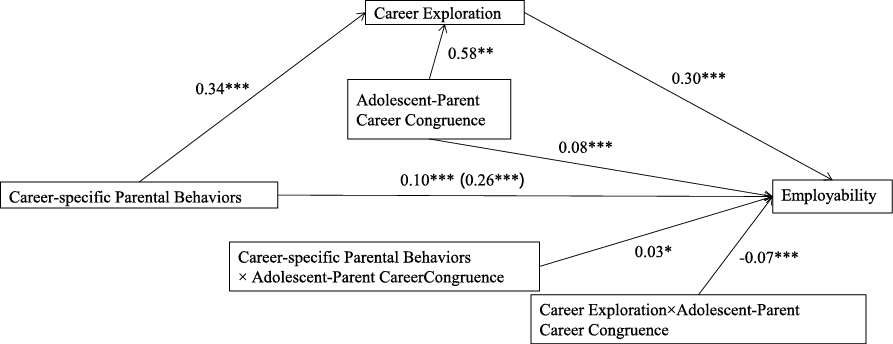
Figure 3 Moderated Mediator Model Diagram
To further examine how adolescent-parent career congruence moderates the influence of parental career support on employability and of career exploration on employability (controlling for family socioeconomic status and place of birth), adolescent-parent career congruence was divided into high and low groups by adding or subtracting one standard deviation from the mean. Simple effects analysis plots were drawn (see Figure 4 and Figure 5, respectively).
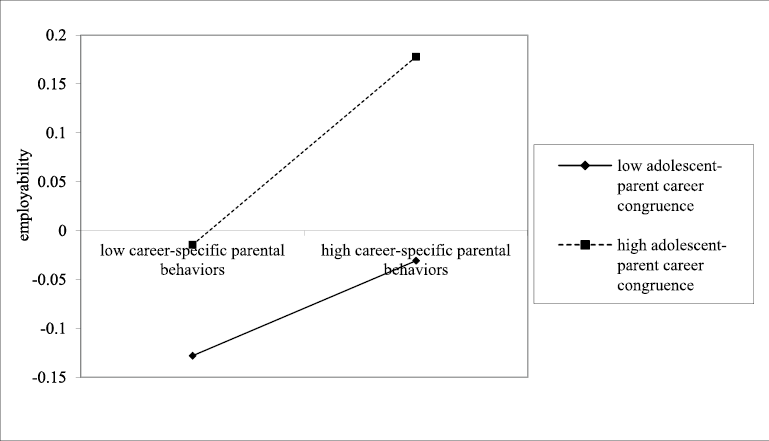
Figure 4 Map of the Moderating Role of Adolescent-Parent Career Congruence between Career-specific Parental Behaviors and Employability
As shown in Figure 4, the results of the simple slope test indicate that under conditions of low adolescent-parent career congruence, parental career support has a significant positive predictive effect on employability (β = 0.07, t = 2.54, p < 0.05); under conditions of high adolescent-parent career congruence, parental career support has a significant positive predictive effect on employability (β = 0.14, t = 4.80, p < 0.001), and the strength of prediction increases.
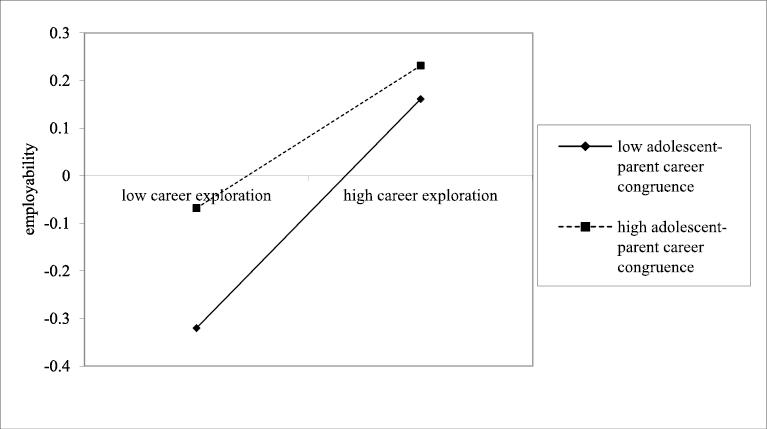
Figure 5 Map of the Moderating Role of Adolescent-Parent Career Congruence between Career Exploration and Employability
As shown in Figure 5, the results of the simple slope test indicate that under conditions of low adolescent-parent career congruence, career exploration has a significant positive predictive effect on employability (β = 0.38, t = 13.46, p < 0.001); under conditions of high adolescent-parent career congruence, career exploration has a significant positive predictive effect on employability (β = 0.23, t = 8.21, p < 0.001), and the strength of prediction decreases.
Taken together (see Table 5), the effects of parental career support and career exploration on employability are moderated by adolescent-parent career congruence. For students with a higher level of adolescent-parent career congruence, the mediating effect of parental career involvement on employability through career exploration is β = 0.087, Boot SE = 0.021, with a 95% confidence interval of [0.051, 0.133]; for students with a lower level of adolescent-parent career congruence, this mediating effect value is larger, β = 0.116, Boot SE = 0.026, with a 95% confidence interval of [0.069, 0.167].
Table 5 Mediating Effects of Career Exploration between Career-specific Parental Behaviors and Employability at Different Adolescent-Parent Career Congruencies
|
Dependent Variable |
Adolescent-Parent Career Congruence Level |
Mediating Effect Values for Career Exploration |
Boot Standard Error |
Bootstrap Lower Limit |
Bootstrap Upper Limit |
|
Employability |
M±SD |
0.087 |
0.021 |
0.051 |
0.133 |
|
M |
0.104 |
0.016 |
0.074 |
0.137 |
|
|
M±SD |
0.116 |
0.026 |
0.069 |
0.167 |
4 Discussion
In recent years, with the continuous development of higher education in China, the number of college graduates has increased year by year. Employability, as an important influencing factor for the successful employment of college students, has become a hot research topic. This study found that career-specific parental behaviors increase college students’ employability. Furthermore, a supportive culture for learning and career development within the family is crucial. A person who lives in a culture of mutual encouragement and support among family members and co-workers will be more confident in successful employment, work harder, and take more initiative (Zhu, 2009). This result is consistent with the ecosystem theory proposed by Bronfenbrenner (Mortimer et al., 2002). This theory states that human beings develop in certain situations, and human development is closely related to the environment. Systems interact with and influence individual development. It has been shown that college students most often discuss career topics with their parents (Otto, 2000). When college students perceive more supportive behaviours from their parents during the job search process, they pay more attention to the possibilities of their future career development, show higher levels of control and self-confidence, and their employability increases. Social support and parental involvement variables are positively correlated with students’ employability, indicating that the closest person has an impact on the development of students’ employability. The influence of the closest people on the development of psychological aspects (especially employability) is in line with the ecological theory of Bronfenbrenner (Santrock, 2019). Ecological theory suggests that parents, teachers, close friends, and school are children’s microsystems and therefore they interact the most and may have the greatest impact on students’ psychological development. College students are in the stage of job-seeking exploration, if parents can use a parenting style that focuses on their children’s behavioural orientation, it will make college students develop adaptive behaviours that actively seek information and relate it to their future career choices, when parents demonstrate more supportive behaviours in their parenting behaviours in the career field, their children will be more optimistic to think about their future career development, integrate the advantageous resources that are available to them around them, and the level of employable The level of employability is also higher. The results of this study suggest that it is necessary to pay attention to career-specific parental behaviors, and parents should encourage their children to explore the possibilities of career development and provide them with advice when needed, in order to promote their employability and success in the workplace.
This study further examines the role of career exploration as a “bridge” between career-specific parental behaviors and college students’ employability. In other words, career-specific parental behaviors not only directly improve college students’ employability but also indirectly increase their employability by facilitating their career exploration. Firstly, career-specific parental behaviors will facilitate college students’ career exploration, and they will be more active and more confident in exploring their future careers. An important reason is that the sheer volume of career information available today is immense, and parental involvement can help filter this information. This phenomenon can be attributed to the cocktail party effect: The cocktail party effect is essentially a mechanism of selective attention, locking on to a target linguistic stream across multiple acoustic inputs, a mechanism that forms the dynamic cognitive basis for language comprehension in noisy environments (Kong, 2025). Furthermore, this result also provides empirical evidence for the self-determination theory, which suggests that if individuals can feel more encouragement and support from the external environment, they will explore their own internal resources more fully, and at the same time, they will generate more motivations and behaviours for adaptation and development (Jing & Wang, 2023). In other words, parent-specific career support will motivate college students to explore themselves and their environments on an ongoing basis. Second, college students who are more active in career exploration tend to obtain higher employability, a result consistent with previous studies (Kanfer & Hulin, 1985; Wang, 2013). This result is also consistent with Super’s Stages of Career Development Theory, which places great emphasis on the importance of career exploration in career development and suggests that exploration is necessary before career choice. Research has shown that career exploration is a positive predictor of employability. In terms of job search behaviour, college students exhibit higher employability if they actively engage in career exploration. The result also provides empirical evidence for the social cognitive theory of career exploration, which emphasises the individual’s information collection and assessment and verification of himself and the external environment. In this process, the individual will gradually reach the state of compatibility between himself and the position, whether it is about his own interests, abilities, personality characteristics of the professional world, or about the external employment environment, and have a clearer understanding of these explorations and preparations. These explorations and preparations can help college students gain more resources and confidence in their job searches (Brands & Raina, 2013; Gao & Sun, 2005).
In addition, the results also once again empirically validate the relational model of employability proposed by Thijssen (Thijssen et al., 2008), in which the impact of employability on employment depends on a series of good translational conditions that cover both the individual’s own quality and the organisational environment; among them, career exploration plays a crucial role as a key factor at the individual level. This mediation model reveals that we should not only pay attention to the direct impact of career-specific parental behaviors on college students’ employability, but also pay attention to the mediating role of career exploration, and that the promotion of college students’ career exploration can also help to improve college students’ employability.
This study further examined whether the variable of adolescent-parent career congruence moderated the effect of career exploration on college students’ job search behaviour, and found that the variable of adolescent-parent career congruence moderated the effect of career exploration on college students’ employability. First, adolescent-parent career congruence promotes college students’ job search behaviour, i.e., college students whose parents’ careers are congruent will have higher employability (Deng et al., 2020). This result is consistent with Deng Linyuan’s findings that parent-adolescent congruence in career planning can serve as an important predictor of college students’ future career exploration and self-efficacy (Hu & Wang, 2009). This congruence not only affects adolescents’ career aspirations, career behaviours, career resilience, and career competence but also directly relates to their exploratory behaviours in their careers. Second, the impact of career exploration on college students’ employability is more significant for college students with congruent parental careers than for college students with inconsistent parental careers. This result once again validates resource conservation theory (Hobfoll et al., 2003), where individuals actively invest in new resources when seeking employment opportunities. For college students, career exploration is one of the important resources they invest in the employment process to obtain more desirable employment opportunities. In summary, the moderated model examines when the impact of career exploration on college students’ employability is enhanced, and therefore, increasing college students’ career exploration would most benefit college students with consistent parental careers. The moderated model also suggests that there is a need to focus on adolescent-parent career congruence, which can help improve college students’ employability.
Overall, the moderated mediation model proposed in this study, based on theoretical foundations, sheds more light on the mechanisms by which career-specific parental behaviors affect college students’ employability. Career-specific parental behaviors affect college students’ employability through career exploration. This process is influenced by adolescent-parent career congruence. The model explains both the process of how career-specific parental behaviors affects college students’ employability (“how it works”) and the conditions under which it affects employability (“when it works more”), and the results of this model shed light on the mechanism of career-specific parental behaviors’s effect on college students’ employability (“when it works more”), the results of the model extend the relevant theories to some extent and have some practical implications. From the perspective of theoretical value, firstly, career exploration plays a mediating role between career-specific parental behaviors and employability, and this mediating model examines the influence of career-specific parental behaviors on college students’ employability through career exploration, and extends the career construct theory to a certain extent. The career construct theory emphasises the individual’s initiative and constructivity in the process of career development. At the same time, career construction theory also emphasises the importance of environmental factors, such as family support and parent-child relationships, in the development of an individual’s career. These factors can provide individuals with the necessary resources and support for career exploration, thus enhancing their employability. The mediating as well as direct effects of career exploration on career-specific parental behaviors and college students’ employability were moderated by adolescent-parent career congruence. Therefore, we need to consider the mediating role of career exploration and the moderating role of adolescent-parent career congruence in future discussions of the effects of career-specific parental behaviors on college students’ employability.
Although this study examined in depth the mechanism of career-specific parental behaviors on college students’ employability and helped to deepen the understanding of the relationship between the two, there are still the following shortcomings in this study, which need to be improved in future research: (1) Although this study conducted a cross-sectional study based on relevant theories, it still could not completely infer the causal relationship between the variables, and future research could further explore the causal relationship between the variables by using a tracking study. (2) The parenting styles involved in this study only cover one parenting style of adolescent-parent career congruence, and other types of parenting styles such as positive parenting or psychological control are also worthy of in-depth exploration; Constructivist learning theory posits that learning occurs through interaction within a context and social meaning making (Hong, 2025), and the aforementioned types have relatively strong social meaning-making attributes that cannot be ignored, which makes future exploration necessary. (3) The effects of different majors, different school types and different grades on college students’ employability should be further examined in future studies.
5 Conclusion
(1) Career exploration mediates the effects of career-specific parental behaviors on college students’ employability.
(2) The variable adolescent-parent career congruence moderated the effect of career exploration on college students’ employability as well as direct pathways.
Thus, there is a moderated mediating effect of career-specific parental behaviors on college students’ employability.
References
[1] Heijde, C. M. V. D., & Van der Heijden, B. I. J. M. (2006). A competence‐based and multidimensional operationalization and measurement of employability. Human Resource Management, 45(3), 349−375.
[2] Yu, H., Zheng, X., Xu, C., & Yan, C. (2014). The relationship between college students’ employability and subjective-objective employment performance: A linear and inverted U-shaped relationship. Acta Psychologica Sinica, 46(6), 807−822.
[3] Inkson, K., & Arthur, M. B. (2001). How to be a successful career capitalist. Organizational Dynamics, 30(1), 48−61.
[4] Juliadietrich, & Kracke, B. (2009). Career-specific parental behaviors in adolescents’ development. Journal of Vocational Behavior, 75(1), 70−81.
[5] Zhao, F., Zhao, H., Li, P., & Qin, J. (2022). The relationship between parental career-related behaviors and preschool education majors’ satisfaction: The mediating role of career adaptability and career planning. Psychological Science, 45(1), 68−74.
[6] Mortimer, J. T., Zimmer-Gembeck, M. J., Holmes, M., Shanahan, M. J., & Michael, J. (2002). The process of occupational decision making: Patterns during the transition to adulthood. Journal of Vocational Behavior, 61(3), 439−465.
[7] Pan, G. H. (2021). The impact of family expectations on college students’ employment (Unpublished doctorial dissertation). East China Jiaotong University, Shanghai.
[8] Xia, T., Gu, H., Huang, Y., Zhu, Q., & Cheng, Y. (2020). The relationship between career social support and employability of college students: A moderated mediation model. Frontiers in Psychology, 11, 1−12.
[9] Werbel, J. D. (2000). Relationships among career exploration, job search intensity, and job search effectiveness in graduating college students. Journal of Vocational Behavior, 57(3), 379−394.
[10] Pavlova, M. K., & Silbereisen, R. K. (2014). Coping with occupational uncertainty and formal volunteering across the life span. Journal of Vocational Behavior, 85(1), 93−105.
[11] Lent, R. W., & Brown, S. D. (2013). Social cognitive model of career self-management: Toward a unifying view of adaptive career behavior across the life span. Journal of Counseling Psychology, 60(4), 557−568.
[12] Yang, Q., & Gong, J. (2022). The influence of parental support on college students’ career adaptability: The chain mediation of psychological capital and career exploration. Chinese Journal of Clinical Psychology, 30(4), 1−5.
[13] Guan, Y., Zhou, X., & Liu, H. (2015). Career-specific parental behaviors, career exploration, and career adaptability: A three-wave investigation among Chinese undergraduates. In the 2014 International Conference on Career Development and Employment Management Abstracts (pp. 22−23).
[14] Chasanah, A. M., Salim, & Agoes, R. M. (2019). Parental support, career exploration, and career decision-making self-efficacy in junior high school students. University of Surabaya, 4.
[15] Zhang, Y., Ye, B., Luo, Z., Sun, C., & Liu, D. (2015). The impact of coping efficacy on college students’ employability: The mediating role of career exploration. Chinese Journal of Clinical Psychology, 5, 815−817.
[16] Gushue, G. V. (2006). The relationship of ethnic identity, career decision-making self-efficacy, and outcome expectations among Latino/a high school students. Journal of Vocational Behavior, 68(1), 85−95.
[17] Thijssen, J. G. L., Van der Heijden, B. I. J. M., Rocco, & Tonette, S. (2008). Toward the employability-link model: Current employment transition to future employment perspectives. Human Resource Development Review, 7(2), 165−183.
[18] Kanfer, R., & Hulin, C. L. (1985). Individual differences in successful job searches following lay-off. Personnel Psychology, 38(4), 835−847.
[19] Wang, Y. (2013). The impact of psychological capital on college students’ employability. Applied Psychology, 19(1), 65−71, 79.
[20] Wen, Z., & Ye, B. (2014). Mediating effect analysis: Methods and model development. Advances in Psychological Science, 22(5), 731−745.
[21] Sawitri, D. R., Creed, P. A., & Zimmer-Gembeck, M. J. (2013). The adolescent-parent career congruence scale: Development and initial validation. Journal of Career Assessment, 21(2), 210−226.
[22] Hobfoll, S. E., Johnson, R. J., Ennis, N., & Jackson, A. P. (2003). Resource loss, resource gain, and emotional outcomes among inner-city women. Journal of Personality and Social Psychology, 84(3), 623−640.
[23] Duan, J., Yang, J., & Zhu, Y. (2020). Conservation of resources theory: Content, theoretical comparisons, and research prospects. Psychological Research, 13(1).
[24] Deng, L., Xiong, Y., Liang, J., & Wang, L. (2020). Establishment and effectiveness verification of a high school career curriculum system based on home-school cooperation. Educational Science Research, 4, 35−44.
[25] Sulistiobudi, R. A., & Prasetio, C. E. (2023). Do my parents support my career? The role of adolescent-parent career congruence in the employability of vocational education graduates. European Journal of Education and Pedagogy, 4(3), 97−101.
[26] Schultheiss, D. E. P., Kress, H. M., Manzi, A. J., & Glasscock, J. M. J. (2001). Relational influences in career development: A qualitative inquiry. Counseling Psychologist, 29(2), 216−241.
[27] Dietrich, J., & Kracke, B. (2009). Career-specific parental behaviors in adolescents’ development. Journal of Vocational Behavior, 75(2), 109−119.
[28] Stumpf, S. A., Colarelli, S. M., & Hartman, K. (1983). Development of the career exploration survey (CES). Journal of Vocational Behavior, 22(2), 191−226.
[29] Zhou, H., & Long, L. (2004). Statistical tests and control methods for common method bias. Advances in Psychological Science, 12(6), 942−942.
[30] Zhu, X. (2009). Employment ability: Connotation, structure, and its cultivation. Guangdong Social Sciences, (4).
[31] Otto, L. B. (2000). Youth perspectives on parental career influence. Journal of Career Development, 27(2), 111−118.
[32] Santrock, J. (2019). Life-span development (17th ed.). New York: McGraw-Hill Higher Education.
[33] Kong, X. R. (2025). Study on hierarchical attentional control mechanisms of language comprehension in noisy environments. Guide to Education Innovation, 5(3).
[34] Jing, X., & Wang, N. (2023). The impact of parental behaviors on college students’ career adaptability and employability. Human Resources, (16), 131−133.
[35] Brands, R., & Raina, A. (2013). Cognitive social structures in social network research: A review. Journal of Organizational Behavior, 34(S1).
[36] Gao, S., & Sun, S. (2005). Social cognitive career theory: Research progress and applications. Psychological Science, 28(5), 1263−1265.
[37] Hu, J., & Wang, D. (2009). A comparative study of parental expectations for children’s personality development and adolescents’ ideal, realistic, and objective personalities. Chinese Journal of Clinical Psychology, 17(5), 601−604.
[38] Hong, J. (2025). Effective lesson planning: A pathway to promoting teacher professional development and high-quality teaching. Guide to Education Innovation, 5(3).