Current Views: 36077
 Current Downloads: 25084
Guide to Education Innovation
ISSN Print:2789-0732
ISSN Online:2789-0740
Contact Editorial Office



Subscribe to the latest published information from SCISCAN
OBE-Based Teaching Reform Practice in Public Policy Analysis under the “Dual Carbon” Goals


-
Information:
School of Public Administration, Zhejiang University of Technology, Hangzhou
-
Keywords:
Public Policy Analysis; Outcome-Based Education (OBE); Low-carbon governance; Talent development
- Abstract: Amidst the global carbon neutrality agenda, there is an urgent need to cultivate public administration talent with enhanced green governance capabilities. This study employs Public Policy Analysis as a case study and implements a systematic teaching reform based on the Outcome-Based Education (OBE) framework. This reform addresses key challenges such as overly abstract theoretical content, a gap between theory and practice, and difficulties in accessing relevant literature. By adopting the teaching philosophy of “integrating research with instruction and combining practice with innovation” and implementing a four-pronged reform strategy: research-guided instruction, practice-driven learning, innovation-oriented cultivation, and competition-based validation, the course has shifted from a traditional knowledge-delivery model to a competency-centered approach. Empirical evidence shows that the reform effectively strengthens students’ core abilities in identifying, formulating, and evaluating low-carbon policies, providing a practical model for cultivating high-quality public administration talent equipped to meet the demands of China’s green and low-carbon development strategies.
- DOI: 10.35534/gei.0601009
- Cite: Wang, W. H., Zhan, J. J., Chen, Y. S., & Weng, L. E. (2026). OBE-Based Teaching Reform Practice in Public Policy Analysis under the “Dual Carbon” Goals. Guide to Education Innovation, 6(1), 94-104.
1 Introduction
In the 21st century, global climate change has emerged as one of the most pressing environmental issues (Wu et al., 2026; Wang et al., 2025). The urgent global demand for carbon neutrality poses a severe challenge to higher education institutions worldwide (Jiang et al., 2026). With the advancement of China’s “dual carbon” strategy, the nation’s energy structure and industrial landscape are undergoing profound transformations (Liu et al., 2025; Tian et al., 2026), creating unprecedented demands for talent across all sectors. Under the current context, there is an increasing need for professional public administration talent, especially those capable of effectively addressing climate change and leading low-carbon initiatives (Xie & Wang, 2018). As talent is recognized as a key strategic resource (Gao et al., 2024), its development must be addressed at its source: higher education should reform the paradigm of public administration education by embedding low-carbon governance competencies into core professional training programs to meet the evolving societal requirements.
The course Public Policy Analysis focuses on policy processes within public administration and draws on multiple disciplines, including management, economics, psychology, and law, thereby possessing strong social applicability, complexity, and interdisciplinarity (Xie, 2015). As a core compulsory course for public administration majors, its primary goal is to cultivate students’ ability to apply advanced public policy theories and methods to systematically analyze and solve complex real-world problems. The course naturally provides a unique platform for cultivating high-quality public administration talent with low-carbon governance capabilities. By exploring the formulation logic, implementation challenges, evaluation methods, and potential policy termination issues of China’s dual carbon goals, students gain a theoretical framework for understanding and responding to climate governance challenges. However, the current course content and teaching practices have not evolved at a pace commensurate with societal and technological changes, resulting in structural inconsistencies (Zheng, 2022). This seriously hinders the course’s effectiveness in cultivating the competencies required by the dual carbon strategy.
Simple adjustments to teaching methods are no longer sufficient to achieve the desired learning outcomes. Outcome-Based Education (OBE) is a learner-centered, results-oriented paradigm that derives course objectives and instructional design from national strategic goals and societal competency requirements (Spady, 1994; Shen & Xia, 2021). Since the Ministry of Education of China piloted engineering education accreditation in 2007, OBE principles have been emphasized as a means to enhance education quality through international best practices. The 2020 guidelines of the Higher Education Teaching Evaluation Center further highlight the importance of establishing output-oriented education systems driven by learning outcomes and assessment mechanisms, indicating that OBE is a crucial framework for current and future curriculum reform (Higher Education Teaching Evaluation Center, 2020). Introducing OBE into Public Policy Analysis aims to address existing challenges such as abstract theoretical content, difficulties in literature acquisition, and insufficient practical experience. By translating the broad goals of the dual carbon strategy into clearly defined core competencies, such as policy identification, formulation, evaluation, and optimization, the course fundamentally reshapes its value orientation and assessment framework.
2 The Gap Analysis
Based on the “backward design” principle of OBE, the primary task of curriculum reform is to start from the macro-level demands of the national dual carbon strategy, determine the desired terminal outcomes for public administration talent, and then, through a thorough analysis of student learning, accurately identify the gaps and pain points in the current teaching model.
2.1 Course Overview
Public Policy Analysis is a compulsory course for the National First-Class Undergraduate Program in Public Administration, aimed at cultivating students’ ability to analyze and solve practical problems using public policy theories and methods. The course draws on multiple disciplines, including political science, management, economics, and law, and emphasizes both operational and practical aspects. Its content covers various stages of the policy process, including formulation, implementation, and evaluation, highlighting the integration of theory and practice and helping students understand the critical role of public policy in social governance.
The course is offered to students in the second semester of their sophomore year, majoring in public administration, carries 3 credits, and includes 48 teaching hours. Its specific learning objectives are as follows:
Objective 1: Develop a scientific mindset and proper value orientation;
Objective 2: Understand and master the general principles of public policy systems and their operational processes;
Objective 3: Enhance policy observation and analytical skills;
Objective 4: Establish a theoretical foundation for scientific decision-making and policy planning in future public sector roles.
2.2 Student Profile Analysis
Through a survey of the learning status of 100 students from two Public Policy Analysis classes for students enrolled in 2023 at the School of Public Administration, Zhejiang University of Technology, we identified the following characteristics regarding learning motivation, prior knowledge, and study habits.
(1) Diverse learning motivations with a strong career orientation
The primary reason students choose this course is its status as a compulsory requirement, accounting for 80.43%. Interest in the course ranks second at 39.13%, yet this choice is closely tied to future career planning. Most students reported aiming to improve their policy analysis (82.61%) and problem-solving abilities (78.26%), master public policy theories and methods (76.09%), and develop critical and independent thinking skills (65.22%). These motivations align closely with career goals: over 70% plan to work in government or public institutions, nearly 30% aim for policy research or consultancy roles, and 50% intend to pursue postgraduate studies. This indicates that students value the course not only for knowledge acquisition but also for its potential to empower future career development.
(2) Limited prior knowledge affects the depth of learning
Despite having completed prerequisite courses in political science and management, the survey results show that students generally had a low level of understanding of the course content before class. Approximately 50% of students rated their prior knowledge of the course content as “average”, and about 70% reported “average or below”. This reflects insufficient foundational knowledge, which can hinder comprehension and in-depth learning of new content.
(3) Varied study habits with a preference for digital resources
Students tend to favor classroom-based learning, with 82.61% preferring lectures and note-taking. Digital resources are increasingly popular: 54.35% use video lectures on Bilibili, and 63.04% learn through peer interaction. In terms of learning resources, Bilibili emerged as the most popular platform, with a utilization rate of 91.3%. Other commonly used learning resources included academic journals and databases (50%), social media or forums (43.48%), libraries (28.26%), and online courses (e.g., MOOCs) at 26.09%. This indicates a combination of traditional and modern study habits, with high demand for diverse learning resources.
2.3 Main Teaching Challenges
Based on the survey results and feedback from course practice, the current Public Policy Analysis course faces the following key teaching challenges, which significantly limit its effectiveness in cultivating talent with low-carbon governance capabilities.
2.3.1 Overly Abstract Theory and Limited Connection to Practice
Approximately 86.96% of students indicated that the theoretical content of the course is too abstract to apply to real-world problems. This issue manifests in two ways.
(1) Disconnect between theory and reality: The course’s theoretical content is largely based on academic research and classic models, which are sometimes overly idealized and do not fully capture the complexity and variability of real-world scenarios. As a result, students find it difficult to link the theories learned to practical social issues.
(2) Insufficient case-based teaching: Traditional lecture-based methods provide students with limited and slowly updated case examples, restricting opportunities for active engagement and application of theory. The cases in the textbook are often not sufficiently diverse or closely linked to current social hotspots or national strategies (e.g., policy implementation under the “dual carbon” background), which reduces students’ intuitive understanding and sense of practical relevance.
2.3.2 Lack of Practical Experience, Hindering Mastery of Course Content
67.39% of students reported insufficient practical experience, which prevents them from fully understanding and mastering key course concepts. This challenge is reflected in three main aspects.
(1) Absence of practical modules: The course primarily emphasizes theoretical instruction and lacks sufficient hands-on components, such as internships, field research, or simulated policy-making exercises. Consequently, students have limited opportunities to participate directly in policy formulation, implementation, and evaluation, making it difficult to gain experiential insights.
(2) Limited interaction opportunities: Students have few opportunities to engage with government agencies, non-profit organizations, think tanks, or businesses, limiting their understanding of the actual needs, challenges, and implementation processes faced by policy actors.
(3) Insufficient project participation: Students rarely participate in real policy research projects or team collaborations, resulting in a lack of experience in addressing complex problems in practice and hindering their ability to apply theoretical knowledge effectively.
2.3.3 Difficulties in Literature Acquisition
60.87% of students reported challenges in accessing and efficiently utilizing relevant literature, which affects their ability to gather and apply information effectively. There are two main reasons.
(1) Limited literature screening skills: The field of public policy contains a wide variety of literature of uneven quality, making it difficult for students to identify high-quality, targeted resources.
(2) Weak interdisciplinary integration: Dual carbon issues involve multiple fields, including energy and power engineering, environmental science and engineering, economics, management, and public administration. Most students in the public administration program have a liberal arts background, and course content may be overly focused on a single disciplinary perspective, limiting the ability to integrate knowledge across disciplines. This hinders students’ capacity for comprehensive analysis of complex problems and their understanding of research and practice in the dual carbon domain.
3 OBE-Based Curriculum Reform Design for Public Policy Analysis
The curriculum reform of Public Policy Analysis is grounded in the OBE philosophy and adopts a “backward design” approach. The reform starts from the terminal learning outcomes expected of public administration talent under the dual carbon strategy and sets clear, measurable student competencies, such as policy analysis skills and green governance practice abilities. By systematically optimizing teaching activities and assessment methods, the reform aims to precisely align national strategic needs with student capabilities. Figure 1 shows the framework of OBE-based Public Policy Analysis under the “Dual Carbon” Goals.
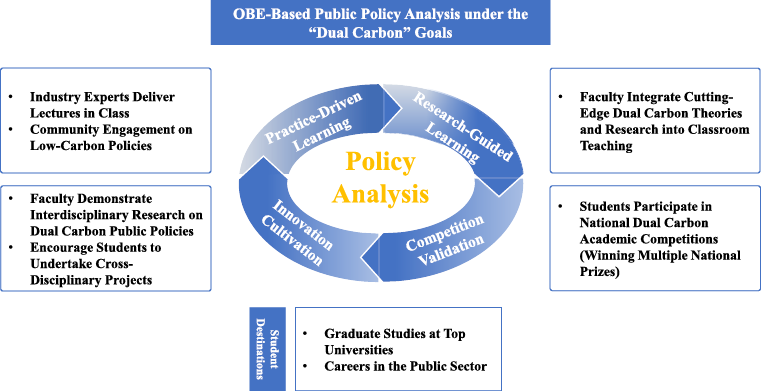
Figure 1 The Framework of OBE-Based Public Policy Analysis Under the “Dual Carbon” Goals
3.1 Teaching Philosophy: Integrating Research and Instruction, Combining Practice and Innovation
OBE requires that teaching design be guided by expected student outcomes. This reform integrates dual carbon objectives into the core of public policy analysis, emphasizing integration of research and instruction (i.e., embedding faculty cutting-edge research into teaching) and combination of practice and innovation (i.e., balancing practice-driven learning with innovation-oriented cultivation). This philosophy directly addresses identified pain points of the course: students’ weak theoretical foundation, limited practical experience, and insufficient interdisciplinary application skills. Through research-instruction integration, instructors bring dual carbon policy studies (e.g., carbon-neutral pathways and green transition mechanisms) directly into the classroom, preventing theory from becoming detached from practice. The practice-innovation approach stimulates student initiative through applied cases and innovative projects, facilitating a shift from passive learning to measurable learning outcomes.
Specifically, the philosophy encompasses four dimensions: (1) Research-guided instruction: Ensures that teaching content remains cutting-edge and relevant; (2) Practice-driven learning: Compensates for students’ lack of hands-on experience; (3) Innovation-oriented cultivation: Promotes interdisciplinary integration and broadens understanding of emerging research; (4) Competition-based validation: Tests learning outcomes and enhances practical problem-solving abilities. This design not only addresses challenges such as abstract theory, theory-practice gaps, and difficulties in literature acquisition but also uses the dual carbon strategy as a continuous case thread, helping students master low-carbon policy analysis skills and cultivating public administration talent equipped for green governance.
3.2 Reform Measures
The reform measures follow the OBE “outcomes-activities-assessment” framework, optimizing each measure to directly correspond with specific learning outcomes. The overall design centers on the dual carbon strategy, aiming to cultivate students’ competencies in identifying, formulating, evaluating, and optimizing low-carbon policies. The measures are divided into four modules: research-guided instruction, practice-driven learning, innovation-oriented cultivation, and competition-based validation, with flexible allocation of instructional hours to meet different content and student needs, fully embedding dual carbon elements such as corporate field visits and low-carbon social practice investigations.
3.3 Specific Implementation of Teaching Modules
3.3.1 Research-Guided Instruction: Incorporating Cutting-Edge Knowledge and Strengthening Theory-Practice Integration
Research-guided instruction serves as the content-oriented OBE module, transforming faculty research findings into teaching resources to ensure that course content reflects the latest developments in the dual carbon field. To address students’ challenges with literature acquisition and comprehension, instructors provide theoretical frameworks, research tools, and literature resources, guiding students in applying abstract models, such as policy process theory and stakeholder analysis framework, to real-world issues.
For instance, the faculty share their latest research findings in public policy analysis, including empirical studies on low-carbon governance mechanisms and policy evaluation. Using classroom demonstrations, case analyses, literature interpretation, and group discussions, students gain an in-depth understanding of research backgrounds, methods, and conclusions. Instructors also guide students in accessing and analyzing relevant academic articles, policy reports, and industry data, cultivating their literature retrieval, reading, and analytical skills. Students are encouraged to select dual carbon policy topics of interest, conduct in-depth policy analysis, and produce small research papers. This approach not only bridges theory and practice but also develops students’ research literacy, enabling them to conduct data-driven and critical evaluations of dual carbon goals.
3.3.2 Practice-Driven Learning: Bridging Theory and Reality, Addressing Abstractness and Experience Gaps
Practice-driven learning is an experiential, outcome-oriented approach that emphasizes students producing measurable results in authentic contexts, effectively bridging the gap between theory and practice. To address students’ classroom dependence and limited practical exposure, this measure is implemented through two main components.
(1) Industry experts on campus: The course team actively invites experienced professionals and government officials to deliver lectures, sharing real-world cases of policy formulation, implementation, and evaluation. Through interactive discussions, students gain direct exposure to frontline experience, understanding policy backgrounds, implementation challenges, and evaluation issues, and produce high-quality individual policy reflection reports. Students are also encouraged to maintain ongoing engagement with experts after class, establishing professional networks for future career development.
(2) Field practice: Instructors lead students out of the classroom to enterprises, communities, and other dual carbon-related sites for field research and observation. For example, students visit factories producing biodegradable straws and meet with company representatives to learn about the latest advancements in green technology development and application. During fieldwork, students apply public policy theories and methods to identify problems, collect data, analyze causes, propose recommendations, and compile group research reports. Students are encouraged to conduct public engagement studies regarding low-carbon policies, assessing awareness and participation levels. These activities allow students to experience the roles and responsibilities of the public and enterprises in dual carbon policy interactions, compensating for the limitations of literature-based and theoretical learning and addressing gaps in practical experience.
3.3.3 Innovation-Oriented Cultivation: Promoting Interdisciplinary Integration and Problem-Solving
Under the New Liberal Arts framework, OBE requires cultivating high-quality talent with innovation and practical abilities. Given the liberal arts background of public administration students, this measure encourages interdisciplinary collaboration, guiding students to apply multidisciplinary knowledge and methods to solve complex social problems in the dual carbon domain. Faculty leverage their expertise across natural sciences, management, and engineering to provide multi-dimensional guidance.
(1) Faculty modeling interdisciplinary integration to broaden student perspectives: Instructors share their own interdisciplinary learning and research experiences, for example, applying engineering perspectives to analyze energy policy, economic models to evaluate environmental policy, and sociological theory to study public cognition and behavior regarding climate change, helping students understand the complexity and multidimensionality of dual carbon goals.
(2) Student interdisciplinary collaborative projects to enhance comprehensive competencies: Students form interdisciplinary teams, with members from public administration, environmental science, economics, and engineering, to participate in innovative dual carbon projects. For example, a team combining economics, information management, industrial engineering, and public administration evaluates the implementation effects of the “plastic ban” policy. During project execution, students leverage their respective expertise, learn from one another, and collaborate to produce innovative and feasible policy proposals or solutions. Such collaboration effectively addresses disciplinary gaps and cultivates teamwork, communication, innovation, and problem-solving skills, fully developing students’ overall competencies in line with OBE requirements.
3.3.4 Competition-Based Validation: Closing the Outcome Loop and Enhancing Application
Competition-based validation serves as the external verification phase of OBE assessment, guiding students to transform classroom knowledge into academic outputs and social practice, and to test their competencies through high-level competitions. Instructors help students extract research-worthy policy analysis topics from societal dual carbon issues (e.g., energy saving and emission reduction issues), complete high-quality policy reports, and encourage participation in national competitions.
For example, students are encouraged to participate in the National College Student Energy Conservation and Emission Reduction Social Practice and Technology Competition, the National College Student Energy Economics Academic Innovation Competition, and the China Youth Carbon Neutrality Innovation and Entrepreneurship Competition. During competition preparation, instructors provide one-on-one guidance to help students refine research design, optimize analysis methods, and enhance presentation skills. Participation allows students to validate their learning outcomes, exchange knowledge with peers from other universities, expand their horizons, and stimulate innovative thinking. Competition results also serve as an important indicator for evaluating course effectiveness, providing feedback for continuous improvement. By integrating competition validation, practical experience gaps are addressed, OBE outcomes are reinforced, and students’ career development is supported.
4 Evaluation and Analysis of Reform Outcomes
The OBE-based reform of Public Policy Analysis, implemented under the dual carbon strategy, has achieved significant outcomes through the teaching philosophy of integrating research and instruction with a combination of practice and innovation, as well as the four teaching modules of research-guided instruction, practice-driven learning, innovation-oriented cultivation, and competition-based validation. These outcomes are reflected not only in improvements in individual student competencies but also in the overall quality of the course and its alignment with societal needs. The specific achievements are summarized as follows.
4.1 Dynamic and Multi-Dimensional Evaluation Model
The course has transitioned from a single, summative assessment model to an established dynamic evaluation system encompassing instructor assessment, student evaluation of instructors, and peer evaluation. This system aims to provide a more comprehensive and in-depth understanding of students’ learning progress and skill development. By incorporating continuous assessment components, such as in-class performance, presentations, and policy proposal writing, students’ learning initiative is effectively stimulated, encouraging active participation and diligent completion of learning tasks. This multi-dimensional evaluation not only creates a closed feedback loop, allowing instructors to adjust teaching content and methods based on student performance, but also cultivates students’ critical thinking and collaboration skills through peer evaluation. During peer review, students attentively listen to presentations from classmates and provide objective assessments, which develop both analytical and communication abilities. Consequently, assessment has shifted from focusing solely on numerical grades to emphasizing comprehensive competencies.
Specifically:
(1) Instructor assessment: Student grades include continuous assessment (30%: 10% for mid-term presentations, 10% for policy proposals, 10% for classroom participation), midterm examination (20%), and final examination (50%);
(2) Student evaluation of instructors: Students evaluate teaching effectiveness through course feedback surveys; currently, the combined ratings of “satisfied” and “very satisfied” reach 100%;
(3) Peer evaluation: Students assess classmates’ presentations, fostering critical thinking and communication skills.
4.2 Demonstrative and Leading Role of Research-Integrated Teaching Outcomes
The lead instructors adhere to the principle of “research-driven teaching”, thereby transforming cutting-edge research on dual carbon governance mechanisms and low-carbon policy evaluation into high-quality teaching resources. This deep integration of research and teaching ensures that course content remains up-to-date and practically relevant. By producing case studies recognized as Ministry of Education exemplary cases and provincial-level outstanding graduate teaching cases, the course has established a strong academic influence within the field of public administration, attracting attention from both students and faculty (Ministry of Education, 2020). The teaching team has consecutively received university-level “Excellent Course and Reward” awards, recognizing both instructional investment and teaching quality. This demonstrates the course’s benchmark role in high-quality education resource development, providing a replicable model for teaching reform in public policy analysis and a reference for other courses.
Specifically:
(1) Ministry of Education exemplary cases: Case studies prepared by the lead instructors were awarded national-level recognition by the Ministry of Education’s Center for Degree and Graduate Education Development, demonstrating the high quality and influence of the course’s case-based teaching;
(2) Outstanding graduate teaching cases: The teaching team’s case studies were selected by the Zhejiang Graduate Education Society as provincial-level outstanding graduate teaching cases, further confirming their value in graduate education;
(3) Excellent Course and Reward: Public Policy Analysis has consecutively received the Zhejiang University of Technology’s “Excellent Course and Reward” awards, reflecting the university’s recognition and support for high-quality educational resources.
4.3 Enhancement of Innovative Practical Competencies through Competitions
The course uses high-level academic competitions, such as the National College Student Energy Conservation and Emission Reduction Social Practice and Technology Competition and the National College Student Energy Economics Academic Innovation Competition, as practical training platforms, providing students with opportunities to demonstrate talent and develop skills. Through case studies, simulated decision-making, and field research, students transform theoretical knowledge into practical solutions for dual carbon challenges, improving both practical and innovative capabilities.
In recent years, students have achieved outstanding results in national and provincial competitions, with award-winning graduates entering top domestic universities such as Tsinghua University, Peking University, and Zhejiang University, as well as key industry positions. This demonstrates that the practice-oriented teaching model effectively enhances students’ research and innovation abilities, laying a solid foundation for future academic advancement and career development, and contributes to the cultivation of high-quality public administration talent in the low-carbon field. Table 1 presents the statistics of awards at the provincial level or higher won by students who have taken the Public Policy Analysis course in dual carbon-related academic competitions.
Table 1 Student Awards at the Provincial Level or Above
|
Year |
Student Awards |
Level |
Graduate Destination / Current Status |
|
2024 |
17th National College Student Energy Conservation and Emission Reduction Social Practice & Technology Competition |
National First Prize |
Zhejiang University / Central China Normal University / Zhejiang University of Technology / China University of Mining and Technology |
|
2024 |
10th National College Student Energy Economics Academic Innovation Competition |
Zhejiang Provincial First Prize |
Enrolled |
|
2024 |
10th National College Student Energy Economics Academic Innovation Competition |
Zhejiang Provincial Third Prize |
Enrolled |
|
2023 |
9th National College Student Energy Economics Academic Innovation Competition |
Zhejiang Provincial Third Prize |
Shanghai University / Shandong University / East China Normal University |
|
2022 |
1st National College Student Ecological Environment Management Scientific Research Innovation Competition |
National First Prize |
Shanghai Jiao Tong University / Tsinghua University / Zhejiang University / East China Normal University |
|
2022 |
1st National College Student Ecological Environment Management Scientific Research Innovation Competition |
National Third Prize |
Zhejiang University / Shandong University / Zhejiang University of Technology / Shanghai University |
|
2022 |
8th National College Student Energy Economics Academic Innovation Competition |
Zhejiang Provincial Third Prize |
Agricultural Bank of China / Zhejiang University of Technology / Shandong University / Shanghai University |
|
2022 |
8th National College Student Energy Economics Academic Innovation Competition |
Zhejiang Provincial Third Prize |
Zhejiang University / National Civil Service |
|
2022 |
8th National College Student Energy Economics Academic Innovation Competition |
National Second Prize |
Nanjing Agricultural University / Tongji University / Huazhong University of Science & Technology |
|
2022 |
8th National College Student Energy Economics Academic Innovation Competition |
National Second Prize |
Zhejiang University / Tsinghua University / East China Normal University / Duke Kunshan University |
|
2022 |
“Chuang Qingchun” China Youth Carbon Neutrality Innovation and Entrepreneurship Competition |
National Silver Award |
Shandong University / Zhejiang University of Technology / Agricultural Bank of China / Shanghai University |
|
2022 |
15th National College Student Energy Conservation and Emission Reduction Social Practice & Technology Competition |
National First Prize |
Tsinghua University / Peking University / Zhejiang University / Shanghai Jiao Tong University / East China Normal University |
|
2021 |
Zhejiang University of Technology “Double Hundred and Double Entry” Excellent Research-Based Political Theory Course |
University First Prize |
Tsinghua University / Peking University / Zhejiang University / Shanghai Jiao Tong University / East China Normal University |
|
2021 |
7th National College Student Energy Economics Academic Innovation Competition |
National Third Prize |
Zhejiang University / Tsinghua University / East China Normal University |
|
2020 |
6th National College Student Energy Economics Academic Innovation Competition |
National Third Prize |
East China University of Science & Technology / Tongji University |
5 Conclusion and Implications
The OBE-based reform of Public Policy Analysis demonstrates that, under the dual carbon strategy, public administration education must transition from a “knowledge-transmission” model to a “competency-development” paradigm, placing greater emphasis on cultivating students’ practical and innovative abilities, and thereby producing high-quality public administration talent for society.
5.1 Maintaining an Outcome-Oriented Closed-Loop Teaching System
The core of the reform’s success lies in establishing a student-centered closed-loop system, guided by student learning outcomes, with continuous improvement of teaching content and methods. Through a diversified evaluation and feedback mechanism, instructors can accurately identify students’ learning difficulties and dynamically adjust the curriculum, ensuring that content is closely aligned with students’ actual needs. Moving forward, this evaluation model should be further refined to ensure that teaching activities consistently support the development of students’ core competencies, so that every instructional effort translates into students’ ability to solve complex societal problems, contributing to the achievement of the dual carbon targets and sustainable development.
5.2 Strengthening the Research-Teaching Integration and Resource Transformation Mechanism
High-quality teaching depends on high-level research support; research serves as both the source and driving force of education. Transforming cutting-edge dual carbon policy research into classroom case studies is crucial for enhancing the course’s appeal and relevance, allowing students to engage with the latest knowledge and theories. The practical experience of this course suggests that instructors should actively convert research projects into teaching materials and employ case-based teaching methods, enabling students to understand the logic of dual carbon goals in authentic contexts. This approach effectively addresses the gap between theory and practice and improves students’ practical capabilities in the dual carbon field.
5.3 Deepening the Competition-Driven Practice-Oriented Pathway
Academic competitions serve as a “touchstone” for evaluating teaching quality and as an effective platform for cultivating high-quality talent, offering students opportunities to demonstrate their abilities and develop skills, particularly in solving dual carbon-related problems. Guiding students to participate in national-level competitions significantly enhances critical thinking, teamwork, and the application of modern information technologies, while fostering innovation and practical competencies (Gu & Tang, 2025). Future teaching reforms should further integrate competition resources into the curriculum on a regular basis, using competitions to promote learning and teaching (“learning through competitions, teaching through competitions”), thereby cultivating a strong atmosphere of innovative practice. This will nurture more interdisciplinary public administration talent who possess both solid theoretical foundations and exceptional practical abilities, contributing to achieving dual carbon goals and building a sustainable, beautiful China.
In summary, this curriculum reform not only represents an optimization of the Public Policy Analysis course but also serves as a proactive exploration of the transformation of public administration education in the new era. It provides a practical model for cultivating high-quality talent aligned with the national dual carbon strategy and offers a reference for the reform of other courses.
References
[1] Wu, L., Liu, G., Huang, Z., Meng, J., & Zhou, Y. (2026). Cross-national comparative assessment of synergies and conflicts in climate policy mixes. Nature Climate Change, 1-10.
[2] Wang, G., Wu, J., & Zhou, J. (2025). Multi-objective optimization research on the achievement path of dual carbon goals in mining enterprises. Energy, 333: 137-194.
[3] Jiang, Y., Lei, Y., & Sun, T. (2026). From Scenarios to Solutions: A Development Path for Philosophy and Social Sciences Laboratories in Industry-Characteristic Universities under the “Dual Carbon” Goals. Guide to Education Innovation, 6(1), 28-41.
[4] Liu, Y., Du, M., Yang, L., Cui, Q., Liu, Y., Li, X., ... & He, C. (2025). Mitigation policies’ interactions delay the achievement of carbon neutrality in China. Nature Climate Change, 15(2), 147–152.
[5] Tian, C., Gao, Z., Jiang, Y., & Liu, Y. (2026). Empowering the “Dual Carbon” Goals through Industry Education Integration: Industry-Education Integration in Oil & Gas New Energy. Guide to Education Innovation, 6(1), 57-75.
[6] Xie, J., & Wang, Y. (2018). Exploration of talent cultivation models in the School of Public Administration, Tsinghua University. China University Teaching, (7), 42–49.
[7] Gao, B., Zhang, N., & Chen, C. (2024). Comprehensive evaluation of urban talent ecological environment and diagnosis of barrier factors: An analysis of 16 cities in Shandong Province. Expert Systems with Applications, 246, 123157.
[8] Xie, M. (2015). Introduction to public policy (4th ed.). Beijing: Renmin University of China Press.
[9] Zheng, Y. (2022). Teaching optimization research on the “Public Policy” course based on the OBE concept. Journal of Southeast University (Philosophy and Social Science Edition), 24(S1), 163–166.
[10] Spady, W. G. (1994). Outcome-based education: Critical issues and answers. Arlington: ERIC.
[11] Shen, T., & Xia, Z. (2021). Conceptual connotation, theoretical origins, and development trends of outcome-based education. Educational Culture Forum, 13(4), 49–54.
[12] Ministry of Education, Center for Higher Education Quality Evaluation. (2020, March 6). Work guidelines of the Higher Education Teaching Evaluation Center, 2020. https://www.eqea.edu.cn/pgcenter/xwzx/621725/index.html
[13] Gu, J., & Tang, J. (2025). The impact of innovation and entrepreneurship training programs on undergraduates’ research careers: Evidence from Chinese universities. Evaluation and Program Planning, 111: 102581.