Current Views: 32673
 Current Downloads: 21732
Guide to Education Innovation
ISSN Print:2789-0732
ISSN Online:2789-0740
Contact Editorial Office



Subscribe to the latest published information from SCISCAN
An Empirical Study on the Influence and Strategies of the Political Cognition within China’s Private Economy by College Students


-
Information:
College of Sciences, China Jiliang University, Hangzhou
-
Keywords:
College students; China’s private economy; Political cognition; Influence
- Abstract: Based on the survey of 5195 college students from 25 universities in 11 cities in Zhejiang Province, this paper analyzes the influence of college students’ political cognition within China’s private economy. It is found that the theoretical learning, policy participation and career choice orientation have remarkable positive effects in descending order. Combining the research results, this paper puts forward concrete countermeasures to improve college students’ political cognition within China’s private economy from three dimensions. Firstly, we should pay attention to knowledge intervention and establish a cognitive system with theory input. Secondly, we should pay attention to the doers and influence identity construction by discourse shaping. Thirdly, we should pay attention to social integration and enhance cognitive belonging with collective identity.
- DOI: 10.35534/gei.0602010
- Cite: Yao, Y. F. An Empirical Study on the Influence and Strategies of the Political Cognition within China’s Private Economy by College Students. Guide to Education Innovation, 6(2), 105-118.
1 Background of the Study
“The private sector serves as a vital force in advancing Chinese modernization, a fundamental pillar of high-quality development, and a key driver in realizing China’s goal of building a modern socialist powerhouse and achieving its Second Centenary Goal.” (CPC Central Committee & State Council, 2023) Since the 18th CPC National Congress, the CPC Central Committee, with Comrade Xi Jinping at its core, has attached great importance to the development of the private economy, and has made a series of important instructions and discussions on the development of the private economy on the basis of the adherence to the policy of “the two unswervinglys” (unwaveringly consolidating and developing the public sector, and unwaveringly encouraging, supporting, and guiding the non-public sector), emphasizing that “the private economy is an intrinsic element of China’s economic system, and that private enterprises and private entrepreneurs are the key elements of China’s economic system. Private enterprises and private entrepreneurs are our own people” (Xi, 2018), “from the policy and public opinion to encourage and support the development and growth of the private economy and private enterprises” (CPC Central Committee, 2022). The development of China’s private sector economy has been a spiraling process of co-evolution between theoretical and practical innovation. Within the theoretical framework of the socialist market economy, it has progressed through distinct phases: from the exploratory stage of planned commodity economy, to the construction and improvement phase of the socialist market economy, and ultimately to the current breakthrough stage of deepening reforms in the socialist market economy (Zhu & Wang, 2020). As the most distinctive feature, greatest advantage, and most vital resource of Zhejiang’s economy, the private sector economy has played a milestone role in the province’s socioeconomic development (Zhejiang Provincial Bureau of Statistics, 2021). In 2023, Zhejiang Province promulgated The Several Measures to Promote the High-Quality Development of the Private Economy in Zhejiang Province with the objective of investigating the efficacy of the dual role of government and market in promoting the development of the private economy, on the basis of deepening the practice of innovation.
“Youth are both the driving force behind social development and innovation, as well as a factor influencing social stability and generating social issues” (Yang, 2013), while “differences in political cognition can lead to divergent political orientations and attitudes toward the same political objectives” (Fang, 2006). Therefore, it is imperative for young college students to comprehensively grasp and deliberate on their “current state of political cognition” (Zhang, 2001). The private sector economy serves as the cornerstone of employment for college graduates. As the mainstay workforce in private enterprises, young graduates’ political cognition of the private economy embodies their ideological identification with China’s market economy system and the path of socialism with Chinese characteristics in critical domains. This cognition directly reflects contemporary youth’s endorsement of the national governance system and confidence in national development, influencing both their career orientation and self-positioning, while simultaneously shaping public discourse and value perceptions regarding the socialist market economy with Chinese characteristics.
Consequently, conducting research on young college students’ political cognition of the private economy is of significant theoretical and practical value. A review of the extant literature reveals that, in recent years, relevant studies in domestic academia have focused on the macro-value level. These studies include the overall political identity of young people based on the socialist economic system with Chinese characteristics (Ma & Huang, 2022), and the political implications of the connotation and value of the private economy (Zhou & Si, 2021). Alternatively, the focus may be on generalized static descriptions, such as the impact of the Internet perspective on the political cognition of young college students (Yang & Cao, 2016), or the misunderstandings of youth’s cognition of the private economy since reform and opening up. Finally, the focus may be on individual groups, such as research on ethnic minority college students and young entrepreneurs’ identification with the mainstream ideology under the market economy. The extant literature provides a theoretical foundation for this study from various perspectives, including a theoretical and interdisciplinary approach. However, there is a paucity of systematic empirical research on young college students’ political cognition of the private economy. In light of this, the present study aims to address this research gap by focusing on the political attitude and cognition of young college students in Zhejiang Province towards the private economy.
To this end, the study will: (1) Compile a scale of political cognition of the private economy; (2) Summarize and refine the overall attributes and characteristics of young college students’ political cognition of the private economy on the basis of a large number of samples and data analyses; (3) Explore the influencing factors of young college students’ political cognition of the private economy. The study’s findings will provide an operational paradigm for the in-depth investigation of this field that can be replicated empirically. The study will establish a replaceable paradigm, thereby facilitating in-depth research in this field.
2 Research Design and Measurement Operations
2.1 Dependent Variable: Political Perception of the Private Economy
Political cognition can be defined as “the political subject’s knowledge, judgment, and evaluation of various characters, events, activities, and their laws in political life, that is, the knowledge and understanding of various political phenomena” (Wang, 2018). The conceptualization of young college students’ private economy political cognition should be founded on the specificity of individual youth cognition and the universality of college students’ group characteristics and macro policies. This approach enables a comprehensive understanding of college students’ group’s private economy political cognition and facilitates the exploration of the intrinsic correlation and mechanism of action between private economy political cognition and college students’ group’s political behavior.
In operationalizing the concept of young college students’ political cognition of the private economy, this paper delineates it as the psychology and awareness of college students’ political attributes, including attitudes, characteristics, status, and roles of the private economy. This encompasses the cognitive tendencies and structures of the private economy system, emotions, and values that underpin the relevant political behaviors of the college student group. The dependent variable of this study, private economy political cognition, is divided into three components: institutional cognition, affective cognition and value cognition. Institutional cognition is a term used to describe the way in which college students understand the Party’s leadership, the socialist road, and the basic socialist economic system. It is particularly focused on the rich implications and historical value of the socialist market economy system. Institutional cognition provides insights into the status of contemporary college students’ recognition of the socialist system with Chinese characteristics with regard to the policies of the market economy and private enterprises. Affective cognition delves into the initial emotional responses and impressions of young college students toward private enterprises and private entrepreneurs. This phenomenon serves as an expression of their sentimental attitudes regarding the existence, development, and destiny of these entities. Value cognition involves the recognition and acceptance of the value, significance, and substantial contribution of private enterprises to the survival and development of the nation, society, and individuals. It is an evaluation of the historical role and realistic contribution of private enterprises based on rational thinking.
2.2 Explanatory Variables
The social action theory posits that “transforming the world is only possible by creatively renewing knowledge-action (person)-society and structure” (Wang, 2023). The “knowledge” dimension, in particular, underscores the significance of contextualized knowledge. In the context of higher education, young college students are engaged in the process of updating their knowledge through active participation in the objective world. Concurrently, their “knowledge” of private economic and political cognition is oriented towards “theoretical learning”. The “action (person)” level emphasizes the role of individuals and the social context in which they reside. The knowledge of young college students regarding the politics of the private economy is directed towards social practice based on “knowledge acquisition”, and operates through the concrete social action of policy participation, which is essentially based on the transformation of practice-oriented thinking and action modes. The “social and structural” level emphasizes contemporary issues and practical conflicts. In the dynamic interplay between “knowledge” and “action”, young college students perceive career choice as a pivotal conduit for “participation in real-world action”, concurrently reflecting on the political cognition of the private sector economy in the praxis of knowledge application. The study also reflects on and revises the political cognition of the private economy in the practice of knowledge utilization. The theoretical framework outlined above serves as the foundation for the study’s three explanatory variables: theoretical learning, policy participation, and career choice orientation.
2.2.1 Theoretical Learning
The formation of young college students’ political cognition “has the possibility of using auxiliary means to learn to understand the knowledge of political texts, and then through analogy, deduction and other ways of thinking to complete the integration of direct and indirect cognitive activities” (Qi, 2021). Theoretical learning assists young college students in analyzing the theoretical system and methodology of the role of the market economy and the policy system of private enterprises in general. This, in turn, provides the basis for effective cognitive integration and the formation of a scientific cognitive framework. Consequently, it is imperative for young college students to enhance their precise comprehension of the “two unswervingly” principles through theoretical learning. This will fortify their political discernment regarding the genuine contributions and value of private enterprises and private entrepreneurs. This, in turn, will continuously enhance their political judgment, comprehension, and participation in the policy system of the private economy. The following hypothesis is thus proposed:
Hypothesis 1: Active engagement in theoretical learning has been demonstrated to enhance the political awareness of young college students regarding the private economy.
2.2.2 Policy Participation
Policy participation behavior through a certain political carrier can effectively reflect the citizens’ political psychology and will. Objectively speaking, the process of young college students participating in and caring about private economic policies and industry development is itself a process of establishing, forming and perfecting the political cognition of this object, and its cognitive structure is also constantly integrated and reorganized in practice. As a kind of political behavior, policy participation can reflect not only the perceptual cognition of the acceptance or non-acceptance of the political system and political values, but also the rational cognition of the operation logic of the current private economic policy system, i.e., the degree of understanding of the policy participation traditions, procedures, functions, rights and responsibilities, etc., and the consequent influence on the political process in line with the psychological expectations. Therefore, policy participation behavior is an important observation point for examining young college students’ political cognition of the private economy. To this end, the hypotheses were formulated:
Hypothesis 2: Policy engagement is an important influence on young college students’ political perceptions of the private economy.
2.2.3 Career Choice Orientation
Marxism posits that social existence dictates social consciousness, with social consciousness serving as a reflection of social existence. The pursuit of a better life by young college students is also reflected in their choice of career as a purposeful, conscious activity. The career selection of young college students, or the specific practice of “future” career development planning, is closely related to the current social and economic development. In the contemporary age, young college students have become increasingly cognizant of the strategic nature of career choice, giving due consideration to both its economic viability and its personal significance, as determined by their own internal imperatives. Their conception of “future” career development is frequently anchored in trust in national governance, which is also linked to the realization of social values. Consequently, it is imperative to scrutinize the career choices of young college students, particularly those that are driven by their own concerns and oriented towards serving society, in order to assess their political awareness regarding the private economy. The following hypothesis is thus formulated:
Hypothesis 3: Career choice is closely related to the level of political awareness of the private economy among young college students.
2.3 Control Variables
In this study, the following were utilized as control variables: gender, age, education, political affiliation, type of college attended, and major attended.
2.4 Initial Question Development
The present study is predicated on the hypothesis that the initial scale of young college students’ political cognition of the private economy can be compiled and refined based on the structure and connotation of their political cognition of the private economy. To this end, the present study has been conducted in conjunction with the actual situation and the structure and connotation of young college students’ political cognition of the private economy. The initial scale comprises 28 questions, with 5, 5, 5, 5, 4, 4, 4, and 5 questions allocated to institutional cognition, affective cognition, value cognition, theoretical learning, policy participation, and career choice orientation, respectively.
2.5 Pre-implementation Testing
First, the research sample. During the pre-testing process, the research group primarily distributed random questionnaires to Hangzhou universities, including double-first-class, provincial key undergraduate colleges, and higher vocational colleges and universities. The pre-test sample included 378 valid questionnaires, consisting of 202 males and 176 females, with varying educational backgrounds and political affiliations.
Second, research instruments. The research team employed the preliminary Political Cognition Scale of the Private Sector Economy for Young College Students, developed for this study. The scale adopts a 5-point Likert scoring system, ranging from 1 (strongly disagree) to 5 (strongly agree), with five reverse-scored items included.
Third, the optimization of questionnaire questions. The research group refined the questionnaire topics in accordance with two principles: first, the adjustment of topics that may have ambiguity in the pre-test; and second, the deletion of topics that can improve the reliability coefficient through item analysis. The application of these principles resulted in the retention of 28 questions, which were subsequently confirmed. The reliability coefficient of the questionnaire as a whole was determined to be 0.80. Among the 28 questions, the reliability coefficients of the six dimensions of institutional cognition, affective cognition, value cognition, theoretical learning, policy participation, and career choice orientation were 0.69, 0.71, 0.84, 0.76, 0.71, and 0.71, respectively.
Fourth, the validity test. Three questions with a loading value of less than 0.4 in each dimension were deleted. The final questionnaire has a total of 25 questions, of which institutional cognition, affective cognition, and value cognition are composed of 5 questions, theoretical learning is composed of 4 questions, and policy participation and career choice orientation are composed of 3 questions. The group tested the structural validity of the questionnaire by using validated factor analysis, and the results showed that all the fit indices met the basic requirements. Specifically, the RMSEA was 0.062, and the GFI, NFI, NNFI, IFI, and CFI were 0.91, 0.93, 0.94, 0.94, and 0.94, respectively. From the fit indices, the factors of the dependent and explanatory variables for each indicator were more satisfactory. The specific items and their factor loadings are presented in Table 1 below.
Table 1 Topic Loading Coefficients of the Questionnaire on the Political Perception of the Private Economy among Young University Students
|
Dimension |
Question |
Factor Loading |
|
Institutional Recognition |
Private enterprises constitute a vital component of China’s socialist market economy. It is imperative to persist in deepening reforms of the socialist market economy system |
0.86 |
|
Under the socialist system with Chinese characteristics, upholding the centralized and unified leadership of the Communist Party of China represents the most salient feature and fundamental guarantee for developing the private economy |
0.85 |
|
|
Fairness and justice, as the value orientation in constructing and perfecting the socialist basic economic system, exert profound influence and play a significant role in income distribution, market order regulation, and capital constraint mechanisms |
0.63 |
|
|
The legal protection of legitimate rights and interests for private enterprises and entrepreneurs in accordance with Chinese law constitutes a correct policy decision |
0.72 |
|
|
The development and expansion of private enterprises stands as one of the most crucial factors contributing to China’s remarkable economic achievements since the reform and opening-up. The principle of “the two unswervinglys” (unwaveringly consolidating and developing the public sector, and unwaveringly encouraging, supporting, and guiding the non-public sector) serves as the institutional foundation for China’s modernization path with distinct Chinese characteristics |
0.88 |
|
|
Affective Recognition |
A favorable impression is held of “private enterprises” |
0.82 |
|
A positive perception exists toward owners of private enterprises |
0.81 |
|
|
Significant challenges persist in China’s private enterprise sector |
0.79 |
|
|
Many peers opt to pursue civil service careers or seek employment within the public sector rather than work in private enterprises |
0.80 |
|
|
Private enterprises may eventually cease to exist in the future |
0.99 |
|
|
Value Recognition |
Private enterprises play a critical role in national and societal development |
0.64 |
|
Private enterprises fulfill their due social responsibilities by actively fostering harmonious labor relations and building a community of shared interests for all employees |
0.68 |
|
|
Private enterprises can effectively mitigate socioeconomic disparities |
0.63 |
|
|
Private enterprises genuinely implement the principle of “The earlier prospering groups help those lagging behind to achieve common prosperity” |
0.62 |
|
|
Private enterprises have made monumental contributions to achieving common prosperity and advancing Chinese-style modernization |
0.72 |
|
|
Theoretical Learning |
Focus on General Secretary Xi Jinping’s discourses concerning the “private sector economy”, “private enterprises”, and “market economy” |
0.84 |
|
Systematically study General Secretary Xi Jinping’s theoretical frameworks on the “private sector economy”, “private enterprise”, and “market economy” |
0.84 |
|
|
Acquire foundational knowledge in political economy and the Chinese-adapted Marxist economic development philosophy |
0.75 |
|
|
Understanding Xi Jinping’s Economic Thought |
0.77 |
|
|
Policy Participation |
Actively engage in discussions or submit opinions during government consultations on policy drafts related to private enterprises or economic development |
0.76 |
|
Closely follow and participate in the development process of the private sector economy within the framework of Chinese-style modernization |
0.95 |
|
|
Prioritize awareness of national policies and industry prospects when seeking employment, working, or interning in private enterprises |
0.85 |
|
|
Career Choices Orientation |
As a university student, I take pride in pursuing employment in private enterprises after graduation |
0.76 |
|
Willing to join private enterprises as a career choice post-graduation |
0.70 |
|
|
Exhibit entrepreneurial intentions or take concrete actions to start businesses after graduation |
0.65 |
3 Research Findings
3.1 Research Sample
The data used in this study are from a sample survey conducted by the research group in universities in Zhejiang Province. The survey was conducted from March 1, 2023, to August 30, 2023, in 25 colleges and universities in 11 cities in Zhejiang Province by selecting survey samples through whole cluster stratified sampling. A total of 5,500 questionnaires were distributed, and 5,379 were collected, of which 5,195 were valid questionnaires, with an effective rate of 96.6%. The details of the survey samples are shown in Table 2 below.
Table 2 Basic Information of the Survey Sample
|
Variables |
Type of Division |
Number of Participants |
Percentage (%) |
|
Gender |
Male |
1680 |
32.34 |
|
Female |
3515 |
67.66 |
|
|
Academic Qualifications |
Junior College & Below |
1292 |
24.87 |
|
Bachelor’s Degree |
3623 |
69.74 |
|
|
Master’s Degree |
262 |
5.04 |
|
|
PhD |
18 |
0.35 |
|
|
Institution Type |
Public Institutions |
505 |
9.82 |
|
Private Institutions |
4614 |
88.82 |
|
|
Sino-Foreign Cooperative Institutions |
76 |
1.46 |
|
|
Academic Disciplines |
Humanities and Social Sciences |
3052 |
58.75 |
|
Natural Sciences |
320 |
6.16 |
|
|
Engineering |
858 |
16.52 |
|
|
Other Fields |
965 |
18.57 |
|
|
Age |
18-20 |
3356 |
64.60 |
|
21-24 |
1689 |
32.51 |
|
|
25-30 |
131 |
2.52 |
|
|
Above 30 |
19 |
0.37 |
|
|
Political Status |
Non-affiliated Individual |
1528 |
29.41 |
|
Member of the Communist Youth League |
2166 |
41.69 |
|
|
Applicant for Party Membership |
1012 |
19.48 |
|
|
Member of the Communist Party of China (including probationary members) |
484 |
9.32 |
|
|
Other |
5 |
0.10 |
3.2 Research Instruments
This study utilizes the questionnaire delineated in Table 1 above, encompassing three dimensions of the dependent variable, namely, political cognition (i.e., institutional cognition, affective cognition, and value cognition); and three dimensions of the explanatory variable, including theoretical learning, policy participation, and career choice orientation. A five-point scale was utilized, ranging from 1 to 5, denoting “totally disagree” to “totally agree”. Twenty of the questions were positively scored, and five were negatively scored. The scores for each dimension were then aggregated to calculate the mean value, with higher values indicating heightened awareness of the politics of the private economy. The range of possible scores was from 1 to 5. The reliability analysis yielded an overall reliability coefficient of 0.81 for the questionnaire. Among the three dimensions of the dependent variable (institutional cognition, affective cognition, and value cognition), the reliability coefficients were 0.87, 0.72, and 0.89, respectively. For the three dimensions of the explanatory variable (theoretical learning, policy participation, and career choice orientation), the reliability coefficients were 0.77, 0.71, and 0.73, respectively.
3.3 Holistic Characteristics
This study aggregated and averaged scores across all items within the three dimensions of college students’ political cognition of the private sector economy, enabling comparative dimensional analysis to examine current overall characteristics. The results revealed the following descending order of cognitive levels: institutional cognition (M = 4.28), value cognition (M = 3.97), and affective cognition (M = 3.82). While institutional cognition scored highest, all dimensions exceeded the scale midpoint (see Figure 1). Crucially, though varying in degree, the three dimensions demonstrated complementary rather than contradictory relationships, with statistically significant positive intercorrelations. This indicates evaluative consistency across different facets of youth’s political cognition, justifying the computation of an aggregate mean score (M = 4.02) that surpasses the scale median as a valid composite measure.
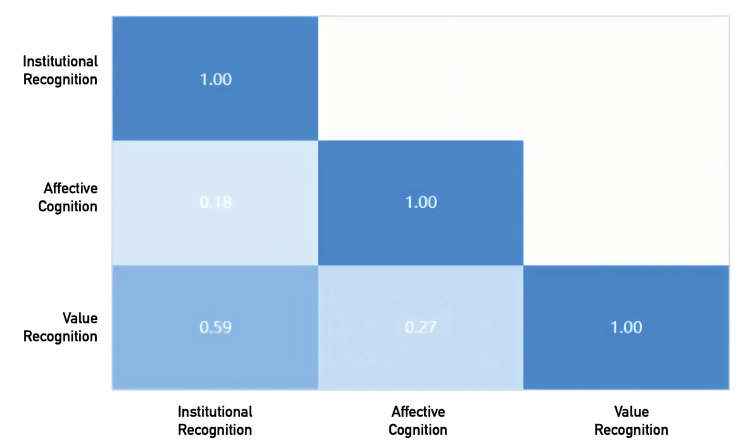
Figure 1 Correlation Matrix of Scores on the Three Dimensions of Political Awareness of Private Economy among College Students
Subsequently, the research team conducted mean difference tests on adjacent dimensions of political cognition scores. The results demonstrated statistically significant disparities in young college students’ cognitive levels regarding the private sector economy’s institutional framework, value proposition, and affective resonance (Table 3).
Table 3 Test of Differences between Dimensions of Young College Students’ Political Cognition of Private Economy
|
Adjacent Factor Pairing |
Different Mean |
t |
|
Institutional Recognition-Value Recognition |
0.31 |
36.35 |
|
Value Recognition-Affective Recognition |
0.15 |
14.33 |
3.4 Descriptive Results
In order to effectively compare the factors affecting young college students’ political cognition of the private economy and the degree of their influence, this study adopts a nested analytical model to analyze the degree of influence of the three explanatory variables on young college students’ political cognition of the private economy through multiple regression (Table 4). The regression model is shown in Table 5. The model is structured as follows: Model 1 serves as the baseline, Model 2 incorporates theoretical learning as an additional variable, Model 3 adds policy participation as a variable on top of Model 2, and Model 4 constitutes the full model. Model 4 incorporates career choice orientation as an additional variable based on Model 3.
Table 4 Descriptive Statistics of the Three Dimensions of the Dependent Variable and Explanatory Variables of Young College Students’ Political Awareness of the Private Economy
|
Number of Participants |
Minimum |
Maximum |
Mean |
Standard Deviation |
Median |
|
|
Institutional Recognition |
5195 |
5.00 |
25.00 |
21.40 |
3.37 |
21.00 |
|
Affective Recognition |
5195 |
8.00 |
25.00 |
19.12 |
2.52 |
19.00 |
|
Value Recognition |
5195 |
7.00 |
25.00 |
19.85 |
3.44 |
19.50 |
|
Theoretical Learning |
5195 |
4.00 |
20.00 |
15.71 |
3.30 |
17.00 |
|
Policy Participation |
5195 |
3.00 |
15.00 |
9.35 |
2.19 |
9.50 |
|
Career Choice Orientation |
5195 |
3.00 |
15.00 |
9.17 |
2.20 |
9.00 |
Table 5 Multiple Regression Analysis of Factors Influencing Young College Students’ Political Awareness of the Private Economy
|
Independent Variables |
Dependent Variable: College Students’ Political Cognition of the Private Sector Economy |
|||||
|
Model 1 |
Model 2 |
Model 3 |
Model 4 |
|||
|
Regression Coefficient |
Regression Coefficient |
Regression Coefficient |
Regression Coefficient |
|||
|
Control Variable |
Gender |
Male=1 |
-0.01 |
-0.01 |
-0.01 |
-0.01 |
|
Academic Qualifications (Reference group: PhD) |
Junior College & Below |
0.02 |
-0.01 |
-0.01 |
-0.01 |
|
|
Bachelor’s Degree |
0.01 |
-0.01 |
-0.01 |
-0.01 |
||
|
Master’s Degree |
0.01 |
-0.03 |
-0.02 |
-0.02 |
||
|
Political Status (Reference group: Other) |
Non-affiliated Individual |
0.02 |
-0.02 |
-0.02 |
-0.02 |
|
|
Member of the Communist Youth League |
0.02 |
-0.02 |
-0.02 |
-0.02 |
||
|
Applicant for Party Membership |
0.03 |
-0.01 |
-0.02 |
-0.02 |
||
|
Member of the Communist Party of China (including probationary members) |
0.03 |
-0.01 |
-0.01 |
-0.02 |
||
|
Explanatory Variable |
Theoretical Learning |
0.30** |
0.28** |
0.27** |
||
|
Policy Participation |
0.06** |
0.04** |
||||
|
Ws |
Career Choice Orientation |
0.07** |
||||
|
Constant Term |
0.66** |
0.50** |
0.49** |
0.47** |
||
|
F-value |
1.15 |
211.90 |
196.54 |
188.3 |
||
|
R2 |
0.01 |
0.13 |
0.25 |
0.31 |
||
3.5 Robustness Tests
To ensure the robustness of the multivariate regression analysis on factors influencing young college students’ political cognition of the private sector economy, the research team implemented multiple validation measures. Addressing potential endogeneity concerns, multicollinearity diagnostics were conducted to examine intercorrelations among explanatory variables and safeguard model stability against collinear predictors. The results indicated all three dimensions exhibited Variance Inflation Factor (VIF) values below 10 and tolerance thresholds above 0.1, confirming the absence of high multicollinearity among explanatory variables when controlling for covariates (Table 6). This empirically validates the reliability of the model’s regression coefficients.
Table 6 Diagnostic Results of Explanatory Variables’ Multicollinearity
|
VIF Value |
Tolerance Level |
|
|
Theoretical Learning |
1.225 |
0.816 |
|
Policy Participation |
1.297 |
0.771 |
|
Career Choice Orientation |
1.115 |
0.896 |
Subsequently, the research team employed the Breusch-Pagan test to assess heteroskedasticity in the model and evaluate residual homogeneity. The results demonstrated statistically significant effects (p < 0.05) across all explanatory variables on students’ political cognition of the private sector economy, confirming the model’s capacity to capture critical explanatory mechanisms. Finally, sensitivity analysis was conducted using alternative indicators to examine the model’s robustness to measurement variations. While marginal fluctuations in R²were observed upon substituting key variable indicators, the coefficients and significance levels of core explanatory variables remained stable overall.
First, theoretical learning and political cognition of the private sector economy. In the full model, the “theoretical learning” variable yielded a coefficient of 0.27 with a significance level below 0.01, indicating that — while controlling for objective individual variables including gender, educational background, and political affiliation — young college students engaged in theoretical learning scored 0.27 points higher on political cognition assessments of the private sector economy compared to their non-engaged counterparts. This demonstrates a statistically significant positive effect of theoretical learning on students’ political cognition, thereby validating Hypothesis 1: Active participation in theoretical learning effectively enhances youth’s political cognition regarding the private sector economy. The full model calculations further reveal that “theoretical learning” exerts substantially greater influence on students’ political cognition than both “policy participation” and “career choice orientation”.
Second, policy participation and political cognition of the private sector economy. In the full model, the “policy participation” variable demonstrated a coefficient of 0.04 with statistical significance below 0.01 (p < 0.01). This indicates that, while controlling for other variables, youth’s engagement in policy activities exerts a significant positive influence on their political cognition regarding the private sector economy — with more active participation correlating with higher cognition levels. These findings confirm Hypothesis 2: Policy participation constitutes an important determinant shaping college students’ political cognition of the private economy. Notably, among the three explanatory dimensions examined, “policy participation” manifested the weakest relative impact on students’ political cognition.
Third, career choice orientation and political cognition of the private sector economy. The full model yielded a coefficient of 0.07 (p < 0.01) for the “career choice orientation” variable, demonstrating that - while controlling for other covariates - students’ employment preferences toward private enterprises significantly enhance their political cognition levels regarding the private sector economy. Specifically, those inclined to pursue careers in private enterprises exhibited stronger political cognition, thereby validating Hypothesis 3: Career choice orientation maintains significant correlation with youth’s political cognition of the private economy. Comparative analysis of the full model reveals that “career choice orientation” ranks as the second most influential factor following “theoretical learning” in shaping students’ political cognition.
4 Research Discussions and Responses
The political cognition of the private sector economy among young college students serves as a critical microcosm of the youth population’s views on the market economy system and related policies in the new era. It reflects both the current reality where private enterprises are subject to subjective evaluations (both positive and negative) while objectively serving as major employment providers, and mirrors the societal mechanisms shaping youth political cognition. Therefore, comprehensively understanding and guiding young students’ political cognition of the private sector economy - cultivating correct orientations amidst the historical interplay between evolving individual perceptions and the development of private enterprises - represents an endogenous driver for engaging youth in high-quality development of the private sector during China’s modernization process. Based on the research findings, the following insights emerge for enhancing young college students’ political cognition of the private sector economy:
4.1 Enhancing Knowledge Intervention: Theoretical Internalization for Cognitive Framework Construction
“Once established, a proper individual cognitive framework immediately acquires robust functionality, enabling autonomous correction of maladaptive cognitions while cultivating self-monitoring capacity over intrinsic factors — namely the ideational, behavioral, and affective determinants underlying obstacles.” (Lan, 2005) Theoretical input is the foundation for building cognition. The Party’s scientific theories are powerful ideological weapons for young college students to understand and transform the world (Han, 2023). Constructing a theoretical cognition system of the private sector economy for young college students represents a crucial component in shaping their political cognition framework encompassing conceptual, structural, and methodological dimensions. The initial step in this process is the construction of an individual cognitive structure. Centered on Marxist political economy and its latest sinicized theoretical achievements, this approach explores multi-tiered and systematic methods for theoretically contextualizing the evolution of China’s private sector development since the founding of the Communist Party of China. Through diversified channels of knowledge dissemination and theoretical education, it emphasizes the integration of multimodal scenarios and practical applications to make ideological theories more relatable and concrete. This process solidifies the theoretical foundation of youth’s political cognition regarding the private sector economy. The second objective is to establish a scientific cognitive paradigm. Cognition is defined as the process of evolution and the result of evolution. The cognitive structure, in its capacity as a system, must adeptly navigate the interplay between elements and elements, elements and systems. It is imperative to facilitate the reading and comprehension of the seminal works of Marxist political economy among young college students, while concurrently fostering a comprehensive grasp of Xi Jinping’s economic thought. This endeavor is instrumental in the establishment of a scientific cognitive paradigm for the private economy, thereby enhancing students’ cognitive understanding of the institutional mechanisms underpinning the private economy and the associated policies. Third, mastering systematic cognitive methodologies. Marxism encompasses a profound worldview and methodology. Guiding young college students to systematically study and apply Marxist political economy methodologies, particularly dialectical materialism and historical materialism, enables them to analytically examine the economic phenomena and relationships arising during the modernization of China’s socialist market economy. This approach fosters a correct understanding of the historical inevitability and developmental logic underlying China’s current economic system, thereby cultivating sound political stances and value orientations.
4.2 Focusing on Actors of Practice: Discursive Shaping and Identity Formation
Discourse, as a dynamic and socially constructed process, necessitates the establishment of a group-specific discursive space through intra-group consensus building. Within this space, it evokes collective affective resonance to reinforce group identity. Young college students, possessing the most active thinking patterns and innovative discursive expressions, require effective discourse construction that continuously bridges the transformation from individual cognition to collective consensus, and from personal narratives to group identity. How can discourse construction effectively shape young students’ political identification with the private sector economy?
First, A primary strategy entails the activation of group discourse and consensus. “Cognitive frames activated in communication can be used to construct specific identities, which are dynamically negotiated and adjusted through frame shifting.” (Zhang, 2021) The collective cognition of young college students is not merely an aggregation of individual perceptions. When individuals embedded in social networks coalesce into groups, they inevitably generate unique discursive atmospheres and intra-group consensus. Therefore, it is essential to proactively identify discourse triggers and entry points for youth engagement. By strategically leveraging the communication systems and dissemination patterns of youth discourse, we should employ multiple approaches — including career guidance, talent recruitment incentives, model worker recognition, and youth leader forums — to channel students’ attention and participation toward the private sector’s economic development.
Secondly, the utilization of group intention and identity is crucial. “The choice of frames by communicative subjects is subjective and purposeful, and specific purposes and effects are achieved in communication through cognitive frames.” (Song, 2022) In shaping college students’ political cognition of the private sector economy, it is imperative to skillfully leverage their cognitive orientations and preferences. By sourcing narratives from everyday practices and innovations, we should employ targeted, relatable approaches to articulate the private sector’s development story. Utilizing accessible language for ideological communication and theoretical elaboration can strengthen political identification, foster affective resonance, and build intellectual alignment — ultimately solidifying correct political stances and cultivating accurate political value judgments.
Third, innovating the discursive communication system. The internet constitutes the most significant variable and growth factor in shaping young college students’ political cognition of the private sector economy. In the omnimedia era, online communication enables the integration and synergy of content provision and resource platforms. We must deepen our understanding of youth-oriented discursive practices in private sector engagement while upholding fundamental principles and pursuing innovation. This involves expanding youth-centric digital discourse spheres aligned with contemporary themes, constructing a multidimensional discursive framework that reflects the new era youth’s political cognition of the private economy, and ultimately employing accessible narrative approaches to address students’ queries about private sector development — thereby continuously refining their cognitive understanding of this vital economic domain.
4.3 Promoting Social Integration: Strengthening Cognitive Belonging through Collective Identity
“Identity cognition can be defined as the subject’s confirmation of the legitimacy of their identity or role, which reflects their identification with their role, including the geographic society in which that role is located.” (Song, 2022) When this identity cognition is transformed into collective identity, it will “help maintain collective cohesion and reduce the mobilization cost of collective action” (Gong, 2013). Enhancing the political cognition level of young university students toward the private economy requires a societal approach to influence this collective’s sense of cognitive belonging.
The first imperative involves constructing an integrated “government - society - students” cognitive pathway. Currently, channels for youth participation in private sector development remain limited. Government departments should fully leverage their institutional advantages by systematically consolidating social resources and diversifying engagement mechanisms. This includes spearheading initiatives that encourage students to contribute insights on private enterprises’ developmental planning, technological innovation, labor protections, and social contributions — while establishing institutional support structures and policy frameworks that capitalize on national development opportunities to solidify youth’s cognitive understanding and sense of responsibility toward the private economy.
The second priority necessitates reshaping the “universities - society - students” cognitive pathway. Higher education institutions must be strategically utilized as pivotal platforms for cognition cultivation. By leveraging cognitive development principles, we should integrate policy interpretation, ideological education, and theoretical instruction into both specialized and ideological-political curricula — transforming political theory systems into pedagogical practice systems. Guided participation through professional internships, social practice programs, research initiatives, and corporate-academic exchanges will foster mutually embedded development between youth cohorts and private sector ecosystems.
The third dimension requires activating the “enterprises - society - students” cognitive pathway. As future workforce pillars and key stakeholders, students’ perception is directly shaped by private enterprises’ societal contributions. Firms must proactively align with national strategic demands through deep university partnerships — leveraging resources for talent cultivation, technological R&D, and social services. By providing premium platforms and skill-building opportunities that empower new, quality, productive forces, enterprises can enhance the youth’s political cognition through active integration with national development trajectories.
References
[1] CPC Central Committee & State Council. (2023-07-14). Opinions on promoting the development and growth of the private sector economy.
[2] Xi, J. P. (2018-11-02). Speech at the symposium on private enterprises. People’s Daily, p. 2.
[3] CPC Central Committee. (2022-12-17). The Central Economic Work Conference held in Beijing. People’s Daily, p. 1.
[4] Zhu, P. H., & Wang, T. Y. (2020). The private economy as an inherent element of China’s economic system: The innovation and development of Xi Jinping’s socialist basic economic system. Journal of the Party School of the Central Committee of the CPC (National Academy of Governance), 24(4), 29–36.
[5] Zhejiang Provincial Bureau of Statistics. (2021-06-14). The private economy as a golden name card: Strengthening institutional advantages through mechanisms. Retrieved from https://tjj.zj.gov.cn/art/2021/6/14/art_1229129214_4663600.html.
[6] Yang, L. X. (2013). Research on the sinicized Marxist youth perspective (Unpublished doctorial dissertation). Party School of the Central Committee of CPC, Beijing.
[7] Fang, X. G. (2006). Fundamental theoretical research on political cognition (Unpublished doctorial dissertation). Fudan University, Shanghai.
[8] Zhang, B. (2001). Understanding the formative characteristics of political cognition and strengthening education in socialist ideals and beliefs. Journal of China Youth University for Political Sciences, (5), 37–39.
[9] Ma, D. Y., & Huang, M. X. (2022). The political cognitive foundation for the modernization of national governance: An empirical analysis based on Chinese netizens and college students. Journal of Guangxi Normal University (Philosophy and Social Sciences Edition), 58(5), 21–36.
[10] Zhou, W., & Si, J. W. (2021). Misconceptions and clarifications on the current private economy. Academic Research, (5), 71–77.
[11] Yang, J. G., & Cao, C. H. (2016). A survey on the political cognition of contemporary college students: A case study of universities in Nanjing. Journal of Anhui Agricultural University (Social Science Edition), 25(1), 110–116.
[12] Wang, P. Q. (2018). Fundamentals of political science (4th ed.). Beijing: Peking University Press.
[13] Wang, B. F. (2023). From “knowledge action” to “social action”: Reflections and critiques based on structuration theory. Journal of Tongji University (Social Science Edition), 34(5), 72–81.
[14] Qi, J. (2021). Research on enhancing political identity among college students in the new era (Unpublished doctorial dissertation). Central China Normal University, Wuhan.
[15] Lan, H. (2005). Addressing psychological crises under knowledge unemployment through cognitive theory. China Youth Study, (10), 71–73.
[16] Han, X. P. (2023). Arming the youth with the party’s scientific theories. Red Flag Manuscripts, (2), 36–39.
[17] Zhang, Y. (2021). Discourse · cognition · identity. Foreign Language Research, 38(1), 24–28, 48.
[18] Song, K. D. (2022). Boundaries, belonging, and expression: Identity cognition of Jiangnan literati in the Ming dynasty. Issues in History Education, (3), 30–37, 200–201.
[19] Gong, W. J. (2013). Constraint and construction: The presentation mechanism of environmental issues — Reflections on citizen opposition to the L waste incineration plant in city A. Society, 33(1), 161–194.