Current Views: 32372
 Current Downloads: 21582
Guide to Education Innovation
ISSN Print:2789-0732
ISSN Online:2789-0740
Contact Editorial Office



Subscribe to the latest published information from SCISCAN
Beyond AI Literacy: An Ecological Agency Framework for Human-Centred Generative AI Integration in Higher Education — A Conceptual Study for Educational Innovation and Disciplinary Development


-
Information:
1. Department of Communication, Faculty of Humanities and Social Sciences, Beijing Normal-Hong Kong Baptist University, Zhuhai;
2. Centre of Foreign Languages, School of General Education, Beijing Normal-Hong Kong Baptist University, Zhuhai
-
Keywords:
Generative artificial intelligence; Higher education; Learner agency; Ecological agency; AI literacy; Assessment redesign; Institutional accountability; Digital pedagogy
- Abstract: Generative artificial intelligence has moved from a peripheral educational technology to an infrastructural condition of higher education. Yet many institutional responses remain trapped between two insufficient positions: a compliance-centred focus on academic misconduct and an innovation-centred enthusiasm for productivity. Neither position adequately explains how students learn to exercise judgment, responsibility, and authorship when intelligent systems become routine participants in academic practices such as reading, writing, feedback, assessment, and knowledge production. Drawing on a focused conceptual review of scholarship on artificial intelligence in education, AI literacy, platformisation, ecological agency, assessment redesign, and educational purpose, this article develops an ecological agency framework for human-centred generative AI integration in higher education. The revised framework distinguishes three core dimensions of learner educational agency - epistemic discernment, dialogic co-action, and ethical reflexivity - from institutional accountability, which is conceptualized as the ecological context that supports rather than constitutes learner agency. It argues that responsible integration requires curriculum designs that make AI visible as an object of inquiry, assessment practices that value process-rich evidence, teacher professional judgment, and institutional safeguards for equity, privacy, and risk. The article shifts the agenda from AI adoption to agency formation and offers a clearer two-level vocabulary for redesigning higher education curricula under algorithmic mediation.
- DOI: 10.35534/gei.0602016
- Cite: He, H. Y., & Wong, C. I. (2026). Beyond AI Literacy: An Ecological Agency Framework for Human-Centred Generative AI Integration in Higher Education — A Conceptual Study for Educational Innovation and Disciplinary Development. Guide to Education Innovation, 6(2), 186-197.
1 Introduction
Higher education is entering a transformative phase in which generative artificial intelligence is no longer an optional digital supplement but a pervasive condition of academic work. Students can use language models to explore concepts, summarize readings, compare arguments, generate code, produce visual material, rehearse presentations, translate drafts, and receive immediate feedback. Teachers can use similar systems to design examples, produce rubrics, prepare formative tasks, and diagnose common learning difficulties. These possibilities have intensified debate over academic integrity, assessment validity, teacher authority, and the future of disciplinary knowledge. The central problem is not simply whether generative AI should be permitted or prohibited. The fundamental educational question is what kinds of agency, judgment, and responsibility higher education should cultivate when students increasingly learn with systems that can simulate fluent knowledge work.
Early responses to generative AI in universities have often emphasized detection, policy compliance, and risk management. Such responses are understandable, particularly because conventional take-home assignments, essays, and coding tasks are vulnerable to forms of outsourcing that are difficult to verify. Yet a primarily prohibitive response can leave students without a principled understanding of how AI-mediated work should be evaluated, challenged, cited, or refused. Conversely, an adoptionist response that treats generative AI as a neutral productivity tool risks reducing learning to efficient output generation. Both responses share a limitation: they focus on tool access and institutional control more than on the formation of educational agency. A stronger educational response must ask how learners can use, question, and sometimes resist algorithmic systems while preserving intellectual effort, ethical responsibility, and disciplinary standards.
The existing literature provides important but fragmented resources for this task. Reviews of artificial intelligence in education have mapped applications and persistent gaps in theory, pedagogy, and educator participation (Chen et al., 2020; Chiu et al., 2023; Zawacki-Richter et al., 2019). Critical higher education scholarship has shown that AI is often invoked through vague promises of inevitable transformation and shifting authority (Bearman et al., 2023; Williamson & Eynon, 2020). AI literacy studies clarify competencies for understanding and evaluating AI systems (Long & Magerko, 2020; Ng et al., 2021), while assessment and policy scholarship stress human judgment, process evidence, governance, risk management, and competency development (Miao & Holmes, 2023; National Institute of Standards and Technology, 2023; OECD, 2021; Swiecki et al., 2022; UNESCO, 2024a, 2024b). What remains underdeveloped is an integrated pedagogical account of how core learner agency and agency-supporting institutional conditions can be analytically distinguished and practically connected.
This article addresses that gap by developing an ecological agency framework for human-centred generative AI integration in higher education. It is guided by three questions: RQ1: How should learner educational agency be conceptualized under conditions of generative AI mediation? RQ2: What curricular, assessment, and institutional conditions support such agency? RQ3: How can higher education institutions support innovation without weakening disciplinary standards, teacher judgment, or learner responsibility? The argument proceeds as a conceptual study. It synthesizes scholarship across education, AI literacy, platform studies, and assessment theory to propose a two-level framework that distinguishes core learner-agency dimensions from the ecological conditions that make agency achievable.
2 Literature Review
Artificial intelligence in education has developed through several overlapping agendas. Earlier work emphasized intelligent tutoring systems, automated feedback, learning analytics, and adaptive platforms. More recent scholarship has expanded attention to generative AI, multimodal systems, and the institutional embedding of commercial infrastructures. Zawacki-Richter et al. (2019) found that much AI-in-higher-education research had focused on profiling, prediction, assessment, and adaptive systems, while educator perspectives were relatively underrepresented. Chen et al. (2020) similarly identified a gap between application-oriented experimentation and robust theoretical grounding. Chiu et al. (2023) mapped opportunities across learning, teaching, assessment, and administration but also noted recurring challenges around ethics, privacy, interpretability, and teacher readiness. These reviews indicate that while the field has accumulated extensive technical and practical studies, its educational purposes remain insufficiently articulated.
Widely accessible generative AI intensifies those unresolved questions. Kasneci et al. (2023) described opportunities for content generation, personalized support, and interactive learning, while Farrokhnia et al. (2024) identified strengths, weaknesses, opportunities, and threats associated with conversational AI in education. Cotton et al. (2024) foreground academic integrity, arguing that institutions cannot rely only on detection but must reconsider assessment design and student guidance. Taken together, these studies suggest that the challenge is not limited to whether AI can support learning; it concerns how educational environments shape trust, risk, authorship, and legitimate assistance.
A second literature stream concerns AI literacy and educator competence. Long and Magerko (2020) define AI literacy as a set of competencies that enable people to evaluate AI technologies, communicate about them, and use them effectively. Ng et al. (2021) organize AI literacy around knowing and understanding, using and applying, evaluating and creating, and ethical issues. Redecker’s (2017) DigCompEdu framework is also relevant because it locates digital competence within teachers’ professional engagement, assessment practice, and learner empowerment. UNESCO’s competency frameworks for students and teachers similarly frame AI capability as a combination of conceptual understanding, responsible use, ethical awareness, and pedagogical judgment (UNESCO, 2024a, 2024b). This literature is essential because it prevents AI integration from being reduced to operational training. However, AI literacy alone may still imply that the main task is to make individuals competent users of systems that already exist. Higher education requires a broader account of agency: students should not merely know how to use AI; they should learn how to position AI within disciplinary inquiry, evaluate its epistemic authority, and decide when its use is educationally inappropriate.
A third literature stream comes from critical studies of platforms and educational datafication. Poell et al. (2019) define platformisation as the penetration of platform infrastructures, economic processes, and governance frameworks into social sectors. Decuypere et al. (2021) apply critical platform analysis to education, showing how digital platforms reorganize pedagogical relations, institutional governance, and the production of evidence. Williamson and Eynon (2020) caution that AI in education should be historicized rather than treated as a sudden technological rupture. These studies matter because generative AI is not only a classroom tool. It is part of an infrastructure in which commercial systems, data extraction, automated evaluation, and institutional dependence can shape educational possibilities. If learners and teachers encounter AI only as a convenient interface, the platform conditions of knowledge production remain invisible.
A fourth literature stream concerns educational purpose and agency. Biesta (2009) argues that education must be understood in relation to purpose, not merely measurement or effectiveness. Biesta and Tedder (2007) conceptualize agency ecologically, as something achieved through engagement with contexts rather than possessed as an individual trait. Emirbayer and Mische (1998) similarly describe agency as temporally embedded, involving past orientations, present judgment, and future possibilities. These accounts are particularly valuable for generative AI because they shift attention from individual skills to the relational conditions under which students can act meaningfully. In AI-mediated learning, agency is shaped by curriculum expectations, assessment formats, teacher guidance, platform affordances, institutional policy, and disciplinary norms. The question is therefore not whether students have agency in the abstract, but whether higher education designs conditions that make agency achievable.
The literature review reveals a specific gap. AI-in-education research maps applications and risks; AI literacy defines competencies; platform studies reveal infrastructural power; assessment scholarship questions conventional evidence of learning; and educational theory clarifies purpose and agency. Work on AI-enabled learning ecologies further shows that knowledge and assessment are being reorganized together rather than separately (Cope et al., 2021). These strands are rarely integrated into a framework that clearly separates learner-level agency from institutional conditions while still explaining their interdependence. This article, therefore, treats generative AI integration as a pedagogical and institutional design problem rather than a narrow technology adoption problem.
3 Theoretical Framework
The theoretical foundation combines ecological agency, educational purpose, and critical platform awareness. Ecological agency begins from the premise that agency is not a stable capacity located inside the learner. It is achieved through the interaction between learners and their contexts for action (Biesta & Tedder, 2007). Such contexts include material resources, social expectations, institutional rules, disciplinary traditions, and available technologies. In generative AI environments, this ecological view is more persuasive than individualistic accounts of digital skill. A student’s capacity to use AI responsibly depends not only on technical proficiency but also on whether assignments require intellectual process, whether teachers make legitimate assistance explicit, whether privacy risks are understood, and whether institutions support open discussion rather than fear-driven concealment.
Educational purpose provides the normative anchor. Biesta (2009) warns that education cannot be judged only by efficiency, performance metrics, or measurable outcomes; it must remain concerned with what education is for. Generative AI poses exactly this problem. If the educational goal is only to produce a fluent essay, a polished code solution, or a correct answer, automated systems may appear to enhance learning. If the goal includes intellectual struggle, disciplinary formation, ethical judgment, authorship, and the ability to justify one’s reasoning, then output quality alone is insufficient. The framework proposed here, therefore, treats learning not as the production of high-quality artifacts but as the cultivation of judgment through accountable participation in knowledge practices.
Critical platform awareness supplies the infrastructural dimension. Generative AI systems are not simply tools that students pick up and put down. They are embedded in commercial platforms, data regimes, model architectures, and policy environments. Platformisation research helps reveal how interface convenience can obscure governance, ownership, data extraction, and algorithmic authority (Decuypere et al., 2021; Poell et al., 2019). This is especially relevant in higher education, where AI tools may mediate searching, drafting, translation, feedback, grading, and academic advising. An ecological agency framework must therefore ask not only how students use AI but also how AI infrastructures reorganize what counts as knowledge, effort, and legitimate participation.
The resulting framework defines learner educational agency in AI-mediated higher education as the learner’s contextually supported capacity to inquire, judge, act, and take responsibility for knowledge practices involving algorithmic systems. Three core dimensions follow from this definition. Epistemic discernment refers to the ability to test claims, evaluate evidence, identify uncertainty, and distinguish plausible fluency from warranted knowledge. Dialogic co-action refers to the ability to interact with AI systems as provisional interlocutors rather than authoritative sources, using them to support questioning, comparison, critique, and revision. Ethical reflexivity refers to awareness of privacy, bias, authorship, attribution, access, and dependency. Institutional accountability is not treated as a fourth dimension of learner agency. It is theorized as the ecological context for agency: the responsibility of universities to design policies, assessments, infrastructures, and teacher development practices that make responsible agency possible.
4 Methodology
This article uses a focused conceptual review design. It does not report new interviews, surveys, observations, or experimental findings. Instead, it develops a conceptual framework through interpretive synthesis of selected literature. This approach is appropriate because the problem addressed here is not the measurement of a single intervention but the theoretical integration of several research conversations that remain only partially connected: AI in education, AI literacy, platformisation, assessment redesign, and ecological agency.
The analytical materials were selected through purposive, relevance-based searching rather than a formal systematic review protocol. The selection prioritized peer-reviewed articles, major scholarly books or chapters, and authoritative policy reports that meet at least one of four criteria: direct relevance to artificial intelligence in higher education; conceptual significance for AI literacy or student agency; importance for assessment redesign and educational purpose; or relevance to AI governance, risk, and competency development. Particular attention was given to publications from 2020 onward because generative AI has rapidly changed the practical conditions of higher education, while classic theoretical sources were retained where they provided conceptual depth. The resulting body of work includes journal articles, book chapters, and policy frameworks from academic publishers, international organizations, and government agencies.
The interpretive procedure followed three stages. First, the literature was grouped into five analytical streams: AI applications and research gaps; generative AI opportunities and risks; AI literacy and competency frameworks; platformisation and governance; and educational agency and assessment purpose. Second, recurring concepts were compared across streams, including literacy, agency, trust, risk, authorship, assessment validity, platform power, human oversight, and institutional accountability. Third, these concepts were reorganized into a framework that could explain how generative AI integration should be designed pedagogically rather than merely administered technologically. This procedure is transparent, but it should not be mistaken for exhaustive bibliometric coverage. Its purpose is conceptual development.
Trustworthiness in conceptual work depends on clarity of selection, coherence of argument, and disciplined use of evidence. To strengthen analytical credibility, the framework was developed by checking whether each proposed learner-agency dimension was supported across more than one literature stream (see Table 1). For example, epistemic discernment draws from AI literacy, assessment, and educational purpose; dialogic co-action draws from generative AI studies and assessment redesign; ethical reflexivity draws from AI ethics, platform studies, and policy frameworks. Institutional accountability was retained, but reclassified as an ecological condition rather than a learner-agency dimension. This distinction responds to a key level-of-analysis problem: individual competence cannot solve infrastructural power, yet institutional governance does not itself constitute learner agency. The proposed framework, therefore, avoids treating either student training or institutional policy as a complete solution.
Table 1 Analytical Streams Used for Conceptual Synthesis
|
Analytical Stream |
Representative Sources |
Main Concern |
Use in Framework |
|
AI in Education Reviews |
Zawacki-Richter et al.; Chen et al.; Chiu et al. |
Applications, gaps, and research trends |
Defines the problem beyond tool adoption |
|
Generative AI in Higher Education |
Kasneci et al.; Farrokhnia et al.; Cotton et al. |
Opportunities, integrity, risk, and trust |
Links students use to assessment and responsibility |
|
AI Literacy and Competency |
Long & Magerko; Ng et al.; Redecker; UNESCO |
Understanding, use, evaluation, and ethics |
Provides competence vocabulary for the agency |
|
Platform and Governance Studies |
Poell et al.; Decuypere et al.; NIST; EU AI Act; U.S. Department of Education |
Infrastructure, risk, and accountability |
Defines ecological conditions for the agency |
|
Educational Agency and Purpose |
Biesta; Biesta & Tedder; Emirbayer & Mische |
Purpose, judgment, and context for action |
Supplies the normative core |
Note: Sources are representative of the conceptual streams used in the synthesis, not a complete systematic review corpus.
5 Analytical Results: Core Learner Agency and Ecological Conditions
The first core learner-agency dimension is epistemic discernment. Generative AI systems produce fluent outputs that may appear authoritative even when incomplete, biased, fabricated, or contextually inappropriate. Students must therefore learn to treat AI-generated content as a claim requiring verification rather than as knowledge already warranted. Epistemic discernment includes source comparison, evidence tracing, uncertainty recognition, disciplinary evaluation, and the ability to explain why a claim should or should not be trusted. It extends AI literacy by situating technical understanding inside disciplinary knowledge practices. A biology student, a law student, a designer, and an education researcher may all use generative AI, but the standards by which they evaluate its output differ. Discernment must therefore be taught within disciplines rather than outsourced to generic digital-skills modules.
The second core learner-agency dimension is dialogic co-action. Generative AI changes academic work because students can engage with a system that responds, revises, challenges, and elaborates. This interaction can support learning when it functions as a dialogic scaffold: students ask questions, compare alternative explanations, request counterarguments, test examples, and revise their own reasoning. It undermines learning when it becomes a substitute for cognitive work. The pedagogical implication is that educators should design tasks in which AI interaction is documented, interrogated, and transformed into student-owned reasoning. Process logs, annotated prompt histories, reflective commentaries, oral defenses, and iterative drafts can shift attention from final output to the quality of engagement. The point is not to romanticize prompting but to make interaction with AI accountable to disciplinary judgment.
The third core learner-agency dimension is ethical reflexivity. Students need to understand that generative AI use involves more than convenience. It raises questions of privacy, intellectual property, bias, environmental cost, unequal access, academic authorship, and dependency. Akgün and Greenhow (2022) show that ethical issues in AI education cannot be left outside the classroom, while Miao and Holmes (2023) argue that governance, transparency, and human oversight should be built into educational practice. For higher education, ethical reflexivity means that students should be able to justify not only whether a tool works but also whether its use is legitimate in a specific task, fair to peers, respectful of data rights, and consistent with disciplinary expectations. Ethical reflexivity also requires acknowledging unequal conditions: students differ in access to paid systems, technical confidence, linguistic background, and prior academic preparation.
Institutional accountability is the ecological context that supports learner agency. Universities often place the burden of responsible AI use on students and individual teachers while leaving assessment structures, platform procurement, staff development, and policy communication underdeveloped. This is not sufficient. Institutional accountability means that universities must establish transparent expectations, provide teacher development, redesign assessment ecologies, evaluate risks in educational technologies, and create spaces for deliberation. The U.S. Department of Education’s Office of Educational Technology (2023) similarly emphasizes human-centred AI use, educator involvement, transparency, and safeguards in teaching and learning. The European Union’s AI Act classifies certain AI uses in education and vocational training as high-risk, especially systems used for admission, evaluation of learning outcomes, level allocation, or test monitoring (European Parliament & Council, 2024). Even outside these regulatory contexts, the principle is relevant: AI systems that shape access, evaluation, and progression require heightened scrutiny, not casual adoption. Institutional accountability, therefore, enables, constrains, and distributes learner agency; it should not be confused with the agency of the learner itself.
Together, the three core dimensions and the institutional context form the ecological agency framework illustrated in Figure 1. The framework rejects the idea that responsible generative AI integration can be achieved through a single policy, a detection tool, or a training workshop. It instead positions learner agency as an outcome of the relationship between student capacities and the conditions created through curriculum design, assessment redesign, teacher judgment, and institutional governance. The three learner dimensions are mutually reinforcing. Epistemic discernment without ethical reflexivity may produce technically skilled but irresponsible users. Dialogic co-action without assessment redesign may reward polished output rather than learning. Ethical reflexivity without institutional accountability may become an individual burden. Institutional accountability without student agency may become compliance management rather than education.
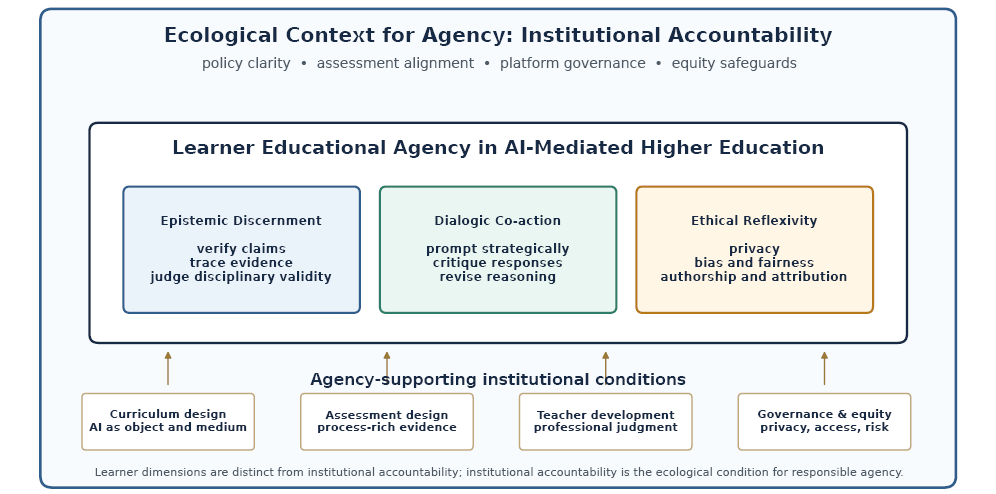
Figure 1 Ecological Agency Framework: Core Learner Dimensions and Institutional Conditions
6 Discussion
The framework answers the first research question by conceptualizing learner educational agency as a contextually supported capacity rather than a private skill or an institutional property. This revision matters because debates about generative AI often conflate two analytical levels: the learner’s capacity to judge and act, and the institution’s responsibility to shape the conditions of judgment and action. The framework now separates these levels while preserving their ecological interdependence. Students need conditions under which they can make informed judgments about when AI assistance is appropriate, how outputs should be verified, how their own reasoning should remain visible, and how responsibility should be assigned. The ecological perspective, therefore, reframes AI integration from a behavioral-control problem to a pedagogical-design problem.
The framework answers the second research question by identifying design principles that connect learner agency to curriculum, assessment, and institutional practice. Curriculum should treat AI both as an object of study and as a mediated environment of study. Students should learn what generative AI systems can and cannot do, but they should also examine how such systems alter authorship, knowledge access, feedback, translation, and disciplinary participation. Assessment should shift from easily outsourced final products toward process-rich evidence of learning. This does not mean abandoning essays, reports, or projects; rather, it requires embedding them within staged inquiry, annotated decision-making, oral explanation, in-class synthesis, and reflective accountability. Institutional policy should be developmental rather than merely punitive: students should encounter clear expectations, worked examples, and opportunities to practice legitimate use before being judged for misconduct.
The framework answers the third research question by clarifying how innovation can coexist with disciplinary standards. The key is to distinguish assistance from replacement. Generative AI can support brainstorming, language clarification, example generation, debugging, translation, and formative feedback. These uses are educationally defensible when students remain responsible for inquiry, evidence, interpretation, and final judgment. They become problematic when the system replaces the learner’s engagement with sources, concepts, data, or argument. Disciplinary standards should therefore specify which cognitive and ethical responsibilities cannot be delegated. In humanities and social sciences, these may include interpretation, contextual judgment, citation ethics, and argumentative positioning. In professional and technical disciplines, they may include safety reasoning, design justification, data validation, and accountability to users or clients.
The theoretical contribution of this article is to move beyond the dominant vocabulary of adoption, acceptance, and literacy while also resolving a level-of-analysis problem in agency-oriented AI education. Adoption studies usefully explain factors such as trust, perceived risk, and technological confidence, but they can imply that successful integration is measured by increased use. Literacy frameworks clarify competencies, but they may overemphasize individual capability if not joined to institutional design. Platform studies reveal infrastructural power, but they can offer limited pedagogical guidance for classroom redesign. By distinguishing three learner-agency dimensions from institutional accountability as an ecological condition, the article provides a more coherent vocabulary: responsible AI integration should increase neither uncritical use nor defensive prohibition, but the capacity to act with judgment within AI-mediated learning ecologies.
The practical contribution is a design agenda for universities. AI policy should be course-sensitive because legitimate assistance varies by discipline, level, task, and learning outcome. Assessment redesign should make learning processes visible through reasoning trails, source verification notes, AI-use statements, draft comparisons, and oral explanations. Teacher development should focus less on tool demonstrations and more on assessment judgment, ethical scenarios, discipline-specific examples, and feedback strategies. Institutions should also treat platform procurement as educational governance: privacy, transparency, accessibility, cost, and pedagogical alignment should matter as much as convenience.
For disciplinary development, the framework suggests that generative AI should be understood as a catalyst for rearticulating what disciplines value. When a tool can produce fluent generic output, disciplines must clarify what counts as deep understanding. This may involve renewed attention to methods, evidence, interpretation, situated judgment, embodied practice, and public accountability. In education studies, the issue is especially important because the field is not only affected by AI but also responsible for theorizing how societies should learn with it. A mature educational response must therefore avoid both technological determinism and nostalgic resistance. It should use generative AI as a pressure point for asking what forms of knowledge, agency, and responsibility higher education should defend and redesign. Figure 2 translates this argument into a two-level design logic: institutional accountability supports learner agency, while learner agency becomes visible through accountable inquiry, authorship, and disciplinary judgment.
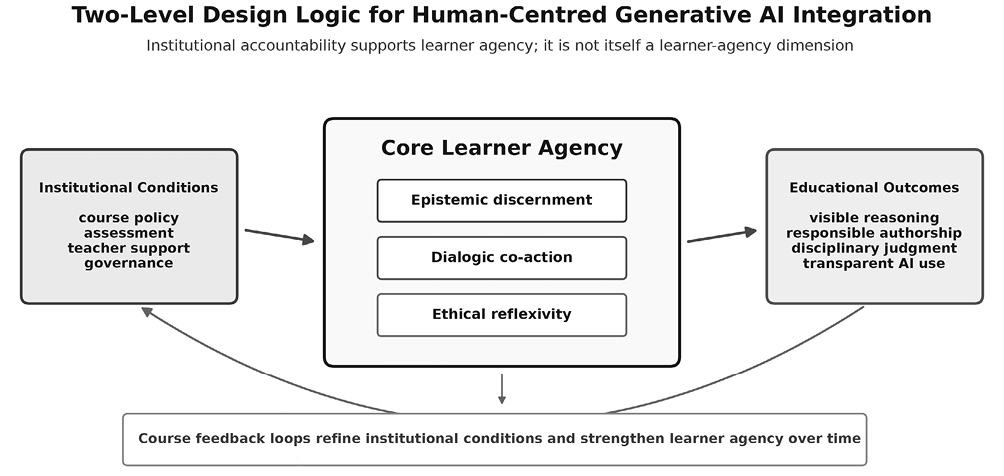
Figure 2 Two-level Design Logic for Human-Centred Generative AI Integration in Higher Education
Table 2 summarizes the design implications for core learner agency and its ecological context.
Table 2 Design Implications for Core Learner Agency and Ecological Context
|
Analytical Component |
Educational Risk If Neglected |
Design Response |
Evidence of Learning |
|
Epistemic Discernment (Learner Agency) |
Fluent misinformation is mistaken for knowledge |
Teach verification, source comparison, and discipline-specific evaluation |
Annotated claims, source audits, justification notes |
|
Dialogic Co-action (Learner Agency) |
AI replaces rather than supports student thinking |
Require iterative drafts, prompt critique, and reflective transformation |
Process logs, draft histories and oral defense |
|
Ethical Reflexivity (Learner Agency) |
Privacy, bias, authorship, and dependency remain invisible |
Use ethical scenarios and transparent AI-use declarations |
Reasoned disclosure and risk analysis |
|
Institutional Accountability (Ecological Context) |
Learner responsibility is unsupported or displaced onto individuals |
Align policy, assessment, procurement, equity safeguards, and staff development |
Course-level AI guidance, governance review, and assessment redesign |
7 Conclusion
Generative AI has made visible a problem that higher education could previously postpone: many assessment tasks reward finished products while saying too little about the processes, judgments, and responsibilities through which learning is achieved. The response should not be to chase perfect detection or to celebrate frictionless productivity. A more educationally serious response is to redesign learning ecologies so that students can develop agency in relation to algorithmic systems. The revised ecological agency framework identifies three core learner-agency dimensions: epistemic discernment, dialogic co-action, and ethical reflexivity. It further positions institutional accountability as the ecological context that enables and regulates those dimensions. Together, they provide a more coherent vocabulary for integrating generative AI without surrendering educational purpose.
The argument has direct relevance for educational innovation and disciplinary development. Innovation should not be measured by the speed with which universities adopt new tools, but by the quality of the learning relations, assessment practices, and institutional responsibilities they build around them. Disciplinary development should not treat AI as an external disturbance; it should use AI-mediated conditions to clarify what forms of inquiry, authorship, and judgment are central to each field. The future of higher education will not be determined by generative AI in isolation. Instead, it will be shaped by whether institutions can design environments in which learners act with greater, not lesser, responsibility.
8 Limitations and Future Research
This article is conceptual and therefore has limitations. It does not test the proposed framework in a classroom, compare institutional policies empirically, or measure changes in student learning. The literature selection was purposive rather than systematic, so it should be read as an integrative theoretical synthesis rather than a comprehensive review of all AI-in-education research. The framework is also developed at a general higher education level; its three learner-agency dimensions and institutional conditions will require adaptation for particular disciplines, institutional contexts, student populations, and regulatory environments.
Future research should examine how the three learner-agency dimensions can be operationalized in course design and assessment practice, and how institutional accountability shapes their development. Comparative case studies could investigate how disciplines define legitimate AI assistance. Classroom-based research could analyze whether process-rich assessment improves epistemic discernment and reduces hidden outsourcing. Policy research could examine how universities communicate AI expectations to students and staff. Equity-focused and longitudinal studies are also needed to determine whether agency-oriented AI education develops stronger judgment, transparent authorship practices, and resilient disciplinary understanding.
Acknowledgments
The authors acknowledge the forum organizers for creating a valuable venue for scholarly dialogue on educational innovation and disciplinary development. No external funding supported this study.
References
[1] Akgün, S., & Greenhow, C. (2022). Artificial intelligence in education: Addressing ethical challenges in K-12 settings. AI and Ethics, 2(3), 431-440.
[2] Bearman, M., Ryan, J., & Ajjawi, R. (2023). Discourses of artificial intelligence in higher education: A critical literature review. Higher Education, 86(2), 369-385.
[3] Biesta, G. (2009). Good education in an age of measurement: On the need to reconnect with the question of purpose in education. Educational Assessment, Evaluation and Accountability, 21, 33-46.
[4] Biesta, G., & Tedder, M. (2007). Agency and learning in the life course: Towards an ecological perspective. Studies in the Education of Adults, 39(2), 132-149.
[5] Chen, X., Xie, H., Zou, D., & Hwang, G.-J. (2020). Application and theory gaps during the rise of artificial intelligence in education. Computers and Education: Artificial Intelligence, 1, 100002.
[6] Chiu, T. K. F., Xia, Q., Zhou, X., Chai, C. S., & Cheng, M. (2023). Systematic literature review on opportunities, challenges, and future research recommendations of artificial intelligence in education. Computers and Education: Artificial Intelligence, 4, 100118.
[7] Cope, B., Kalantzis, M., & Searsmith, D. (2021). Artificial intelligence for education: Knowledge and its assessment in AI-enabled learning ecologies. Educational Philosophy and Theory, 53(12), 1229-1245.
[8] Cotton, D. R. E., Cotton, P. A., & Shipway, J. R. (2024). Chatting and cheating: Ensuring academic integrity in the era of ChatGPT. Innovations in Education and Teaching International, 61(2), 228-239.
[9] Decuypere, M., Grimaldi, E., & Landri, P. (2021). Introduction: Critical studies of digital education platforms. Critical Studies in Education, 62(1), 1-16.
[10] Emirbayer, M., & Mische, A. (1998). What is agency? American Journal of Sociology, 103(4), 962-1023.
[11] European Parliament, & Council of the European Union. (2024). Regulation (EU) 2024/1689 of the European Parliament and of the Council of 13 June 2024 laying down harmonised rules on artificial intelligence and amending Regulations (EC) No 300/2008, (EU) No 167/2013, (EU) No 168/2013, (EU) 2018/858, (EU) 2018/1139 and (EU) 2019/2144 and Directives 2014/90/EU, (EU) 2016/797 and (EU) 2020/1828 (Artificial Intelligence Act). Official Journal of the European Union. https://eur-lex.europa.eu/eli/reg/2024/1689/oj.
[12] Farrokhnia, M., Banihashem, S. K., Noroozi, O., & Wals, A. (2024). A SWOT analysis of ChatGPT: Implications for educational practice and research. Innovations in Education and Teaching International, 61(3), 460-474.
[13] Kasneci, E., Sessler, K., Küchemann, S., Bannert, M., Dementieva, D., Fischer, F., … & Kasneci, G. (2023). ChatGPT for good? On opportunities and challenges of large language models for education. Learning and Individual Differences, 103, 102274.
[14] Long, D., & Magerko, B. (2020). What is AI literacy? Competencies and design considerations. In Proceedings of the 2020 CHI Conference on Human Factors in Computing Systems (pp. 1–16). Association for Computing Machinery.
[15] Miao, F., & Holmes, W. (2023). Guidance for generative AI in education and research. UNESCO. https://unesdoc.unesco.org/ark:/48223/pf0000386693.
[16] National Institute of Standards and Technology. (2023). Artificial intelligence risk management framework (AI RMF 1.0). Washington: U.S. Department of Commerce.
[17] Ng, D. T. K., Leung, J. K. L., Chu, S. K. W., & Qiao, M. S. (2021). Conceptualizing AI literacy: An exploratory review. Computers and Education: Artificial Intelligence, 2, 100041.
[18] OECD. (2021). AI and the future of skills, volume 1: Capabilities and assessments. Paris: OECD Publishing.
[19] Poell, T., Nieborg, D., & van Dijck, J. (2019). Platformisation. Internet Policy Review, 8(4).
[20] Redecker, C. (2017). European framework for the digital competence of educators: DigCompEdu. Luxembourg: Publications Office of the European Union.
[21] Swiecki, Z., Khosravi, H., Chen, G., Martinez-Maldonado, R., Lodge, J. M., Milligan, S., … & Gašević, D. (2022). Assessment in the age of artificial intelligence. Computers and Education: Artificial Intelligence, 3, 100075.
[22] UNESCO. (2024a). AI competency framework for students. UNESCO. https://unesdoc.unesco.org/ark:/48223/pf0000391105.
[23] UNESCO. (2024b). AI competency framework for teachers. UNESCO. https://unesdoc.unesco.org/ark:/48223/pf0000391104.
[24] U.S. Department of Education, Office of Educational Technology. (2023). Artificial intelligence and the future of teaching and learning: Insights and recommendations. Washington: U.S. Department of Education. https://tech.ed.gov/files/2023/05/ai-future-of-teaching-and-learning-report.pdf.
[25] Williamson, B., & Eynon, R. (2020). Historical threads, missing links, and future directions in AI in education. Learning, Media and Technology, 45(3), 223-235.
[26] Zawacki-Richter, O., Marín, V. I., Bond, M., & Gouverneur, F. (2019). Systematic review of research on artificial intelligence applications in higher education — where are the educators? International Journal of Educational Technology in Higher Education, 16, Article 39.