Current Views: 34266
 Current Downloads: 23023
Guide to Education Innovation
ISSN Print:2789-0732
ISSN Online:2789-0740
Contact Editorial Office



Subscribe to the latest published information from SCISCAN
An Empirical Study on Learning and Growth Satisfaction among Liberal Arts Students in Application-Oriented Undergraduate Universities


-
Information:
School of Humanities and Foreign Languages, Anhui Science and Technology University, Chuzhou
-
Keywords:
Application-oriented undergraduate universities; Liberal arts majors; Learning satisfaction; Self-growth; Empirical study
- Abstract: This study investigates the status of self-perceived learning and growth satisfaction among liberal arts students in application-oriented undergraduate universities. Using a questionnaire survey method, a total of 573 undergraduate students majoring in Chinese Language and Literature and Law from the School of Humanities at Anhui Science and Technology University were recruited as participants. An empirical analysis was conducted across four dimensions: major evaluation, learning experience, self-regulated learning ability, and self-perceived personal growth. The findings indicate that students reported a high level of satisfaction with professional instruction and the construction of academic culture, demonstrated strong awareness of self-regulated learning, and maintained satisfactory academic discipline and norms. However, in the context of the digital era, liberal arts students exhibited a substantial demand for improvement in instrumental skills, particularly in office software proficiency and new media applications. Based on the findings, corresponding recommendations are proposed from four aspects: refined university management, pedagogical innovation among instructors, strengthened family-school collaboration, and enhanced student engagement. The study is expected to provide empirical evidence and practical implications for improving the quality of liberal arts talent cultivation in application-oriented undergraduate universities.
- DOI: 10.35534/gei.0602012
- Cite: Su, H. D. (2026). An Empirical Study on Learning and Growth Satisfaction among Liberal Arts Students in Application-Oriented Undergraduate Universities. Guide to Education Innovation, 6(2), 138-147.
1 Introduction
1.1 Research Background and Significance
Education, as the cornerstone of social development and a bridge for individual growth, consistently plays a central role in today’s rapidly changing world. For application-oriented undergraduate universities, the mission of higher education is no longer confined to the traditional transmission of knowledge; rather, its more essential responsibility lies in cultivating interdisciplinary talents equipped with innovative thinking and practical competencies. Students’ learning satisfaction, as an important subjective indicator of educational quality, directly influences their learning motivation, enthusiasm, and level of participation in academic and social activities. High satisfaction not only contributes to the enhancement of students’ overall competencies but also serves as a prerequisite for cultivating leading talents across various fields. Conversely, lower levels of satisfaction may lead to academic burnout and may even cause mental health problems.
With the intensification of global technological competition, the demand for innovative talent has rapidly increased. As an important component of application-oriented universities, the learning experiences and developmental trajectories of students in the humanities and social sciences under the wave of digital transformation warrant further investigation. Through an in-depth examination of liberal arts students’ self-perceived learning and growth satisfaction, blind spots in teaching management can be accurately identified, resource allocation can be optimized, and empirical evidence and policy implications can be provided for educational reform in local application-oriented undergraduate universities.
1.2 Definition of Core Concepts
In this study, self-regulated learning is defined as a continuous process in which individuals proactively identify learning needs, establish goals, recognize resources, select strategies, and objectively evaluate learning outcomes. Satisfaction refers to an individual’s subjective experience of fulfillment following participation in a specific activity. Integrating these two concepts, university students’ self-regulated learning and personal growth satisfaction refers to a comprehensive subjective evaluation of students’ abilities to identify their own needs, regulate learning processes, and achieve goals in an environment lacking rigid external supervision.
1.3 Literature Review
1.3.1 Domestic Research Status: From Evaluation Indicators to Empirical Analysis
Research on learning satisfaction in China has undergone a transition from “classroom evaluation” to “comprehensive quality evaluation”. Early studies primarily focused on teachers’ instructional skills and the quality of teaching materials. With the gradual improvement of educational quality assessment systems, scholars have increasingly emphasized students’ subjective roles in the learning process. By developing the Initial Scale of University Students’ Self-Learning and Growth Satisfaction, Fan et al. (2017) established the foundation for quantitative research across four dimensions: general conditions, major evaluation, learning ability, and growth perception (Fan et al., 2017). Wang (2020), through an investigation of university students in specific disciplines, found that the enhancement of self-regulated learning ability constituted a core variable contributing to higher overall satisfaction (Wang, 2020). In addition, the study by Shi and Qin (2017) suggested that school management and family support exert significant moderating effects on students’ growth satisfaction (Shi & Qin, 2017).
However, systematic analyses focusing on liberal arts students in application-oriented universities, particularly under conditions characterized by pronounced urban–rural disparities (e.g., where the proportion of students from rural areas exceeds 70%), remain insufficient, especially regarding their learning adaptability and perceived developmental gains.
1.3.2 International Research Status: Engagement Theory and Self-Efficacy
International discussions on learning satisfaction originated from the application of the “customer satisfaction” theory to the educational context. Astin’s Involvement Theory posits that the breadth and depth of students’ participation in campus activities directly determine their learning satisfaction (Astin, 1989). Building upon this perspective, the Student Engagement model proposed by Kuh (2003) has become an internationally recognized evaluation framework, emphasizing the decisive role of a supportive institutional environment in shaping students’ academic satisfaction (Kuh, 2003).
In addition, self-efficacy has been regarded in Western literature as a key psychological factor influencing satisfaction with self-regulated learning. Research by Pintrich and colleagues demonstrated that students with higher levels of self-efficacy tend to exhibit greater satisfaction in setting learning goals and employing metacognitive strategies (Pintrich, 2004).
1.3.3 Research Review and Research Gap
A synthesis of domestic and international studies suggests that although theoretical frameworks concerning university students’ satisfaction have gradually taken shape, several limitations remain. First, existing research has primarily focused on engineering or medical institutions, while insufficient attention has been paid to students majoring in liberal arts within application-oriented undergraduate universities. Second, evaluations of students’ emerging competencies in the digital era, such as office software proficiency and new media application skills, remain relatively limited. Third, there is a lack of in-depth exploration of subtle differences among academic years and majors (e.g., Chinese Language and Literature and Law) within specific schools or colleges, such as schools of humanities.
Accordingly, this study aims to address these research gaps through an empirical investigation and to provide transferable management experiences for similar institutions.
2 Research Design and Methods
2.1 Participants
The participants in this study consisted of undergraduate students from freshman to senior years majoring in Chinese Language and Literature and Law at the School of Humanities, Anhui Science and Technology University. Data were collected through an electronic questionnaire survey, which ensured broad coverage and efficient data retrieval.
A total of 577 questionnaires were distributed, of which 573 valid responses were obtained, yielding a valid response rate of 99.31%. The demographic characteristics of the sample were distributed as follows. Major distribution: 338 students (58.99%) majored in Chinese Language and Literature, while 235 students (41.01%) majored in Law. Grade distribution: students from freshman to senior years were included, with sophomores accounting for the highest proportion (40.49%). Gender and place of origin: reflecting the characteristics of humanities-related disciplines, female students accounted for 72.25% of the sample, whereas male students accounted for 27.75%; regarding place of origin, students from rural areas represented as much as 71.38% of the sample. Family structure: non-only children constituted the majority, accounting for 74.35% of the participants. Detailed demographic information is presented in Table 1.
Table 1 Demographic Characteristics of the Participants
|
Major |
Grade Distribution |
Gender |
Place of Origin |
Only Child Status |
Total |
||||||
|
Freshman |
Sophomore |
Junior |
Senior |
Male |
Female |
Urban |
Rural |
Only Child |
Non-Only Child |
N |
|
|
Chinese Language and Literature |
51 |
94 |
82 |
111 |
79 |
259 |
92 |
246 |
80 |
258 |
338 |
|
Law |
30 |
138 |
66 |
1 |
80 |
155 |
72 |
163 |
67 |
168 |
235 |
|
Total |
81 |
232 |
148 |
112 |
159 |
414 |
164 |
409 |
147 |
426 |
573 |
2.2 Survey Instrument
This study adopted the Initial Scale of University Students’ Self-Learning and Growth Satisfaction developed by Fan et al. (2017) as the framework for questionnaire design (Fan et al., 2017). The survey instrument mainly consisted of the following four functional modules. Students’ basic information: demographic characteristics and major distribution were collected. Major evaluation and learning experience: this module covered eight dimensions, including interest in the major, understanding of the major, teaching and internship arrangements, curriculum design, instructors’ teaching quality, teaching facilities, self-study conditions, and academic atmosphere. Self-regulated learning ability assessment: this section included seven items, namely satisfaction with learning ability, scholarship attainment, acquisition of certificates, attendance rate, course failure rate, and overall academic satisfaction. Self-growth satisfaction: this component involved 15 specific indicators, including comprehensive competencies, moral character, psychological quality, interpersonal communication, and new media application ability, as well as an overall evaluation of personal growth.
2.3 Survey Procedure and Data Processing
The survey was conducted in strict accordance with research ethics principles. All participating students were informed of the purpose of the study, and the voluntary nature of participation was ensured. All collected data were treated confidentially and used exclusively for academic research and analysis.
Following data collection, descriptive statistics and percentage analyses were conducted using the statistical software JASP (Version 0.95) to examine satisfaction across different dimensions, thereby providing an objective reflection of the actual learning status of students in the School of Humanities.
3 Results and Analysis
3.1 Analysis of Major Evaluation and Learning Experience
The findings indicated that students in the School of Humanities reported an overall high level of satisfaction with the major evaluation and learning experience.
Chinese Language and Literature major: students in this major reported an average satisfaction level of 97.74%. Notably, satisfaction with “understanding of the major” and “academic atmosphere” reached 100%. This finding reflects a strong sense of disciplinary identity among students as well as a positive campus cultural environment (see Figure 1a).
Law major: students majoring in Law demonstrated a similarly high degree of consistency, with satisfaction regarding understanding of the major and academic atmosphere likewise reaching 100%. Satisfaction across the remaining six dimensions, including teaching facilities and curriculum design, all exceeded 95% (see Figure 1b).
Overall evaluation: from the perspective of the School of Humanities as a whole (see Figure 1c), substantial achievements have been made in major development, instructional arrangement, and the cultivation of academic atmosphere, thereby providing students with a supportive educational environment.
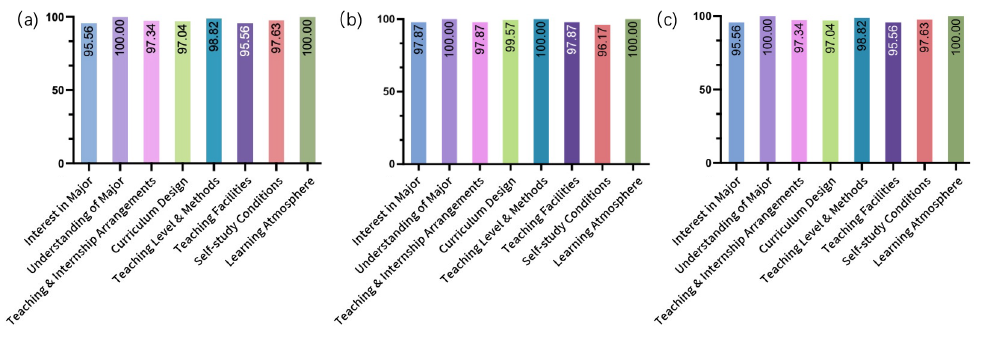
Figure 1 Satisfaction with Major Evaluation and Learning Experience among Students in Chinese Language and Literature (a), Law (b), and the Overall Student Sample (c)
3.2 Analysis of Self-Regulated Learning Ability
In the self-assessment of self-regulated learning ability, students demonstrated relatively strong confidence and a pragmatic attitude. Learning satisfaction and sense of achievement: all students in the School of Humanities (100%) reported satisfaction with their own learning ability, among whom 20.22% indicated that they were “very satisfied”. Academic achievement and certificate acquisition: overall, 12.31% of students had received scholarships. Regarding certificate attainment, the College English Test Band 4 (CET-4) certificate showed the highest holding rate, accounting for 38.08% of the sample. Law students also demonstrated relatively high rates of certificate acquisition, with the attainment rate of other types of certificates reaching 36.72%. Academic discipline and performance: Students exhibited satisfactory performance in terms of academic discipline. Specifically, 93.11% of students reported never having skipped classes, while 84.01% had not failed any courses by the time of the survey (see Figure 2).

Figure 2 Self-Assessment of Self-Regulated Learning Ability and Academic Performance among Chinese Language and Literature Students (a), Law Students (b), and the Overall Student Sample (c)
3.3 Analysis of Self-Growth Satisfaction
The self-growth dimension encompassed 15 specific indicators, ranging from moral qualities to practical competencies. Distribution of key indicators: as shown in Figure 3, students reported relatively high evaluations regarding moral character, political literacy, and interpersonal communication skills. However, the survey also identified potential areas for improvement. Although students expressed overall satisfaction with their office software proficiency and new media application ability, the demand for improvement in these areas appeared to be more pressing when compared with traditional competency indicators, and students also proposed several suggestions for further enhancement. Overall perception: overall, 95.84% of students in the School of Humanities reported satisfaction with their personal growth, among whom 23.35% indicated that they were “very satisfied”. Comparison across majors: the proportion of students reporting being “very satisfied” with their growth experience was slightly higher among Law students (25.24%) than among students majoring in Chinese Language and Literature (21.47%) (see Figure 4).
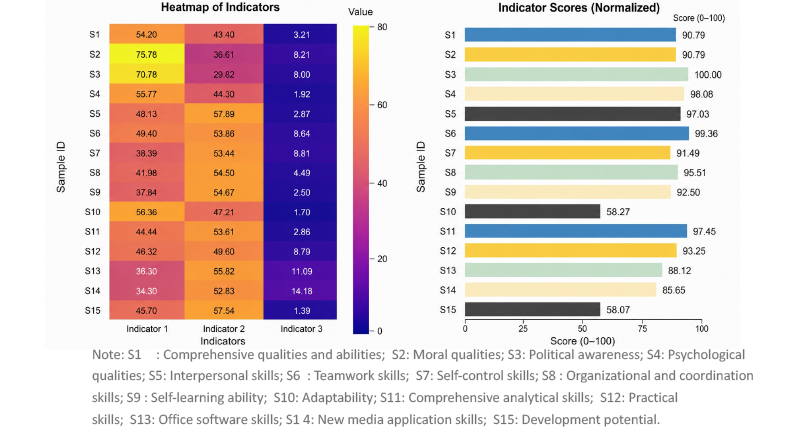
Figure 3 Overall Satisfaction of Students in the School of Humanities Across 15 Dimensions of Self-Growth
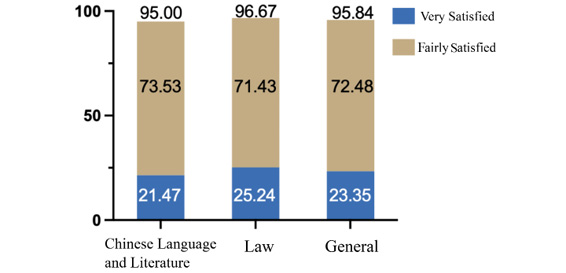
Figure 4 Satisfaction with Self-Growth among Different Majors and the Overall Student Sample in the School of Humanities
4 Discussion
4.1 Synergistic Effects of Teaching Management and Academic Atmosphere Construction
The survey data indicate that the School of Humanities at Anhui Science and Technology University demonstrates outstanding performance in major evaluation and learning experience. In particular, both the Chinese Language and Literature and Law programs achieved a 100% satisfaction rate regarding academic atmosphere. This high level of perceived identification is not incidental but rather the result of the college’s comprehensive efforts in curriculum design, teaching arrangements, and faculty investment.
This phenomenon is consistent with the core proposition of institutional influence models, which emphasize that organizational structure and campus climate are key environmental factors shaping students’ academic achievement (Wang, 2026). The coexistence of a very high class attendance rate (93.11%) and a relatively low course failure rate (15.99%) further supports this observation, indicating that a positive academic atmosphere is not only the product of administrative management but also a manifestation of students’ intrinsic learning motivation.
4.2 Effectiveness of Self-Regulated Learning Development
The college has achieved notable progress in cultivating students’ self-regulated learning ability, as evidenced by the finding that 100% of students reported satisfaction with their learning ability. This suggests that the institution has successfully transformed external instructional guidance into students’ internal self-regulatory capacity.
Students’ positive outcomes in scholarship acquisition, certificate attainment, and overall academic satisfaction reflect the active exploration of application-oriented universities in strengthening student development support and fostering innovative thinking as well as critical analytical abilities. These findings are also consistent with Self-Regulated Learning (SRL) theory, which posits that a supportive institutional environment can significantly enhance students’ academic self-efficacy (Deng, 2005).
4.3 Skill Gaps in the Context of Digital Transformation
Despite the relatively high overall growth satisfaction (95.84%), it is important to note that students reported specific needs for improvement in office software proficiency and new media application skills. In the context of rapid digital transformation and the development of the new media industry, mastery of modern information technologies has become an essential component of competitiveness for students in the humanities. The results suggest that while traditional competency development has been relatively well established, targeted training in modern information technology remains insufficient and requires further strengthening.
4.4 Urban-Rural Background and Developmental Adaptation
In this survey, students from rural backgrounds accounted for 71.38% of the sample. This group typically demonstrates strong perseverance and resilience, but may face initial disadvantages in digital literacy and access to educational resources upon university entry. The high satisfaction levels observed in this study suggest that the balanced allocation of educational resources and the supportive institutional environment provided by the college have effectively mitigated initial disparities associated with diverse socioeconomic backgrounds, enabling students from rural areas and non-only-child families to achieve comprehensive developmental gains.
4.5 Limitations
Despite its contributions, this study has several limitations. First, although the study achieved a high valid response rate, an imbalance existed in the grade distribution of students in the Law major, particularly with only one senior student included in the sample. This imbalance may limit the representativeness of learning and growth satisfaction among higher-grade Law students and should therefore be interpreted with caution when drawing conclusions related to senior students or grade-related developmental differences. Future studies are encouraged to adopt more balanced sampling strategies to ensure adequate representation across academic years and improve the generalizability of findings.
Second, the participants were recruited exclusively from the School of Humanities at Anhui Science and Technology University, which may limit the generalizability of the findings to students from other disciplines, institutions, or regional contexts. Third, the study employed a cross-sectional survey design, limiting the ability to examine longitudinal changes in students’ learning and growth satisfaction. Finally, all measures relied on self-reported data, which may be subject to social desirability bias and subjective response tendencies.
5 Conclusion
Based on an empirical investigation of 573 students from the School of Humanities at Anhui Science and Technology University, the following conclusions are drawn: First, teaching quality is positively associated with student satisfaction. Continuous investment in major construction and teaching facilities has been highly recognized by students, contributing to a favorable educational ecosystem. Second, self-regulated learning management has achieved notable effectiveness. The college has successfully constructed a learning environment that stimulates student engagement, with students demonstrating strong academic discipline and relatively high levels of self-evaluation. Third, digital competency development requires targeted enhancement. A gap exists between students’ demand for office software and new media skills and their current proficiency, which provides a clear direction for future pedagogical reform. Fourth, a preliminary home-school-society collaborative education system has been established. Through the integration of institutional management, teaching practices, family engagement, and student involvement, students’ self-growth satisfaction has been maximized.
Overall, the successful experience of the School of Humanities provides empirical reference for the refined management of liberal arts programs in application-oriented undergraduate universities. Future efforts should consolidate existing strengths while prioritizing the enhancement of digital literacy education to ensure students achieve excellence in both academic and professional domains.
6 Recommendations
Based on the empirical findings above, this study proposes the following recommendations from four dimensions —
university management, teaching practice, family involvement, and student engagement — to further enhance self-regulated learning and growth satisfaction among liberal arts students in application-oriented universities.
6.1 Strengthening Refined Institutional Management and Building a Digital Empowerment System
University management plays a central role in strategic educational design. Curriculum optimization should further integrate theoretical depth with industry practice. In response to identified weaknesses, practical courses such as advanced office software applications and new media data analytics should be introduced to meet the demands of the digital labor market. A dual-mentorship system combining academic and career guidance should be established to provide personalized development planning and help students navigate complex academic trajectories (Mao et al., 2005). In addition, a dynamic feedback mechanism should be developed. Regular communication with students through seminars and questionnaires should be institutionalized to collect feedback on teaching facilities and internship arrangements, thereby improving the relevance and effectiveness of administrative decision-making.
6.2 Promoting Teaching Innovation and Enhancing Student Agency
As the core implementers of education, teachers should develop interdisciplinary perspectives and innovative pedagogical competencies (Chen, 2012). Traditional lecture-based instruction should be transformed through interactive discussion, case-based learning, and flipped classroom models to enhance student engagement.
Individualized academic support should be strengthened, particularly for students from rural backgrounds, to address potential disparities and maximize their academic potential. Furthermore, digital literacy education should be integrated into disciplinary teaching, enabling students to apply new media tools for disciplinary exploration and knowledge reconstruction.
6.3 Promoting Home-School Collaboration and Creating a Supportive Development Environment
The family environment plays a crucial role in psychological regulation and the formation of self-regulated learning habits (Wang, 2015). A regular communication mechanism should be established through online and offline parent meetings, enabling parents to stay informed about students’ academic progress and disciplinary development. Parent education guidance should also be provided to promote more effective communication with emerging adults and to shift parental focus from purely academic performance toward the cultivation of comprehensive competencies and autonomous learning habits.
6.4 Encouraging Active Student Engagement and Fostering Lifelong Learning Orientation
Student intrinsic motivation is the fundamental determinant of satisfaction improvement (Liu et al., 2006). Students should be encouraged to actively assume responsibility for their learning, transitioning from passive knowledge acquisition to proactive problem identification and problem-solving, thereby developing self-regulation and critical thinking skills. Practical engagement should be expanded through research opportunities, social practice, and innovation and entrepreneurship competitions, enabling students to validate theoretical knowledge and enhance comprehensive analytical and social adaptability. Finally, students should strengthen self-management capabilities by establishing clear learning goals and effectively utilizing resources such as libraries and online databases, ensuring sustained academic development even in the absence of external supervision (Jin, 1997; Gao, 2003).
References
[1] Fan, X., Liu, Z. Q., & Zhou, L. Y. (2017). Scale design of university students’ self-learning and growth satisfaction. Journal Name, (2), 82-90.
[2] Wang, C. (2020). Investigation on self-learning and growth satisfaction among medical management undergraduates. Continuing Medical Education, 34(9), 3.
[3] Shi, S. R., & Qin, J. C. (2017). Investigation on university students’ self-learning and growth satisfaction. Science and Education Wenhui, (33), 2.
[4] Astin, A. W. (1989). Student involvement: A developmental theory for higher education. Journal of College Student Personnel, 25.
[5] Kuh, G. D. (2003). What we’re learning about student engagement from NSSE: Benchmarks for effective educational practices. Change: The Magazine of Higher Learning, 35(2), 24-32.
[6] Pintrich, P. R. (2004). A conceptual framework for assessing motivation and self-regulated learning in college students. Educational Psychology Review, 16(4), 385-407.
[7] Wang, F. (2026). A study on learning gains among college students in different types of universities: Evidence from NCSS data (Unpublished doctorial dissertation). Xiamen University.
[8] Deng, Z. W. (2005). Implications of self-regulated learning theory for systematic instructional design. Journal of Jiangsu Institute of Technology (Social Science Edition), 6(4), 83-85.
[9] Mao, L. F., Li, H. L., Tong, S. P., et al. (2005). Practice and reflection on dual-mentorship teaching for nursing undergraduates. Journal of Nurses Training, 20(3), 2.
[10] Chen, K. (2012). A study on social support and subjective well-being of applied undergraduate students. Journal of Anhui University of Science and Technology (Social Sciences), (3), 6.
[11] Wang, W. (2015). An empirical study on the construction of home–school collaboration mechanisms. Shanghai Education Research, (2), 5.
[12] Liu, J. X., Li, Z. H., Zhao, X. H., et al. (2006). Empirical study on influencing factors of college students’ learning satisfaction. Higher Education Research, 27(11), 7.
[13] Jin, W. L. (1997). Introduction to interdisciplinary research. Beijing: Central Compilation & Translation Press.
[14] Gao, Z. M. (2003). Reflections on lifelong education, lifelong learning and learning society. Educational Research, 24(1), 7.