Current Views: 33110
 Current Downloads: 21993
Guide to Education Innovation
ISSN Print:2789-0732
ISSN Online:2789-0740
Contact Editorial Office



Subscribe to the latest published information from SCISCAN
The Connotation, Case Practice, and Promotion Strategies of Biological Modeling Ability from the Perspective of Core Competencies


-
Information:
1. Anhui Fengtai Fourth Middle School, Huainan;
2. College of Life Sciences, Anhui Normal University, Wuhu
-
Keywords:
Modeling ability; Scientific thinking; STS; Science history; Question lists; Core literacy
- Abstract: A model is the key tool of biology teaching and learning. Modeling is an abstract and unambiguous written description of things made to understand them. Modeling has important practical significance in promoting the development of scientific thinking ability and enhancing biological scientific literacy among middle school students. This article analyzed the concept and connotation of models and modeling ability. Combining biology new curriculum standards with new textbooks, and using teaching cases as a starting point, some teaching strategies were presented as follows: Persist in scientifically think and enhance students’ cognitive model ability; Focus on STS teaching and promote students’ model construction ability; Utilize the history of science to cultivate students’ ability to validate models; Scientifically apply conceptual transformation theory to strengthen students’ ability to apply models; Cleverly design question lists to expand students’ innovative model ability. Moreover, the teaching strategy is not invariable. Choosing a multi-dimensional and blended teaching strategy appropriately can help students develop scientific thinking and enhance their core biological literacy.
- DOI: 10.35534/gei.0602027
- Cite: Li, H. Y., & Chen, M. L. (2026). The Connotation, Case Practice, and Promotion Strategies of Biological Modeling Ability from the Perspective of Core Competencies. Guide to Education Innovation, 6(2), 297−307.
It is pointed out that the core literacy of biology includes life idea, scientific thinking, scientific inquiry and social responsibility in the General Senior High School Biology Curriculum Standard (2020 Revision) in China. Scientific thinking refers to the thinking habits and competencies that respect facts and evidence, advocate a rigorous and pragmatic attitude of seeking knowledge and then apply scientific thinking methods to understand things and solve practical problems. As one of the dimensions of core literacy in the field of biology, scientific thinking is an important biology teaching and training goal in senior high school, which can be fostered through teaching strategies based on model construction. The topic of how to promote understanding models and cultivate the modeling abilities of middle school students in routine teaching is never out of date. Based on teaching practice cases, this study aims to deepen students’ understanding of knowledge and then improve students’ modeling ability by putting forward a variety of teaching strategies.
1 Connotation of Model and Modeling
The term “model” originates from the Latin word for “modulus”, meaning sample, size, or standard. The model is the abstraction and generalization of the prototype, and it can only simulate the prototype and reflect the most essential features, but not cover all of the characteristics of the prototype (Cihai Editorial Committee, 1990). It was defined that “Models are tentative schemes or structures that correspond to real objects, events, or a class of events, and that have explanatory ability” in the National Science Education Standards (National Research Council, 1996). It is stated clearly that a model is a simplified description of an object for specific purposes, which can be qualitative or quantitative, in the Chinese compulsory biology textbook “Molecular and Cell”. Some of them were expressed by the concrete objects or other visualized methods, while others in abstract forms, and biological models are divided into physical models, mathematical models and conceptual models (Curriculum and Textbook Research Institute of People’s Education Press, 2007), among which physical models are divided into object models, condition models, process models and so on (Dong & Peng, 2019), and mathematical models include formula, proportion, probability and curve models, etc., while conceptual models cover text symbols, concept maps, tables, graphic diagrams and so on (Chen, 2022).
A biological model is a general description of a cognitive object for a specific biological purpose. It is an effective way to understand biological problems and can be materialized, systematized or digitized. Model construction is commonly referred to as modeling. It means “the process of constructing a model in order to investigate a certain problem or substance” in the Dictionary of Contemporary Chinese Learning. Halloun argues that there are five steps to construct a model: model selection, model construction, model validity, model analysis and model deployment (Halloun, 1996). Qiu Meihong, a scholar from the Taiwan region, holds that the process of model construction includes six aspects: model selection, model establishment, model validity, model application, model scheduling and model reconstruction (Qiu, 2008). Yuan believes that modeling is the conceptualization process of describing and explaining natural phenomena, and it is a cyclic process including defining variables, creating, testing, evaluating and modifying models (Yuan, 2009). Lin argues that model construction is a means of displaying complex things or processes in a simplified and intuitive form by a method for people to reveal the morphology, characteristics and essence of prototypes through research on models under certain assumptions (Lin, 2015). Buckley & Boulter regard model construction as a model-based learning process which covers formation, use, modification and elaboration (Buckley & Boulter, 2000). Model construction is not only crucial to the cultivation of scientific communication and thinking, but also a key process in teaching and learning science (Acher et al., 2007).
Model construction involves three elements: situation, problem and process. Situation is the carrier and foundation of model construction, and problem is the propeller of model construction and expansion, while process emphasizes events and experiences during constructing models (Xiong, 2022). Constructing biological models is to make abstract knowledge concrete and help students understand deeply. The process of modeling is accompanied by students’ thinking. Students can deepen their understanding of knowledge and cultivate their innovative ability and thinking through modeling activities (Chen, 2011).
2 The Connotation of Modeling Ability
Modeling ability, as the name implies, is the ability to demonstrate in the process of modeling. It refers to a simplified description and simulation of a system or process during the analysis and solving of biological problems. It is key to ignore the secondary and non-essential factors and grasp the main and essential factors (Chen, 2022). Hestenes thinks that modeling ability is embodied in four modeling elements: model building, ramification, deployment and validation. description, conception, derivation and verification. Modeling is an activity in which experience is used to explain and organize knowledge (Hestenes, 1992). Schwarz & White believe that modeling ability includes modeling practice ability and modeling meta-knowledge ability (Schwarz & White, 2005). Modeling practical ability includes the ability to construct, apply, compare and improve models. The meta-knowledge ability of modeling consists of metacognitive knowledge and meta-modeling knowledge in the process of modeling. The evaluation of scientific modeling ability includes three dimensions: way of facing, conceptualization and operative work. Among them, the way of facing refers to students’ ability to analyze problem situations, extract effective information and then form mental models, which means students’ initial understanding and extraction from the information contained in a problem situation. Conceptualization is the process of abstractly summarizing objects and events. Operative work is an explicit part of the modeling process. It contains students’ abilities to use the scientific method, represent symbolic language, as well as construct and use models (Lopes & Costa, 2007). Modeling ability is divided into five elements covering model nature, model hypothesis, model purpose, model test and model modification. At the same time, each element is divided into three different hierarchical levels (Upmeier zu Belzen & Kruger, 2010).
In conclusion, model ability is defined as the ability to cognize, construct, validate, apply and innovate. Model cognization ability is to recognize problem situations and judge the correlation between the concepts or patterns involved and the theme, to abstract the essential characteristics of models, and to initially form mental models. Model construction ability is able to use learned theories and evidence, and use relevant information masterfully to transform objects and processes in practical problems into corresponding models, integrating the various components of the model into a connected whole in a logical manner. Model validation ability is able to analyze the relationships between various elements of the model, evaluate and summarize the advantages and disadvantages of the model, and then verify the effectiveness of the model through evidence. Model application ability is able to understand the connotation and extension of model applications, and apply models to solve biological problems, teaching difficulties, and other key issues. Model innovation ability: critically and selectively absorb and accept models, and can transfer them to similar knowledge contexts based on the model, thereby proposing new ideas, viewpoints, and creating new models.
3 Teaching Practice Cases and Improvement Strategies
3.1 Persist in Scientifically Thinking and Enhance Students’ Cognitive Model Ability
Adhering to scientific principles and discovering the essence of science is the first step in understanding scientific models. When constructing the mathematical model about ion diffusion in transmembrane transport of substances (including facilitated diffusion and active transportation), first, students need to construct different ways in which ions enter and exit the cell membrane. One is facilitated diffusion mediated through an ion channel, such as Na+ inward flow. Another is active transport in need of an enzymatic reaction. Constructing its mathematical model requires students to think scientifically: Is the mathematical model of ion entry and exit into the cell membrane the same? Then import the situational knowledge: Proteins on the cell membrane are divided into two types: channel proteins and carrier proteins. Then, students are inspired to think about the difference in their translocation rate. Ion channels transport ions without saturation, but the number of carrier proteins on the cell membrane is limited, and the binding sites between carrier proteins and the molecules being transported are also limited. Therefore, carrier proteins have a certain degree of saturation, and their transport rate is not infinite. In fact, ion channels have a faster transport rate than any carrier protein by more than 1000 times (Lv, 2022). Therefore, based on a deep understanding model, in the constructed mathematical model, the growth trend mediated by ion channels is a straight line (see Figure 1), while the growth trend of ion transmembrane transport through carriers is a curved line (see Figure 2).
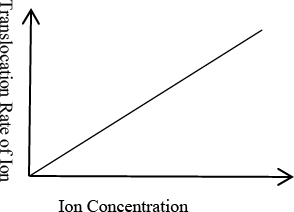
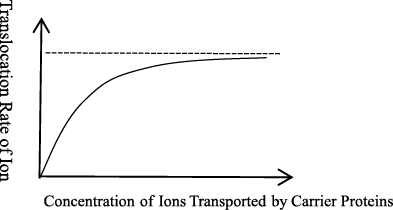
Figure 1 Facilitated Diffusion via Ion Channels Figure 2 Ions Transported across Membranes via the Carriers
3.2 Focus on STS Teaching and Promote Students’ Model Construction Ability
When teaching interspecific relationships, predation and competition are key and difficult topics, and how to construct scientific models to solve real-life problems is the focus and difficulty of teaching. The difficulty in teaching is how to construct a model based on the relationship between lynx and hare in a forest over the past 90 years (see Figure 3).
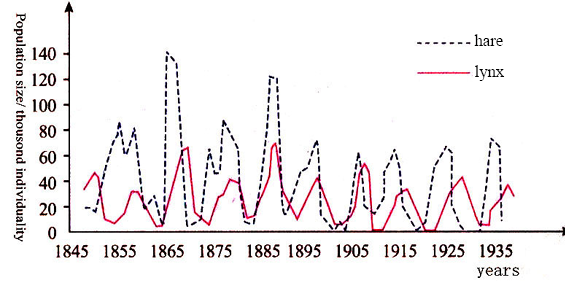
Figure 3 Population Change Curve of Lynx and hare
Case analysis: Firstly, how to discover scientific problems in the complex natural phenomena inevitably involves science (population size, birth rate, mortality rate, etc.), and at the same time, uses the relevant technologies (protection and monitoring, etc.), in order to achieve harmonious coexistence between humans and nature, scientifically maintain ecological balance (Science, Technology and Society: STS), and thus trigger students to analyze and think: in a population, if species A and B are placed at the same time, due to sufficient resources in the early stage, if exists the predation relationship, the prey reaches the peak first, and the predator is also increasing, resulting in a decrease in prey. Therefore, the prey reaches the peak first and decreases first, while the predator decreases due to the decrease in prey, showing a lag effect, and then reaches the peak and decreases with a lag effect. Based on the variation pattern in Figure 3, a mathematical model of this predation relationship is constructed (see Figure 4), where A is the prey, and B is the predator. If there are two species in a population and they compete for food, space, or other resources, then it becomes a competitive relationship. If species A and B have similar competitive abilities, they exhibit a trade-off relationship and can coexist and inhibit each other. A mathematical model can be constructed as shown in Figure 5. If species A and B have different survival abilities in the same population and there is a life and death competition, then the model will rise and fall towards the horizontal axis (see Figure 6). Combining STS teaching, fully utilizing logical thinking (see Figure 4) and meticulous thinking, helps students develop scientific thinking, facilitates the construction of scientific models to solve social problems, and promotes the achievement of core biological
literacy.
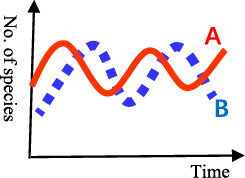
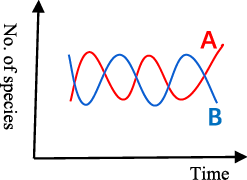
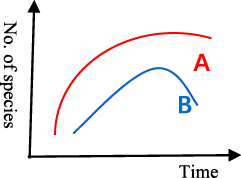
Figure 4 Predation Relationship Figure 5 Competitive Relationship (Ⅰ) Figure 6 Competitive Relationship (Ⅱ)
3.3 Utilize the History of Science to Cultivate Students’ Ability to Validate Models
In the process of constructing physical models of the cell membrane, it is necessary to believe that historical facts are an important guarantee for obtaining scientific conclusions. For example, E. Gorter & F. Grendel extracted lipid components from the plasma membrane of human red blood cells using the organic solvent acetone and spread them on the water surface (Gorter & Grendel, 1925). The unfolded area of membrane lipids was measured to be twice the cell surface area, suggesting that the cell membrane is composed of bilayer lipid molecules. Then S. J. Singer & G. Nicolson proposed the “flow embedding model” in 1972, based on the research results of immunofluorescence technology and freeze-etching technology (Singer & Nicolson, 1972). May some students have some confusion? Since there are proteins penetrating or embedded in the phospholipid bilayer, why is the unfolded area of membrane lipids twice the surface area of the cell? In fact, Dervichian & Macheboeuf conducted a similar experiment but found that the ratio (R) of membrane lipid unfolding area to cell surface area was 1:1, suggesting a layer of phospholipid cell membrane structure (Dervichian & Macheboeuf, 1938). At that time, Dervichian & Macheboeuf used a 10% ethanol solution as an organic solvent and only extracted 70-80% of lipids. Gorter & Grendel measured a dry film area of 99 μ2 at the time, while Houchin et al. measured a membrane surface area of 134 μ2 (Houchin et al., 1958). Westerman et al. measured a wet film area of 145 ±
8 μ2 (Westerman et al., 1961). Bar et al. validated Gorter & Grendel’s experiment again and found that the R values under different pressures were 1.2-2.2 (see Figure. 7) (Bar et al, 1966). At lower pressure, the R value is 2, but at the collapse pressure, the R value approaches 1. Then the relationship between cell membrane surface area (S) and R was described: S=61R-34.5. Zwaal et al. verified that the R value was approximately 1.5 under a pressure of 320-330 N/cm (Zwaal et al., 1976). On the basis of respecting scientific facts, students have been subtly cultivated in their ability to validate models.
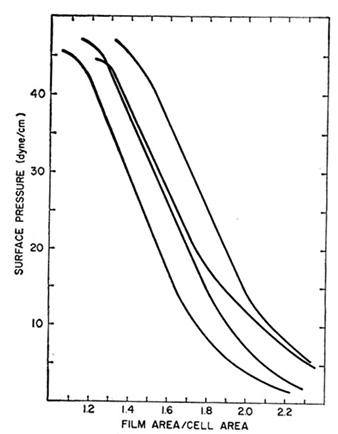
Figure 7 Ratio of Film Area to Erythrocyte Area at Increasing Surface Pressures
3.4 Scientifically Apply Conceptual Transformation Theory to Strengthen Students’ Ability to Apply Models
In the old version of the textbook (2007 edition), mitosis was equivalent to the “cell cycle”, referring to the entire process that a cell undergoes from the completion of one division to the end of the next, including two stages: interphase and division. In the 2019 edition of the new textbook in China, mitosis is equivalent to the division period, which includes the prophase, metaphase, anaphase and telophase stages.
Case analysis: The concept of cell division here involves the essence of cell division. After a cell completes DNA replication and protein synthesis, it begins to divide. Many scholars in China believe that it involves the formation of spindle fibers or star rays (Tao, 2020), hence it is named meiosis. In fact, the term “mitosis” was first proposed by Walther Flemming in 1882, who later translated it as “thread-like” by observing the shape of the dividing chromosome (see Figure 8) (Gall, 1996; Mitchison & Salmon, 2001). Then Eduard Strasburger established the terms “proposition” (early stage), “metaphase” (middle stage), and “anaphase” (late stage) in 1884. The term “telophage” (late term) was introduced by Martin Heidenhain in 1894 (Robert, 2003). As a result, the restatement of “mitosis” in the new textbook first is in accord with the description of meiosis, as there is no interphase in Metaphase II. Second, it is consistent with the descriptions in many university textbooks, such as Cell Biology (Zhai et al., 2011) and General Biology (Wu et al., 2014). It is generally assumed that mitosis includes the period of prophase, metaphase, anaphase and telophase in Botany illustrated (Glimn-Lacy & Kaufman, 2006). Therefore, the concept map of mitosis is based on the new textbook, which solves the problem of concept transformation in classroom teaching and consolidates students’ ability to apply conceptual models.
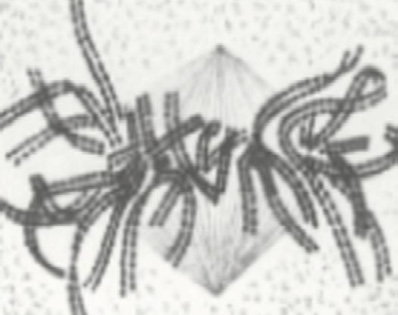
Figure 8 Mitosis Metaphase
3.5 Cleverly Design Question Lists to Expand Students’ Innovative Model Ability
When verifying the chlorophyll experiment required for photosynthesis in plants, it is well-known that the leaf of Pelargonium hortorum is ideal experimental material for the classic experiment. Students often have an inherent conceptual model after learning that photosynthesis requires green leaves. While expanding students’ divergent thinking, a series of questions emerged: (1) Can red leaves replace green leaves in this experiment? (2) Can red leaves be used for this substitution experiment? (3) If red leaves are also acceptable, what is the reason for the success of the experiment? This teaching case uses the leaves of Loropetalum chinense var. rubrum, Rosa chinensis and Pelargonium hortorum as experimental materials. The results showed that the red leaf can replace the green leaf in the experiment. What surprised us most is that the leaf of Pelargonium hortorum is an ideal experimental material (see Figure 9). After investigating the reasons, it was found that the red leaves, which had been decolorized by alcohol, actually contained chlorophyll and appeared green (see Figure 10). The success of the expanded experiment not only stimulated students’ enthusiasm for exploration but also deepened their understanding of the essence of photosynthesis, thus constructing more refined and scientific conceptual models and expanding their ability to innovate models.
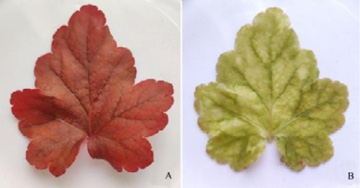
Figure 9 Leaf of Pelargonium hortorum (A, Before the experiment; B, After the experiment)
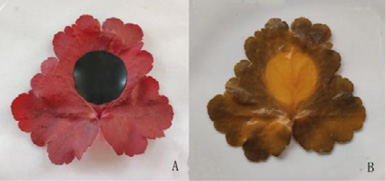
Figure 10 Leaf of Pelargonium hortorum (A, Before the experiment; B, After alcohol decolorization)
4 Teaching Evaluation
4.1 Evaluation Object
A questionnaire survey was conducted among 32 teachers in Wuhu City, Anhui Province, China.
4.2 Evaluation Scale
After the preliminary completion of the evaluation scale, 5 expert teachers of senior high school biology were consulted for the index system at first. Then, the “Biological Series Model Evaluation Scale” was revised according to the experts’ suggestions and issued to 32 senior high school biology teachers by the “Questionnaire Star” platform. At last, 32 valid questionnaires were collected. Then, the quantitative statistical method is used to calculate the weight of the simple ranking index using the formula (Wang, 2005).
Wi=2× [n × (1+m)-Ri]/mn(1+m)
Note: n means the total number of valid questionnaires, m means the number of indicators in the same layer, Ri means the sum of the ranking of each index, and Wi means the weight of the indicator.
4.3 Evaluation Results
After the index and standard were confirmed, the analytic hierarchy process was used to judge the importance of each index. 32 teachers were invited to make further evaluation of the constructed biological series model evaluation scale, and the weight indicators approved by experts were obtained. According to the statistical results, indicators at all levels and their weights are calculated as shown in Table 1. The evaluation criteria for each indicator in the evaluation scale are divided into four grades: excellent, good, average and poor, scoring 4, 3, 2 and 1, respectively. The final evaluation scale is shown in Table 1, and the average score from experts is 3.18.
Table 1 Biological Modeling Ability Evaluation Scale
|
|
First Level Index |
First Level Index Weigh |
Second Level Index |
Second Level Index Weigh |
Indexes Description |
Evaluation Opinion |
|||
|
Excellent |
Good |
Average |
Poor |
||||||
|
Biological Modeling Ability |
Ability to Cognize Models |
0.209 |
Ability to identify problem situations |
0.318 |
Ability to identify practical problem situation in life phenomenon |
4 |
3 |
2 |
1 |
|
Ability to identify models’ essential features |
0.377 |
Be able to fully study the essential characteristics of the models through discrimination, hypothesis, simplification, abstraction and other means |
|||||||
|
Ability to form mental models |
0.305 |
Be able to view problems with model thinking, and modeling awareness and belief |
|||||||
|
Biological Modeling Ability |
Ability to Construct Models |
0.224 |
Ability to select the type of model |
0.303 |
Be able to select correctly to build physical, mathematical or conceptual models |
||||
|
Ability to select relevant materials |
0.317 |
Be able to select graphics, text, data, concepts and other relevant materials |
|||||||
|
Ability to build corresponding models |
0.38 |
Be able to construct a corresponding model reflecting the essential characteristics |
|||||||
|
Ability to Validate Models |
0.221 |
Ability to analyze models |
0.362 |
Be able to analyze each element and the relationship between each element |
|||||
|
Ability to observe the model application effects |
0.329 |
Be able to observe effects after models are applied to real teaching |
|||||||
|
Ability to summarize the advantages and disadvantages of models |
0.309 |
Be able to find out the disadvantages and summarize the advantages of models |
|||||||
|
Ability to Apply Models |
0.169 |
Ability to put forward modification measures after observing the test results |
0.54 |
Be able to propose specific suggestions or solutions for modification |
|||||
|
Ability to test and modify models |
0.46 |
Be able to verify the validity of models by collecting evidence, such as mathematical reasoning and experiments |
|||||||
|
Ability to Innovate Models |
0.177 |
Ability to transfer models |
0.294 |
Students can transfer to similar knowledge contexts based on the model |
|||||
|
Ability to expand models |
0.345 |
Be able to apply models to predict or explain problems |
|||||||
|
Ability to create models |
0.361 |
Be able to create more applicable and scientific biological models |
|||||||
The correlation coefficient between the first level index score and the total score is 0.535~0.740 and has statistical significance(p < 0.05), which indicates the correlation is strong. Cronbach’s Alpha is 0.732, indicating good reliability. Among second level index, the reliability is 0.788, and the correlation coefficient between the score and the total score is 0.677~0.764 in the dimension of model cognition. The reliability is 0.802, and the correlation coefficient is 0.642~0.860 in the dimension of constructing models. The reliability is 0.747, and the correlation coefficient is 0.602~0.747 in the dimension of validating models. The reliability is 0.901, and the correlation coefficient is 0.911~0.917 in the dimension of applying models. The reliability is 0.816, and the correlation coefficient is 0.734~0.842 in the dimension of innovating models. All of the data have statistical significance (p < 0.05). That is to say that the evaluation index system of the senior high school biology series model constructed in this study has good internal consistency.
Through interviews, at the cognitive construction level, interdisciplinary materials were used to expand model cognition breadth, complemented by the formation of the “learning through reflection” habit, which increased students’ modeling consciousness by 15.8%. At the cognitive deepening level, scientific history was employed to foster verification awareness, while conceptual change theory was utilized to mitigate interference from preconceptions, improving model application accuracy by 19.3%. Ultimately, a complete closed loop of “broad cognition-deep reflection-courageous questioning-precise application-courageous innovation” was formed, effectively transitioning from a “problem-solving tool” to a “scientific thinking paradigm”.
5 Conclusion
To sum up, models and modeling are indispensable cognition and ability for senior high school students, as well as an important means to gradually develop scientific thinking. At the same time, it is an important factor in promoting the improvement of students’ core literacies. Modeling ability consists of the ability to cognize, construct, validate, apply and innovate models, which is an interrelated and progressive layer-by-layer. The diversity and pertinence of teaching strategies should be taken into consideration in specific case teaching. Based on different teaching contents, it is necessary to persist in scientific thinking, focus on STS education, make full use of the history of science, design question strings skillfully, and properly apply the theory of conceptual change. Different teaching strategies, including vertical, horizontal or mixed methods, can be adopted according to the actual situation of the textbook and the requirements of the new curriculum standard. Through them, it can be useful to develop students’ scientific thinking and promote students’ modeling ability, and then promote core literacy effectively.
References
[1] Acher, A., Arcà, M., & Sanmartí, N. (2007). Modeling as a teaching learning process for understanding materials: A case study in primary education. Science Education, 91, 398-418.
[2] Bar, R. S., Deamer, D. W., & Cornwell, D. G. (1966). Surface area of human erythrocyte lipids: reinvestigation of experiments on plasma membrane. Science, 153(3739), 1010-1012.
[3] Buckley, B. C., & Boulter, C. J. (2000). Investigating the role of representation and expressed models in building mental models. In J. K. Gilbert & C. J. Boulter (Eds.), Developing models in science education (pp. 119-135). Dordrecht: Kluwer Academic Publishers.
[4] Chen, B. X. (2011). A case study of mathematical models in biology. Biology Teaching, 36(9), 67-69.
[5] Chen, X. C. (2022). Research on evaluation and improvement strategy of biological modeling ability of senior high school students (Unpublished doctorial dissertation). Harbin Normal University.
[6] Cihai Editorial Committee. (1990). Cihai. Shanghai: Shanghai Lexicographical Publishing House.
[7] Curriculum and Textbook Research Institute of People’s Education Press. (2007). Biology 1: Molecules and biology (Compulsory). Beijing: Beijing People’s Education Press.
[8] Dervichian, D., & Macheboeuf, M. (1938). Compt Rend, 206, 1511.
[9] Dong, B. Q., & Peng, Q. C. (2019). The connotation and realization path of scientific thinking from the perspective of core literacy. Curriculum, Teaching Material and Method, (4), 84-90.
[10] Gall, J. (1996). Views of the cell. Maryland: American Society for Cell Biology.
[11] Glimn-Lacy, J., & Kaufman, P. B. (2006). Botany illustrated: Introduction to plants, major groups, flowering plant families (2nd ed.). New York: Springer US.
[12] Gorter, E., & Grendel, F. (1925). On bimolecular layers of lipoids on the chromocytes of the blood. Journal of Experimental Medicine, 41(4), 439-443.
[13] Halloun, I. (1996). Schematic modelling for meaningful learning of physics. Journal of Research in Science Teaching, 33(9), 1019-1041.
[14] Hestenes, D. (1992). Modeling games in the Newtonian World. American Journal of Physics, 60(8), 732-748.
[15] Houchin, D. N., Munn, J. I., & Parneu, B. I. (1958). A method for the measurement of red cell dimensions and calculation of mean corpuscular. Blood, 13(12), 1185-1191.
[16] Lin, M. X. (2015). Model construction in biology concept teaching in junior high school. Education and Teaching Forum, 34, 263-264.
[17] Lopes, J. B., & Costa, N. (2007). The evaluation of modelling competences: Difficulties and potentials for the learning of the sciences. International Journal of Science Education, 29(7), 811-851.
[18] Lv, Z. Z. (2022). Analysis of detailed content on “Ion channels” in the new People’s Education Press textbook. Middle School Biology, 38(4), 3-4.
[19] Mitchison, T. J., & Salmon, E. D. (2001). Mitosis: A history of division. Nature Cell Biology, 3(1), E17-E21.
[20] National Research Council. (1996). National science education standards. Washington, D.C.: The National Academies Press.
[21] Qiu, M. H. (2008). Theoretical architecture of models and modeling capabilities. Science Education Monthly, 3(306), 2-9.
[22] Robert, B. (2003). WWW.Cell biology education. Cell Biology Education, 2, 214-219.
[23] Schwarz, C. V., & White, B. Y. (2005). Metamodeling knowledge: Developing students’ understanding of scientific modeling. Cognition & Instruction, 23(2), 165-205.
[24] Singer, S. J., & Nicolson, G. L. (1972). The fluid mosaic model of the structure of cell membranes. Science, 175, 720-731.
[25] Tao, Y. (2020). Changes in the discussion of “Cell Cycle” — A discussion on the PEP edition of “Biology · Compulsory 1 · Molecules and Cells”. Teaching of Middle School Biology, (8), 74-76.
[26] Upmeier zu Belzen, A., & Krüger, D. (2010). Modellkompetenz im Biologieunterricht [Model competence in biology education]. Zeitschrift für Didaktik der Naturwissenschaften, 16, 41-57. Retrieved from http://www.ipn.uni-kiel.de/zfdn/jg16.html.
[27] Wang, J. Y. (2005). Education evaluation. Changchun: Northeast Normal University Press.
[28] Westerman, M. P., Pierce, L. E., & Jensen, W. N. (1961). Erythrocyte and plasma lipids in sickle cell anemia. Journal of Laboratory and Clinical Medicine, 57, 819.
[29] Wu, X. Y., Zhou, S. L., & Ge, M. D. (2014). General biology (4th ed.). Beijing: Higher Education Press.
[30] Xiong, Y. (2022). Set up situations to cultivate students’ ability of model construction in senior high school physics. Research on Curriculum and Teaching, 11-15.
[31] Yuan, W. X. (2009). On conceptual change teaching model based on modeling. Education Science, 25(4), 31-35.
[32] Zhai, Z. H., Wang, X. Z., & Ding, M. X. (2011). Cell biology (4th ed.). Beijing: Higher Education Press.
[33] Zwaal, T. F. A., Demel, R. A., Roelofsen, B., & van Deenen, L. L. M. (1976). The lipid bilayer concept of cell membranes. Trends in Biochemical Sciences, 5, 112-114.