Current Views: 31768
 Current Downloads: 21172
Guide to Education Innovation
ISSN Print:2789-0732
ISSN Online:2789-0740
Contact Editorial Office



Subscribe to the latest published information from SCISCAN
Exploring the Pathways to Strengthening Vocational Identity among Higher Vocational College Students in Shenzhen


-
Information:
School of Management, Shenzhen Polytechnic University, Shenzhen
-
Keywords:
Vocational identity; Higher vocational colleges; Higher vocational college students
- Abstract: With the advancement of vocational education, vocational colleges have come to constitute a significant portion of China’s higher education system. Ensuring the quality of higher vocational education must be centered on its primary stakeholders: higher vocational college students (“vocational students”). Currently, a pressing issue confronting the development of China’s vocational education is the public’s insufficient understanding of higher vocational education and the low level of identity recognition among vocational students, which severely hampers their academic engagement and personal growth — a matter that warrants serious attention. The identity predicaments faced by higher vocational students are primarily manifested in three dimensions: identity anxiety induced by stigmatizing labels, identity discrimination resulting from the devaluation of their academic credentials, and identity rigidity whereby social strata boundaries become increasingly impermeable. Among vocational college students, low collective self-identity, and a loss of self-worth give rise to identity anxiety; restricted channels for upward mobility lead to the depreciation of individual meaning and value; and the credential society’s reinforcement of academic qualifications further entrenches stratification barriers and impedes social mobility.
- DOI: 10.35534/gei.0602022
- Cite: Xu, T. J., Zhang, X. M., & Yang, Y. F. (2026). Exploring the Pathways to Strengthening Vocational Identity among Higher Vocational College Students in Shenzhen. Guide to Education Innovation, 6(2), 239−247.
1 Background of the Study
In the report of the 20th National Congress of the Communist Party of China, there were clear and specific statements on further strengthening vocational education, such as “coordinating vocational education, higher education, and continuing education to innovate, promoting the integration between vocational education and general education, industry education integration, science education integration, and optimizing the positioning of vocational education types”. These statements provides important guidance for the future development of vocational education and effectively boost people’s prospects and confidence in its advancement.
As an important component of the education system and human resource development, vocational education is of great significance for all-around talent cultivation and serves as a vital pathway for young people to enter the workforce and realize their potential. In 2020, the Ministry of Education, together with nine other ministries and commissions, jointly issued the Action Plan for Quality Improvement and Excellence in Vocational Education (2020–2023), striving to build a modern vocational education system with Chinese characteristics that aligns more closely with economic and social development needs, better meets the people’s expectations, and is more commensurate with China’s comprehensive national strength and international standing. In Shenzhen, vocational colleges represented by Shenzhen Polytechnic University have cultivated a large number of outstanding industrial talents for the construction of the Guangdong-Hong Kong-Macao Greater Bay Area and the development of Shenzhen’s manufacturing industry, and have developed into a highland of vocational education in China.
With the development of vocational education, vocational colleges have occupied half of China’s higher education (Xiao et al., 2022). To ensure the quality of higher vocational education, it is necessary to focus on the core constituents - vocational college students. At present, there is an urgent problem in the development of vocational education in China, namely, insufficient public awareness of vocational education and a low sense of identity among vocational students (Wang, 2017), which seriously affects the development of vocational students and should be highly valued.
2 Identity Related Theories
Identity is the determination of who I am, what I should do, and who I will become. Tajfel provided a detailed definition of identity, stating that it refers to an individual’s ability to recognize the group they belong to, and to have a sense of belonging and emotional and value connections within the group (Tajfel, 1978). Social identity theory emphasizes that identity involves an individual’s cognition of belonging to a specific social group, and the identity of the group has emotional and value significance for them (Turner, 2010). Individual identity formation requires three processes: social classification, social comparison, and positive distinctiveness. The theoretical construction of identity cannot be separated from the support of self-theory and identity theory (Wang, 2008). In the study, the identity recognition of vocational college students is defined as the confirmation of the group of vocational college students to which they belong and their own uniqueness, accompanied by their identity cognition, emotional experience, and corresponding behavioral patterns.
2.1 Factors Influencing Identity
The social identity theory suggests that due to low group status, individuals’ self-esteem can be damaged, and members of vulnerable groups are more prone to low identity recognition (Zhang & Zuo, 2006). Lower social status can weaken an individual’s self-esteem and confidence, reduce self-efficacy and achievement motivation, thereby lowering their cognition and evaluation of the group they belong to. As a result, individuals are less willing to use their group identity for self-representation and confirmation. Meanwhile, stereotypes, discrimination, and prejudice towards low-status groups are also important factors influencing individual identity recognition. Social categorization, as one of the important psychological mechanisms for human adaptation, is a subjective psychological process in which individuals classify themselves and others into different group categories based on shared similarities. The group identity and stereotypes brought about by social classification can have an impact on the mentality of members of low-status groups. Therefore, according to the theory of identity integration, when an individual has a low level of identity recognition, they will avoid using that identity as a basis for integrating other avatars and exhibit behaviors and decisions that are inconsistent with that identity (Ashforth et al., 2000).
2.2 Consequences of Vocational Identity Deficit
Identity is a process of self-construction, which is a dynamic organization formed by the internal self-construction of personal motivation, abilities, beliefs, life experiences, etc. (Zhou, 2008). The better the development of the structure of identity recognition, the better an individual can perceive their uniqueness and commonalities with others, understand their strengths and weaknesses, and develop better (Cao & Zhang, 2010). Lower self-identity can weaken an individual’s self-esteem and confidence, reduce self-efficacy and achievement motivation. Lord et al. (2010) pointed out that identity plays an important role in self-control, and individuals with high identity tend to exhibit more group identity behavior. Negative identity recognition is fragile, variable and unstable. Individuals in these identified states are anxious, confused, and contradictory, constantly feeling fear and unease stemming from uncertainty. Researchers believe that the importance of identity reflects the subjective importance of a particular group’s identity or whether it occupies a central position in an individual’s self-concept, and is also an important factor affecting an individual’s physical and mental health and subjective well-being. Research indicates that the level of self-identity affects an individual’s mental health, with individuals with low self-identity exhibiting higher levels of depression and anxiety.
2.3 Identity Recognition Status of Vocational College Students
Students in vocational colleges are mostly diverted from the middle and high school entrance exams, and their academic performance is generally not high (Zhu et al., 2017). Society, families, and individual students will unconsciously label themselves as “failures”. In teaching practice, it has also been found that there is a phenomenon of “self-dwarfism” in the training process, resulting in a crisis of identity recognition, which is manifested as the loss of self-identity, value, and meaning among vocational college students (Xu & Zhu, 2018). According to social identity theory, the identity of vocational college students is not only the source of learning motivation, sense of value, and belonging, but also the foundation of educational action choices and the main influencing factor in improving the quality of vocational education (Mi & Zhou, 2007). Researchers have found from two levels of implicit and explicit attitudes towards their own group identity among vocational college students that their attitudes towards their vocational identity are relatively low, and they hold more negative emotions. Meanwhile, in terms of behavior, it manifests as academic fatigue, negative employment, etc. Due to the lack of good group identity among many vocational college students, they have not established a positive emotional connection with vocational education and schools, and even become self-destructive and neglect their studies, which seriously reduces the quality of talent cultivation in vocational education (Zhou & Chen, 2011). With the rapid development of the social economy, vocational education plays an increasingly important role in cultivating technical and skilled talents. As a first-tier city in China, the issue of identity recognition among vocational college students in Shenzhen is particularly prominent. This article aims to explore the factors that affect the identity recognition of vocational college students in Shenzhen and propose corresponding improvement strategies to promote their comprehensive development and social harmony.
3 The Causes of Vocational Identity Deficit among Higher Vocational Students
3.1 Low Self-identity and Loss of Self-worth Lead to Vocational Identity Anxiety
Vocational students are often unfairly perceived as “failures” in the competitive college entrance examination system. By observing the action logic of vocational college students, it is evident that many of their action strategies are permeated with a negative self-positioning. When dealing with setbacks, most people do not expect to improve their abilities by overcoming difficulties, and adopt a passive and indifferent action strategy. This negative and self-destructive tendency is essentially an expression of the popular “self-abandonment culture” among vocational college students. The “culture of self-abandonment” is not a cultural gene inherent in a certain group, but the result of negative psychological adjustment that the group is forced to undergo in the face of multiple external disadvantages that cannot be reversed. It is also a product of negative group identity consciousness under the influence of institutional exclusion mechanisms. It can be considered that the crisis of group self-identity and loss of values are not only the main manifestations of “self-abandonment culture”, but also the deep-seated lesions that cause the proliferation of “self-abandonment culture”. In their research, it was found that vocational college students are trapped in “ontological anxiety” related to vocational education, and their identity crisis is marked by a clear “vocational education” brand. “Vocational education” itself has become a stigmatized label, and the whole society not only has low recognition of vocational education, but also discriminates against it, viewing it as “second-rate education” and vocational college students as “gray-collar” and “technical workers”. Chen Xianzhe (2010) also found that vocational colleges have been labeled as “Non-Elite Universities”.
3.2 The Credential Society, by Valorizing Academic Qualifications, Produces Social Segmentation and Exclusionary Boundaries
In a credential society, the identity-ascribing function of education establishes a tacit connection between individuals’ educational credentials and their external identity labels. The devalued educational status of vocational credentials has become a primary source of identity anxiety among vocational students. Unlike the ascribed nature of privileged identities in the past, the achieved nature of educational identity lends the identity-ascribing function of education a relatively equitable character, insofar as acquiring higher-level credentials can secure opportunities for social mobility. Education, accordingly, has come to be widely recognized as a legitimate means of advancement and a pathway for social mobility, constituting a socially accepted mechanism for social screening and stratification — this is the stratifying logic and function of education. In a credential society, the educational qualifications obtained through schooling serve to identify and define one’s social identity, emerging as a critical determinant of social stratification and social status. From the perspective of educational stratification, higher vocational education entails two implicit lines of stratification: one horizontal, oriented toward the delineation of social roles by “vocational identity”; and one vertical, oriented toward the hierarchical ranking of educational levels and credential tiers by “academic status”. Under the influence of socio-cultural habitus and the inherent nature of vocational education, these two lines of stratification constitute the fundamental causes of vocational students’ negative identity construction.
3.3 Limited Career Development Space Leading to the Devaluation of Individual Meaning and Value among Vocational College Students
Higher vocational college students are currently confronted with mobility impediments in both horizontal and vertical dimensions. On the one hand, the student population of higher vocational colleges in China is historically drawn from the central and western regions, rural areas, and urban low- and middle-income families. However, in leading cities like Shenzhen, the student profile is diversifying with increasing numbers of local urban residents. These students possess relatively limited family social capital and constrained social mobility capacity. Moreover, many employers offering favorable terms and conditions explicitly stipulate a “bachelor’s degree or above” as a minimum requirement. This effectively blocks the pathways for horizontal class mobility among vocational students, thereby reinforcing their original class status. On the other hand, vocational students also face significant obstacles in their vertical educational advancement — namely, the pursuit of undergraduate and postgraduate degrees. Due to the distinctive nature of vocational education, vocational colleges generally emphasize practical and skills-based instruction, with relatively moderate demands for theoretical learning, whereas undergraduate institutions place greater emphasis on students’ theoretical competence. This disparity places vocational students at a distinct disadvantage when transitioning to the undergraduate level, as they must navigate a fundamental shift in both learning content and pedagogical approach. Compounding this issue are a series of institutional deficiencies, including the lack of coherent policies and resources to facilitate the transition from associate to bachelor’s degree programs, the limited number of institutions available for articulation, regional restrictions on degree upgrading, and the low level of acceptance that upgraded-degree graduates face in the labor market. Collectively, these factors have dampened vocational students’ enthusiasm for pursuing further education as a means of reconfiguring their identity codes.
4 Strategies for Enhancing Vocational Students’ Identity
This study, grounded in the characteristics, patterns, and underlying psychological mechanisms of higher vocational college students’ identity formation, adopts a social identity perspective to examine the internal mechanisms through which negative stereotypes precipitate identity crises among vocational students, as well as to identify effective interventions. From the perspective of the sociology of education, vocational students’ self-perception as “academic failures” has become a primary driver of their academic difficulties, employment challenges, and even their entrapment within rigid class boundaries. At the same time, based on improving the quality of talent cultivation in vocational colleges in Shenzhen, this project takes the identity recognition status and improvement path of vocational college students in Shenzhen as the research object. The mechanism of educational stratification — which links vocational students’ educational status to their social standing — continues to exert a pronounced stratifying effect within the contemporary educational system. It thereby operates as a covert mechanism precipitating the identity predicament of vocational students, with the consequence that vocational education, consigned to the lower rungs of the educational hierarchy, struggles to fulfill its positive educational function of facilitating individual identity renewal and catalyzing transformative change in the broader social structure. Accordingly, a multi-pronged, synergistic approach is imperative: prioritizing mental health education for vocational students, cultivating a robust “educational ecosystem” for vocational education, promoting high-quality development, accelerating the construction of a skills-oriented society, resolving vocational students’ identity crises, and providing educational opportunities that are genuinely suited to their needs and aspirations.
The relationship between the dimensions of vocational identity among higher vocational college students is shown in Figure 1.
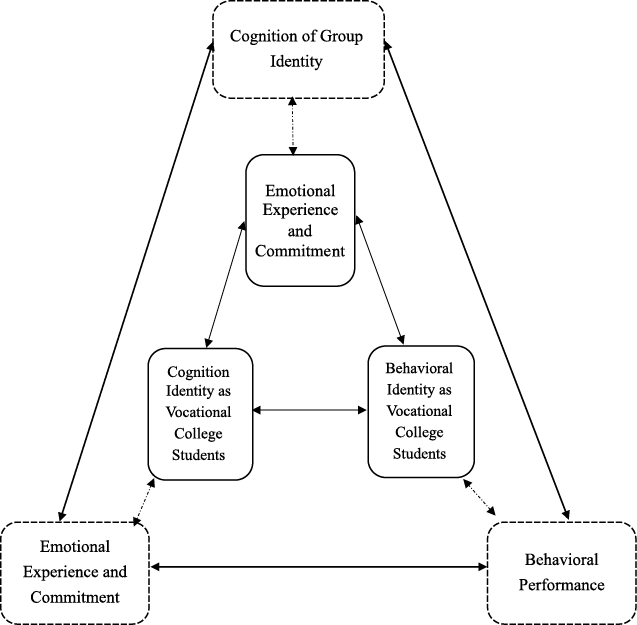
Figure 1 The Relationship between the Dimensions of Vocational Identity among Higher Vocational College Students
4.1 Optimizing the Vocational Education Environment to Stimulate the Intrinsic Development Potential of Vocational College Students
To redress the current state of low self-perception among higher vocational college students, it is imperative to cultivate a vibrant and open vocational education landscape, construct a rich and diverse educational ecosystem for vocational education, elevate the strategic positioning of vocational education reform and development, and promote the development of vocational education with distinction, quality, and integrity. On the basis of steadily developing vocational undergraduate education, it is necessary to accelerate the establishment of a vertically integrated modern vocational education system spanning “associate degree — bachelor’s degree — postgraduate degree”, thereby extending the educational hierarchy of vocational education. This would help to resolve identity controversies such as whether “higher vocational education constitutes a lower tier of higher education” or “higher vocational education represents a higher tier of vocational education”, affording vocational students greater room for upward mobility and more diverse developmental possibilities. Such measures would facilitate the transformation of higher vocational education from a “dependent” and “peripheral” mode of development relative to higher education toward an “endogenous” and “self-conscious” mode, thereby unlocking the intrinsic development potential of vocational education. Reform and development in vocational education should strive to break free from the path dependency on general education, actively carrying out curriculum and pedagogical reforms oriented toward the priority areas of national economic and social development. This entails strengthening cross-disciplinary and cross-curricular integration, introducing new methodologies, technologies, processes, and standards, establishing specialized program tracks oriented toward high-end industries and industry high-end sectors, refining the program system, and developing a cohort of high-quality core curricula, first-class teaching materials, and exemplary practical training projects that represent the caliber of China’s vocational education reform and are capable of achieving international recognition. In the process of developing these quality resources, efforts should be directed toward cultivating a contingent of highly competent professional educators who are well-versed in their disciplines and abreast of industry frontiers, as well as nurturing top-tier innovative talents in vocational education. By strengthening these core human elements, we can promote the high-quality development of vocational education, creating a favorable environment and laying a solid foundation for students’ personal growth and career development.
4.2 Strengthening Mental Health Education to Enhance Higher Vocational Students’ Self-Value Identity
The self-identity crisis and self-abandonment behaviors exhibited by higher vocational college students are, in essence, products of the interaction between “forced abandonment” and “chosen abandonment”. “Forced abandonment” refers to passive behaviors resulting from external factors such as institutional and social exclusion triggered by the achieved status of vocational credentials. “Chosen abandonment”, by contrast, denotes active behaviors stemming from agency-based factors, including weak willpower, psychological motivational deficits, and a crisis of self-exile. In this light, resolving vocational students’ self-abandonment psychology requires not only efforts to reshape the external identity of vocational education but also a fundamental reconstruction of vocational students’ subjectivity through internal psychological education. On the one hand, scientifically grounded and pedagogically sound psychological education should guide vocational students toward a correct understanding of themselves, facilitate appropriate management of their relationships with society, strengthen their self-identity awareness, and enhance their capacity for self-identification, thereby fostering a positive, optimistic, and open-minded worldview, outlook on life, and value system. On the other hand, it is necessary to transform the traditional vocational education value orientation that emphasizes “technical competence at the expense of psychological well-being”. Through moral education and the cultivation of vocational spirit, alongside the promotion of exemplary figures such as industry leaders, master craftsmen, skilled artisans, and technical experts, we can reinforce vocational students’ career development beliefs, raise their future career expectations, cultivate a sense of vocational honor, and ameliorate their vulnerability — both intellectual and emotional — thereby inspiring them to aspire to personal growth and professional excellence. The modernization of education itself, through symbolic means, resists educational monopoly and deconstructs the logic of educational stratification, further rectifying the fundamental logic of education through moral cultivation and restoring its true purpose. We must guide vocational students toward accurate self-understanding and comprehensive self-knowledge, helping them to choose learning models and lifestyles suited to their own ideals, rather than being controlled and manipulated by the symbolic logic of educational credentials. In so doing, we can resolve vocational students’ self-identity crisis and cultivate a new generation of vocational college students characterized by positivity, optimism, and courage.
4.3 Reconstructing the Logic of Educational Stratification and Accelerating the Construction of a Skills-Oriented Society
The stratifying logic of educational credentials in a credential society has rendered higher vocational education an educational pathway to which students resort out of necessity for survival, rather than a means by which they can attain dignified social standing. Consequently, students’ expectations of educational returns are low, as are the actual benefits they derive from such education. In this context, if vocational students are to construct a positive system of self-identity perception, it is first necessary to reshape the status of higher vocational education, eliminate the latent discrimination embedded in educational credentials, and remove the identity labels of “academic failures” and “educational failures” that have been affixed to vocational students under this logic. On the one hand, efforts should be intensified to build a skills-oriented society. For an extended period, educational credentials have served as the primary metric and fundamental yardstick for talent evaluation in China, and academic qualifications have constituted a critical guarantee for individuals’ career development. Under the dominance of credential-first values, it is hardly surprising that society as a whole pursues higher-level credentials and degrees from elite institutions. However, in a society as diverse and multifaceted as ours, relying solely on educational credentials as the single yardstick of evaluation is inherently unscientific; moreover, affixing negative labels to those whose credentials are not considered prestigious is deeply unjust. Therefore, it is particularly urgent to deconstruct the traditional logic of educational stratification in the credential society, establish and refine a skills-based evaluation system, create alternative pathways for talent assessment, provide a different track for individuals with diverse aptitudes to achieve personal growth and excellence, enhance the weight of skills-based evaluation, and accelerate the construction of a skills-friendly society that respects vocational expertise, honors labor, and celebrates creativity. The report of the 20th National Congress of the Communist Party of China has incorporated “master craftsmen” and “highly skilled talent” into the national talent strategy, signaling a significant shift in evaluation orientation. This value orientation has been further underscored by the recent commendation of a cohort of National Excellent Engineers and National Excellent Engineer Teams by the Party Central Committee and the State Council. On the other hand, efforts should be directed toward enhancing the value and quality of vocational students’ occupational positions. In alignment with the imperatives of constructing China’s modern industrial system and advancing new-type industrialization, higher vocational education should adjust its program offerings in a timely manner, targeting high-end industries and industry high-end sectors, promoting the digitalization, informatization, and green transformation of industries, and establishing or strengthening programs oriented toward national strategic industries and key areas of national economic production. Through these measures, vocational education can drive the modernization and digital upgrading of its program structure, thereby cultivating innovative, interdisciplinary, and highly skilled talents capable of adapting to the technological revolution and committed to serving the development of new, quality productive forces. In the process of enhancing its capacity to serve the economy and society, vocational education will secure its position and recognition. Concomitantly, the “vocational identity” of vocational students will undergo natural transformation, their self-efficacy will increase, and their identity predicament will be progressively resolved.
5 Conclusion
As the number of higher vocational college students continues to grow and the state places increasing emphasis on the development of vocational education, attending to vocational students’ identity recognition assumes considerable positive significance for the advancement of vocational education. By strengthening vocational students’ sense of group belonging, their sense of achievement derived from coursework and skills acquisition, and consequently their self-worth, their identity recognition will naturally be enhanced. Only through such measures can students receiving vocational education genuinely embrace vocational education from the depths of their being and identify with their own status, thereby enabling the quality of vocational education to be substantively improved. Enhancing the identity recognition of higher vocational college students in Shenzhen is a systematic endeavor that requires the concerted efforts of government, educational institutions, society, and the students themselves. Through the implementation of the strategies outlined above, the identity recognition of higher vocational college students can be effectively improved, thereby promoting their holistic development and contributing to social harmony.
References
[1] Xiao, G. L., Wan, R. X., & Li, J. (2022). Problems and pathways of cultivating craftsmanship spirit among higher vocational students from the perspective of identity theory. Chinese Vocational and Technical Education, (7), 37-42.
[2] Wang, H. (2017). Self-identity crisis and self-identity construction among college students. Education Review, (4), 89-91.
[3] Mi, J., & Zhou, Z. G. (2007). On teaching strategies for enhancing higher vocational college students’ self-identity. China Higher Education Research, (12), 1-5.
[4] Zhou, J. H., & Chen, L. J. (2011). Current status and countermeasures of self-identity crisis among higher vocational students. School Party Building and Ideological Education, (20), 88-89.
[5] Xu, Y., & Zhu, F. R. (2018). Self-identity crisis and coping strategies of higher vocational college students. Journal of Yangzhou College of Education, 36(3), 73-76.
[6] Zhou, X. H. (2008). Identity theory: Analytical approaches in sociology and psychology. Social Sciences, (4), 46-53, 187.
[7] Wang, Y. (2008). A review of research on identity and identity construction. Journal of Henan Normal University (Philosophy and Social Sciences Edition), (1), 50-53.
[8] Zhang, Y. R., & Zuo, B. (2006). Social identity theory and its development. Advances in Psychological Science, (3), 475-480.
[9] Zhu, J. L., Wu, X., & He, W. (2017). Implicit and explicit group identity of higher vocational students. Journal of Bio-education, 5(3), 155-160.
[10] Cao, H., & Zhang, M. Q. (2010). Identity integration: The path to self-harmony. Advances in Psychological Science, 18(12), 1839-1847.
[11] Tajfel, H. (1978). Differentiation between social groups: Studies in the social psychology of intergroup relations. London: Academic Press.
[12] Turner, J. C. (2010). Social categorization and the self-concept: A social cognitive theory of group behavior. In Social Identity and Intergroup Relations (pp. 243-271). New York: Psychology Press.
[13] Ashforth, B. E., Kreiner, G. E., & Fugate, M. (2000). All in a day’s work: Boundaries and micro role transitions. Academy of Management Review, 25(3), 472-491.
[14] Lord, R. G., & Hall, R. J. (2005). Identity, deep structure and the development of leadership skill. The Leadership Quarterly, 16(4), 591-615.